



Capital outflow eases in first quarter as economy gains more traction









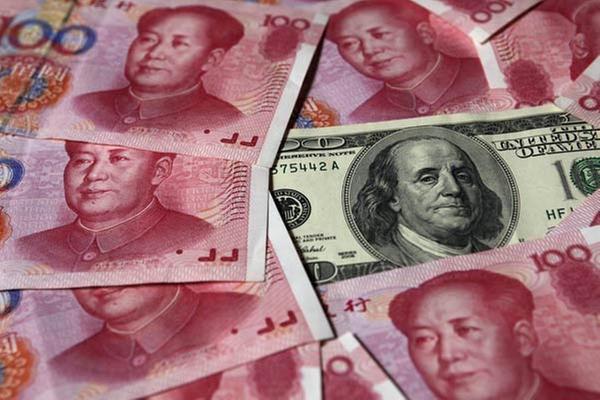 |
| A $100 banknote is placed next to 100 yuan banknotes. [Photo/Agencies] |
China's capital outflow has eased, according to newly released foreign exchange sales data for the first quarter, a spokeswoman for the foreign exchange regulator said on Thursday.
The effect of the United States interest rate hikes and Washington's planned budget cuts on China's capital flows has also been diminishing, said Wang Chunying, a senior official at the State Administration of Foreign Exchange.
China's commercial banks had net sales of $40.9 billion in foreign exchange in the first quarter, down from $124.8 billion in net sales in the first quarter of 2016, Wang said.
The fall means more foreign exchange has become available on the Chinese market and capital outflow pressure has dropped.
"On the whole, the pressure of cross-border capital outflow has eased significantly in the first quarter, and the demand and supply of foreign exchange have tended to become more balanced," Wang said at a news conference.
Wang cited a number of foreign-exchange-related indicators, such as the amount and ratio of foreign exchange purchases and sales.
"These data point to the trend of China's cross-border capital flows gradually reaching equilibrium," he added.
Since the second half of 2014, China had seen net capital outflows and its foreign exchange reserves fall, in stark contrast with the continual growth of reserves for many years.
The situation got better in 2016 and has further improved this year, Wang said.
Reserves stood at $3.01 trillion at the end of March, officials said.
Wang attributed the improvement mainly to China's stable economic fundamentals. China's GDP growth was 6.9 percent year-on-year in the first quarter, beating market expectations. "In the long term, the exchange rate is determined by economic fundamentals," she said.
"The risks of a Sino-US trade war and capital flowing out of China have significantly diminished," given that the two countries have made a lot of progress in trade cooperation, Wang Tao of UBS Securities said in a research note.
Wang of SAFE also said US interest rate hikes and budget cuts will have a diminishing impact on capital outflows from China.
China's foreign exchange reserves, affected by the US interest rate hike in December 2015, fell by $183.8 billion in the fourth quarter of 2015. But the US interest rate hike in March had little effect on China's foreign exchange reserves, which dropped by only $1.4 billion in the first quarter.
The changes show that China has become much more resilient to shocks from changing US policies, she said.











