



A cross-cultural calling









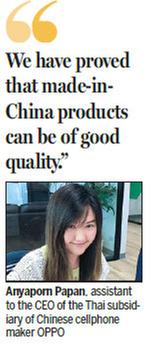 In late 2011, when Anyaporn Papan joined the Thai subsidiary of Chinese cellphone maker OPPO Electronics, the brand was barely known in the country and its sales volume was small, compared with other major players.
Six years later, Papan is proud that the company's products have gradually gained the trust of Thai consumers. OPPO phones now hold market share of more than 10 percent in the Southeast Asian country: "The sales volume is exhilarating. Now, most Thai people know our brand. I feel proud of that."
When she joined the company, Papan realized it faced an uphill battle because made-in-China products were a seen as low-quality goods at the time.
"However, we have proved that made-in-China products can be of good quality," the 32-year-old Bangkok native said, adding that the OPPO's self-centric features have made its cellphones favorites with Thai people, who enjoy taking selfies.
Before she started working for OPPO, she thought it was a South Korean company because it employed so many K-pop stars in advertising and endorsement campaigns.
She enjoys the company's culture, especially because the Bangkok operation has a rough 50-50 split between Chinese and Thai employees: "Everyone works for each other. If I find myself too occupied with something, I can always seek help from a colleague."
Papan has switched posts several times, and is currently working as assistant to the CEO. "I have a very good boss who appreciates his team members' abilities and is able to get the best out of them," she said.
Papan, who speaks proficient Mandarin, learned Chinese in college. She also studied in China for a year. "That's why I decided to find a job that would allow me to use the language," she said.
Initially, she found it difficult to adapt to Chinese food, so for the first few months of her stay she only ate instant noodles. That was before she visited a Sichuanese restaurant and became "addicted" to the spicy fare that is the calling card of the southwestern province.
"My ancestors came from China, so I'm delighted to see the two countries building closer ties that will provide mutual benefits and development," she said.










