



Draw of the south









Northern Kunqu Opera Theater is celebrating its 60th anniversary with a festival of the old art form
Cong Zhaohuan sits in a spacious courtyard surrounded by brick walls that are being torn down. A six-story building, which is being emptied, is nearby.
It's the location of the Northern Kunqu Opera Theater, where Cong, 86, has worked for six decades.
Located in downtown Beijing, the Northern Kunqu Opera Theater is the only professional theater in northern China dedicated to Kunqu, a Chinese opera with a history of around 600 years. Born in the regions south of the Yangtze River, such as Suzhou, Jiangsu province, Kunqu Opera is performed in the melodic Suzhou dialect.
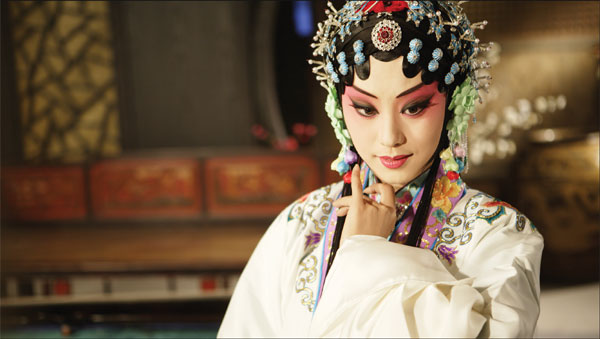
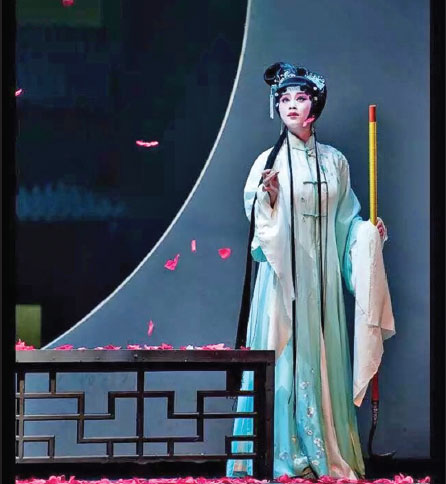
| Shao Tianshuai (top and above), a star with the Northern Kunqu Opera Theater, is known for her performances of The Peony Pavilion and A Dream of Red Mansions. Photos Provided to China Daily |
Combining singing, dancing and acting, the art form was listed as an intangible heritage of humanity by UNESCO in 2001.
"This place is like a gold mine. You cannot imagine how many great Kunqu artists worked here and how many masterpieces they created here," says Cong.
"I am glad that I'm still alive and have the chance to witness a new chapter of the theater."
On June 22, the theater will celebrate its 60th anniversary.
With seven professional troupes, including the Suzhou Kunqu Opera Theater of Jiangsu province and the Shanghai Kunqu Opera Troupe, the Northern Kunqu Opera Theater will hold a festival from June 15 to 27.
At the festival, the audience will enjoy classic Kunqu works performed by both established masters and younger actors.
The Northern Kunqu Opera Theater will have a new venue at the original location, which is scheduled to open in about two years.
Yang Fengyi, president of Northern Kunqu Opera Theater, says the new venue will not just work as a platform for artists but also as a place where the public can learn more about Kunqu.
"We will open the venue by offering workshops, talks and exhibitions as ways to interact with the audience," says Yang.
"In the past, the major job of Kunqu artists, like Cong, was to teach young actors. But with this new venue, they will also share their valuable experience and stories about Kunqu with the audience."
Cong was born in Dalian, Liaoning province, and moved to Beijing in 1949.He started learning the opera at age 17.
In 1957, premier Zhou Enlai helped to establish the Northern Kunqu Opera Theater, and Kunqu master Han Shichang was appointed its first president.
"The theater has gone through many ups and downs in the past 60 years. The early years were very tough," Cong says.
"Back then, Kunqu's popularity was waning. To safeguard its existence, artists then made great efforts to revive traditional repertoires and also worked on new material."
Senior artists even spent their own money on productions, he says.
Cong learned the art form from Han.
During the "cultural revolution" (1966-76), the theater was shut down and didn't reopen until 1979.
Now, it tours the world with more than 30 repertories, including The Peony Pavilion, a Kunqu classic based on a play by Ming Dynasty (1368-1644) playwright Tang Xianzu, and A Dream of Red Mansions, an adaptation of the famous Chinese novel of the same title by Cao Xueqin.
"Usually traditional art forms are appreciated mainly by older people," Yang says.
"However, what excites us is that Kunqu is now drawing more young people. We hold a variety of activities on campuses across China every year to help students embrace this old art form."
The theater is making efforts to cultivate young performers to pass on the tradition and get close to the youth.
Shao Tianshuai is a rising star who will perform a major role in A Dream of Red Mansions at the upcoming festival.
The award-winning actress, who was born and raised in Harbin, Heilongjiang province, started to learn the art form at the Northern Kunqu Opera Theater in 2001.
"I knew nothing about Kunqu then. But my parents considered it a great opportunity, so I came to Beijing," recalls the 32-year-old.
"It was very hard in the beginning, especially the physical training and the singing techniques. But I fell in love with Kunqu Opera."
Despite the current positive situation for Kunqu in China, Cong still has concerns.
He says that the focus on passing down the old art is to teach students how to perform.
However, it's also important to teach students how to write scripts, compose music and even do the makeup and costume designs.
"For example, we have lots of costumes from 60 years ago," says Cong, adding that artists need to pay attention to maintaining the quality of such costumes and making new ones.
"There is still so much to learn and research. I am 86 year sold, and I want to quickly pass down my knowledge of Kunqu Opera to younger people."
chennan@chinadaily.com.cn
(China Daily European Weekly 06/09/2017 page20)


Today's Top News
- One-China principle remains widely recognized as countries revoke overflight permits
- Dangers of bypassing ecology for economic gains
- Funding focus moving away from journal fees
- Kite fans from all over swoop in for a flying visit
- CNS Sichuan sets sail for South China Sea
- Japan's easing of weapons export restrictions opposed





