US, EU should fulfill WTO vow to fruits of partnership










The European Union should have recognized China as a market economy one year ago because, as one of the members of the World Trade Organization, it had agreed to a "sunset clause" in 2001, when China joined the WTO, that it would stop using the "surrogate country" approach when calculating anti-dumping measures against Chinese imports by Dec 11, 2016.
In 2001, China was allowed a 15-year transitional period by the WTO to reform its economy to meet free trade requirements, which it has done. About 100 economies have already recognized China as a market economy, which means they have stopped using the "surrogate country" approach when evaluating Chinese exports.
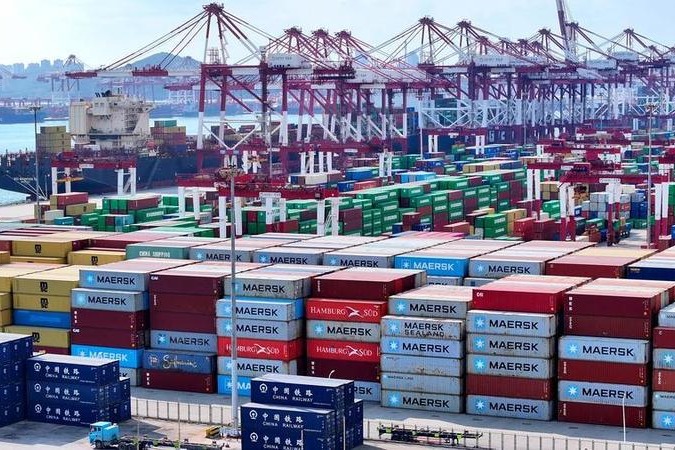
Normally, in an anti-dumping dispute investigation, countries use the cost of production in a third country to calculate the value of imports from a given country. And as the EU and the United States, China's biggest trade partners, are still reluctant to abandon this approach, Chinese businesses face high anti-dumping tariffs.
Moreover, the Donald Trump-led US administration recently said it will not recognize China as a market economy, even as Beijing has asked the WTO to investigate the case.
Since being sworn in as US president, Trump has taken several measures that go against the spirit and trend of globalization thanks to his "America First" policy.
The EU's actions have been somewhat different. European Commission President Jean-Claude Juncker has already listed boosting globalization as one of his top 10 priorities. Although Juncker tried to promote the ambitious Transatlantic Trade and Investment Partnership with the US at the start of his term as EC president in 2014, in the hope of reaping rich benefits from it, he dropped the idea later because of the "closed-door" policy of the US, especially after Trump entered the White House.
But the EU is still to fully recognize China as a market economy. Indeed, it is time the EU did so and set an example for the other economies. Specifically, the EU should fulfill its promises according to Article 15 of the accession protocol signed when China joined the WTO in 2001.
In Chinese culture, promise is debt. And debt has to be paid.
Early this year, German Chancellor Angela Merkel basically helped relieve the concern during her talks with visiting Chinese Premier Li Keqiang. But the EU did not respond positively when Li held talks with European leaders during his second leg of the visit. When Li met European Council President Donald Tusk at the ASEAN and East Asia leaders' meetings in Manila in November, he once again raised the issue, hoping the EU would fulfill its obligations vis-a-vis China, in order to support free trade and globalization.
But the EU has linked the fulfilling of its written commitment to other issues, which include the further opening up of China's market and reducing steel overcapacity. This is unreasonable, because the two issues should be dealt with differently. The EU and WTO members should honor the pledges they made 15 years ago, without adding any more conditions, because their original commitment didn't include additional requests.
During the Brexit talks, the EU asked the United Kingdom to fulfill the financial commitments the latter had made before the start of the ongoing 2014-20 budgetary phase. On Friday, the UK agreed to the honor those financial promises by 2020, even though it will cease to be an EU member from March 2019. If the UK had not agreed, the EU would have not continued the talks to determine the future relationship between Brussels and London.
The Brexit case is relevant to China in the context of WTO rules and the developed economies' biased attitude toward China, because it shows economies have to fulfill their pledges in order to enjoy the fruits of economic partnership.
The author is deputy chief of China Daily European Bureau. fujing@chinadaily.com.cn