Revised law sees fall in recorded juvenile crime









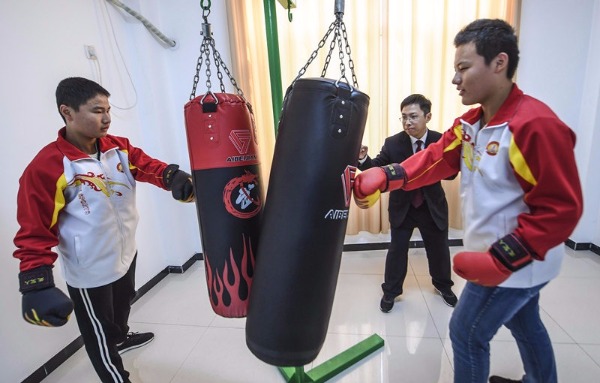
The number of court cases involving minors-children age 17 and younger-h(huán)as fallen by almost 50 percent in the past five years, according to a report published by the National Bureau of Statistics.
The report shows that China's courts dealt with 35,743 cases involving minors last year, a fall of 47.6 percent compared with 2012.
Experts are attributing the change to the influence of the revised Criminal Procedure Law of 2012, which highlights education and rehabilitation rather than punishment for minors accused of crimes, and a decline in the number of repeat offenders.
However, judges and legal experts said juvenile crime is still a serious issue, and the Supreme People's Court has stressed that violent crimes, such as intentional homicide and rape, and drug-related offenses, remain major problems, especially among children age 14 and younger.
"These criminals may be young, but they have big problems," said Qin Shuo, chief judge of the juvenile tribunal at Beijing Haidian District People's Court. "It's easy to judge these young people, but getting them back on the straight and narrow is not easy."
As a pioneer judicial authority that has specialized in juvenile crime since 1987, the court has introduced a range of measures to help young offenders and their victims, and conducted studies on child protection and crime prevention.
In August 2013, the court established the judicial tribunal to handle civil and criminal cases involving minors and college students. It requires psychological assessments of juvenile offenders before prosecution, and provides courses for victims and the parents of young criminals to help them deal with the situation, according to Qin.
In addition, it operates a "return visit" program, under which officials keep track of offenders and victims when cases are concluded, and also encourages regular communication between judges and young offenders.
"Juvenile cases are different from adult ones. That means we must tackle them with different measures, and always make education a priority," Qin said.
Song Yinghui, a professor of law at Beijing Normal University, praised the measures. "Helping a juvenile criminal return to 'normal life' is a crucial element, alongside the values held by judges such as Qin," he said.
Psychological aid
In the 1990s, the court began including psychological assessments in its work, and about three years ago, it invited researchers from the psychology department at the People's Public Security University of China to participate in cases involving juveniles.






- China sees 6.522 billion domestic tourist trips in 2025
- China to boost extreme weather forecasting capabilities in 2026
- China hits 469m motor vehicles in 2025 amid drop in dangerous driving cases
- Fujian deepens cross-Strait integration with Taiwan through infrastructure and cultural initiatives
- Winter sports push tourism in NE China's Jilin
- 'Beijing Rocket Street': A launchpad for accelerated development