



China to move forward in tax cut, fiscal reform in 2018









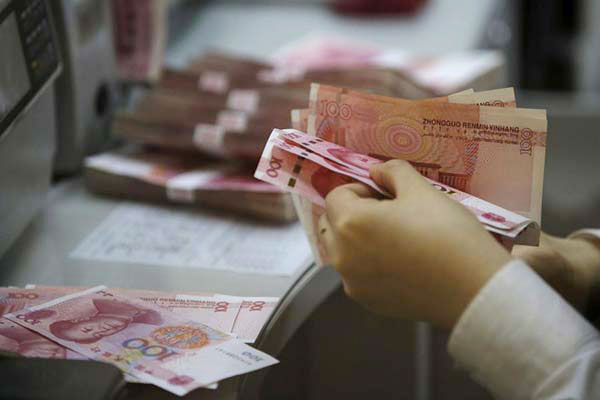
China will continue to cut taxes and step up the reform of the fiscal and taxation system in 2018, according to a national meeting on fiscal work held in Beijing last week.
The government will further cut taxes and administrative fees to reduce enterprises' burdens, the 21 Century Business Herald quoted Finance Minister Xiao Jie as saying at the meeting.
Efforts will be made to optimize the expenditure structure and improve the utilization efficiency of fiscal funds, with priority given in mitigation of major risks, targeted poverty alleviation and pollution control, he said.
By adopting the program of replacing the business tax with the value-added tax, China has cut nearly 2 trillion yuan ($308 billion) of taxes in the recent five years.
Analysts hold there is room for further tax reductions through measures such as lowering corporate income tax and expanding the scope of expense reductions for enterprises. Currently, China has three brackets for value-added taxes at the ratios of 17 percent, 11 percent and 6 percent respectively. The country can reduce the three brackets into two in the future, analysts suggest.
Yang Zhiyong, research fellow with the Chinese Academy of Social Sciences, said the government is likely to increase expenditure and reduce taxes and administrative fees while keeping the deficit ratio at around 3 percent.
In the past five years, China's fiscal deficit grew from 1.2 trillion yuan to 2.38 trillion yuan, while the deficit ratio had been kept within 3 percent.
The national meeting also highlighted that China will keep deepening the reform in an all-round way and speed up the establishment of a modern fiscal system.
According to the meeting, the country will improve the fiscal and the budgetary systems and deepen the reform of tax system.
Efforts will be made to better divide the administrative authorities and spending responsibility of the central and local governments.
Reform of the transfer payment system will be deepened, budget openness will be promoted and value-added tax system will be improved.
The key to the reform is the delegation of the administrative authorities between the central and local governments, said Feng Qiaobin, professor at the Chinese Academy of Governance. He expects gradual progress to be made in this regard.
China's State Council released a guideline on the delegation of administrative authorities and spending responsibilities of the central and local governments in 2016, marking a major step in the reform of fiscal system. The guideline, involving various social and economic sectors, has been implemented steadily.











