World applauds ivory ban, but experts say illegal trade may rise









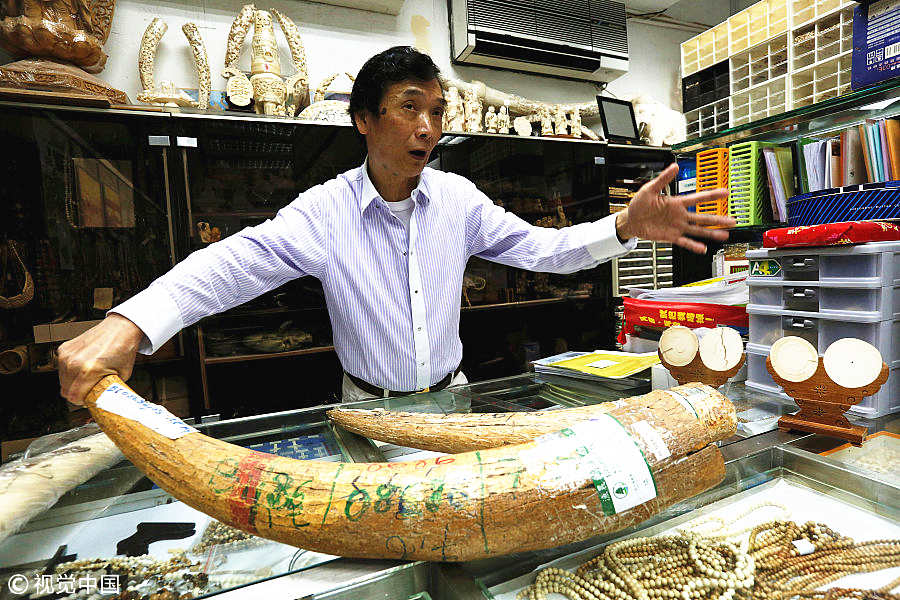
"If the government maintains this approach and refuses to compensate legitimate retailers, it may boost the illegal cross-border trade because sellers will have to dispose of their stockpiles."
According to Li Xiaojia, a senior communications officer for the Beijing office of TRAFFIC, an NGO that monitors the trade in wildlife, the possible ban in Hong Kong and heightened awareness of elephant protection programs have resulted in the city's ivory market shrinking.
A report published in 2015 by the NGO Save the Elephants indicated that more than 30,000 products were registered in Hong Kong's ivory market, making the city the biggest trading center in the world.
Moreover, a report published by the World Wide Fund for Nature showed that the Hong Kong Customs and Excise Department impounded 33 metric tons of illicit ivory between 2000 and 2013.
"Hong Kong is a center for both ivory consumption and trading, but its role as a transition port for the international trade is overwhelming compared with its own scale of consumption," Li said.
"I think the time difference between the bans is unlikely to result in significant growth of the legitimate trade in ivory. However, we really need to keep an eye out for a possible rise in illegal trading from the mainland to Hong Kong."
Potential sales increase
Recent research commissioned by WWF and TRAFFIC found that 25 percent of regular mainland visitors to Hong Kong would still buy ivory even if the trade is banned in 2021.
"Ivory is no longer readily available in the mainland, and that has the potential to increase sales across Asia, including in Hong Kong, which is the place Chinese people visit most and a favorite destination to buy luxury goods," said Gavin Edwards, conservation director of WWF's Hong Kong bureau.
He added that until a complete ban is in place, it is imperative that the Hong Kong government and ivory traders inform visitors from the mainland that it is illegal to transport ivory across the border without a permit. However, many traders ignore that fact and mislead customers who want to take ivory back to the mainland.




- Dazzling Guangzhou lantern display begins countdown to Spring Festival
- Huizhou takes major step forward as petrochemical hotspot
- Beijing's Shunyi district cracks down on crimes related to public welfare
- Hunan's smoked fish and meat arrive in time for Spring Festival
- International arrivals to Guizhou skyrocket after visa-free policies
- Hubei deputy proposes museum of ancient Chinese law at Qin bamboo slip site