



How do we get from Pyeongchang to peace?









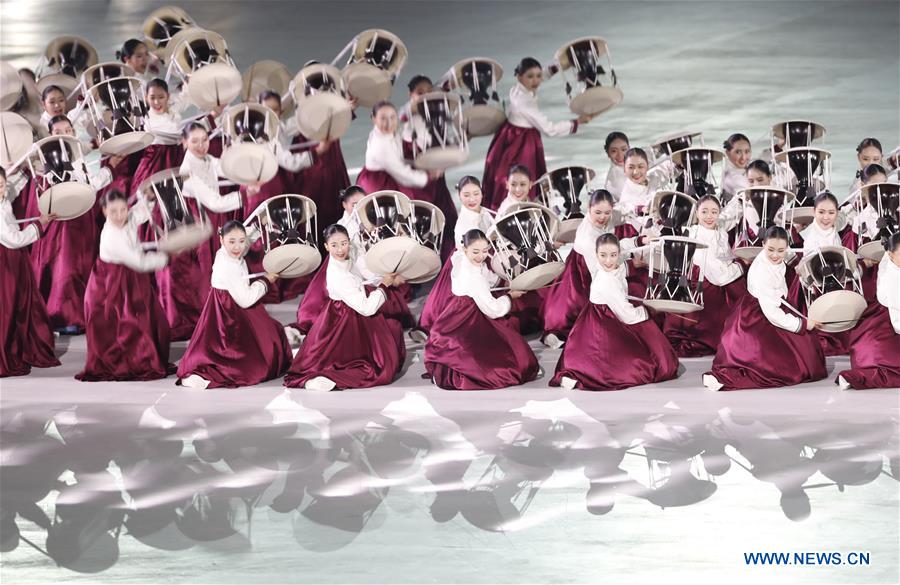
After some two years of rising tensions on the Korean Peninsula, the reprieve brought by the Winter Olympics in Pyeongchang in the Republic of Korea is more than welcome. However, complacency is not an option.
After years of accelerated missile development, which culminated in successful tests of intercontinental ballistic missiles and, as it claims, a hydrogen bomb last year, the Democratic People's Republic of Korea's nuclear program has become not only a threat to its neighbors, but also to the United States. The response of US President Donald Trump's administration-which has included unprecedented saber-rattling-has escalated tensions further.
Yet, on Jan 1, DPRK leader Kim Jong-un called for better relations with the Republic of Korea, before agreeing to participate in the Olympics. What accounts for Kim's sudden extending of an olive branch to the ROK?
Since coming to power in 2011, Kim has been committed to the byungjin policy that emphasizes the parallel goals of economic development and a robust nuclear weapons program. With one of those goals now ostensibly achieved, Kim has shifted his focus to securing new economic opportunities for the DPRK's sanctions-battered economy.
Kim now seems to have decided that his best hope for boosting the DPRK's economy, without reversing progress on its nuclear weapons program, is to weaken the international coalition enforcing the sanctions. His campaign has begun with the ROK, and an attempt to drive a wedge between that country and its US ally and potentially even to convince it to abandon the alliance altogether.
But the ROK is unlikely to be fooled so easily. Since his inauguration last May, President Moon Jae-in has realized that he needed to find a way to mitigate the existential threat of nuclear war. So he decided to treat the Winter Olympics as an opportunity not only to defuse tensions on the Korean Peninsula, but also to spur momentum for dialogue on denuclearization.
Moon himself made it clear last month that no improvement in the ROK's relationship with the DPRK will be possible without denuclearization. Indeed, his efforts to open a dialogue with the DPRK seem to be driven by cool diplomatic realism, not na?ve idealism.
As for the US, its take on these developments reflects a mixture of skepticism and expectation. Trump has expressed support for the effort, but the US remains concerned about any potential strain on their country's alliance with the ROK.
More dangerous, some US policymakers continue to entertain the possibility of giving the DPRK a "bloody nose"-a decision that could cost hundreds of thousands of lives.
To help prevent this outcome, and with Kim refusing to discuss denuclearization, Moon now must figure out how to build up the intra-Korean dialogue to enable talks between the DPRK and the US.
Ultimately though, it is Trump who needs to seize the opportunity to initiate talks. The fact is that, despite their importance, sanctions alone cannot bring about the outcome desired by the US or its allies.
Talks are needed, if only to try to find out the DPRK's true intentions. For that, the Trump administration will need to move beyond the "maximum pressure" it has promised and get started on the "engagement" that it also acknowledges will be indispensable to forging a solution.
The author is a professor emeritus of international relations, Seoul National University. Source: chinausfocus.com





