



Beidou positioned to provide global coverage









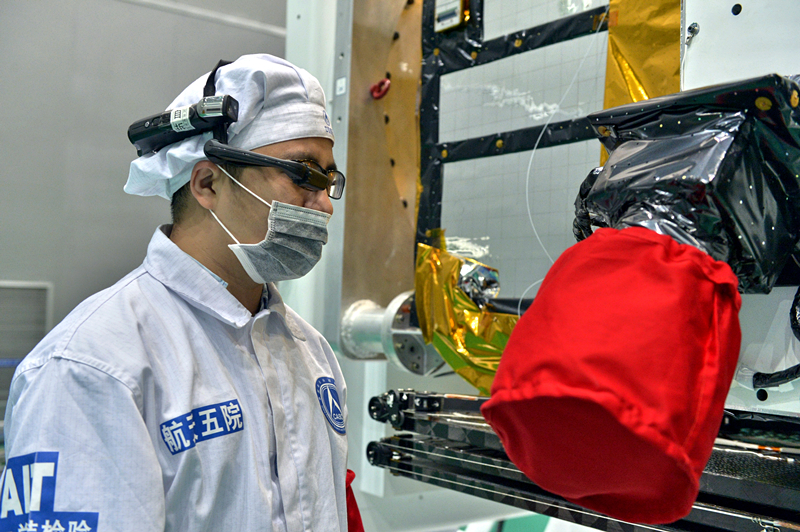
"We were under great pressure when the research and development program for Beidou's third-generation satellites began in 2009 because all the components of the new-generation model were new to us," he recalled.
"We had to develop them on our own and overcome a range of technical difficulties."
There were huge differences between the technologies used on the new model and those employed in previous generations, resulting in scientists and engineers spending a lot of time producing and verifying countless solutions, he said.
Chi added that many of the scientists also had to make time to participate in the development and production of second-generation satellites.
In the years that followed, scientists and engineers overcame a host of unprecedented technical obstacles and also designed a long-endurance, lightweight satellite platform, an intersatellite data link system and advanced self-navigation technology.
Their achievements meant the time spent on research and development for the third-generation Beidou satellites was much shorter than for previous models, Chi said.
In November, the first two third-generation Beidou satellites were launched from the Xichang center, and in January, two more took off from the same center.
Upgrades
Engineers are continuing to upgrade the Long March 3 series with new capabilities that will allow them to better serve Beidou missions, according to Jiang Jie, chief designer of the Long March 3 carrier rocket family that is used to transport the satellites into orbit.
In the early years of the Beidou project, before engineers succeeded in modifying the rockets' flight and ground-control systems, they were only able to place satellites into geostationary orbits.
Once the modifications were made, however, it became possible to add medium Earth orbits and inclined geosynchronous orbits to their launch scopes, she added.
Cen Zheng, project manager of the Long March 3 family at the China Academy of Launch Vehicle Technology, said the frequent Beidou missions that will be launched in the coming years will prompt designers and engineers to improve the rockets' reliability and safety.






- Xinjiang reports highest foreign trade growth in China
- Harbin authorities demand return of pensions paid out to deceased
- Global research project on AI guardrails launched in Beijing
- Partnering with China, embracing opportunities
- China's cyberspace regulators announce measures for protection of minors
- Beijing's 'Rocket Street' promoted at aerospace conference













