



Chinese paleontologist is museum's poster girl









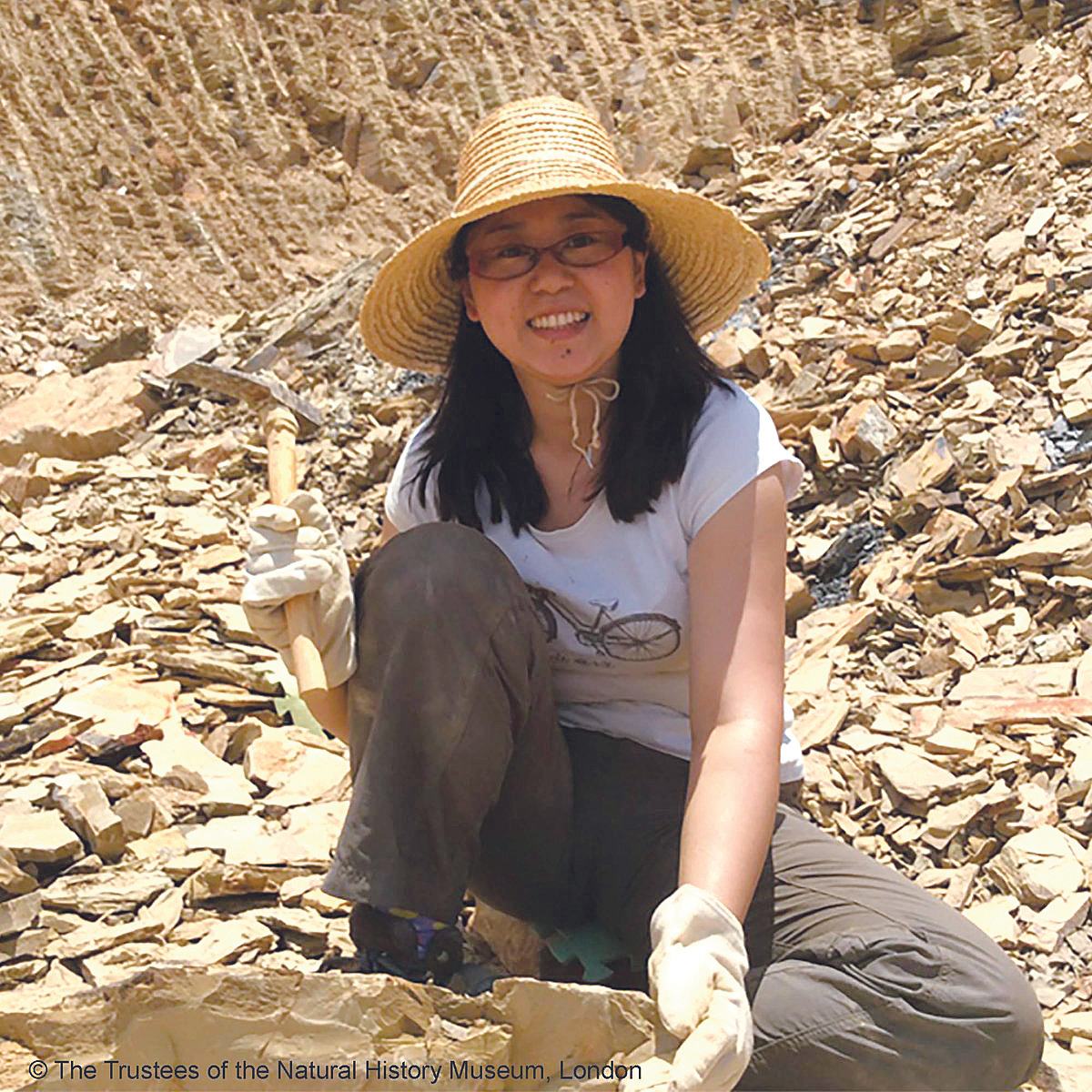
A Chinese paleontologist has been featured as one of the most inspiring women in science and research in a campaign spearheaded by the Natural History Museum in London.
Ma Xiaoya has been a research fellow at the world-famous institution in Kensington for seven years and has been highlighted by the museum as one of its many female workers in what is often seen as being a male-dominated sector.
Her research focuses on animal fossils from the Cambrian period, which was about 541-485 million years ago, when the Earth saw “a great flowering of animal life”.
“I study the early ancestors of animals in a group called Ecdysozoa,” she wrote on the museum website, “which includes nematodes, tardigrades and arthropods such as millipedes, crabs and spiders.”
The paleontologist, who holds degrees from Yunnan University, China in biology and zoology and a PhD from the University of Leicester in the UK, said her greatest achievements have been leading a new field of research called neuropaleontology.
“Most paleontologists work on hard parts of animal fossils, but colleagues and I were the first group to report fossilised neural tissue, which rarely survives through fossilisation,” Ma said.
Ma revealed that they had found nervous structures in some of the oldest fossils from the Chengjiang Biota, a World Heritage Site in China.
“I study the central nervous systems and cardiovascular systems of ancient animals, which helps us to understand how they lived and evolved,” she explained.
Ma and her colleagues have published several papers on the subject, and she believes the discipline of neuropaleontology is now growing.
“It’s been fantastic to work in this field of science because I am able to make exciting new scientific discoveries and to contribute towards solving the puzzle of early evolution of animal life on Earth,” Ma added.
The Natural History Museum said that more than 300 scientists spend their days inside collections, storeroom and laboratories, with around 160 women scientists currently working as curators and researchers across life and earth sciences disciplines, many of them spending time in the field.
According to the Women in Science and Engineering campaign, although there was an increase of 13,000 women working in core science, technology, engineering and maths occupations in 2016, the proportion of the workforce made up by women has decreased since 2015 from 22 percent to 21 percent.










