Made in China 2025 will boost manufacturing









With the fourth industrial revolution prompting adjustments and changes in the global manufacturing industry, some developed economies, including the United States, Germany, the United Kingdom, France and Japan, have already worked out strategies to boost their manufacturing sectors.
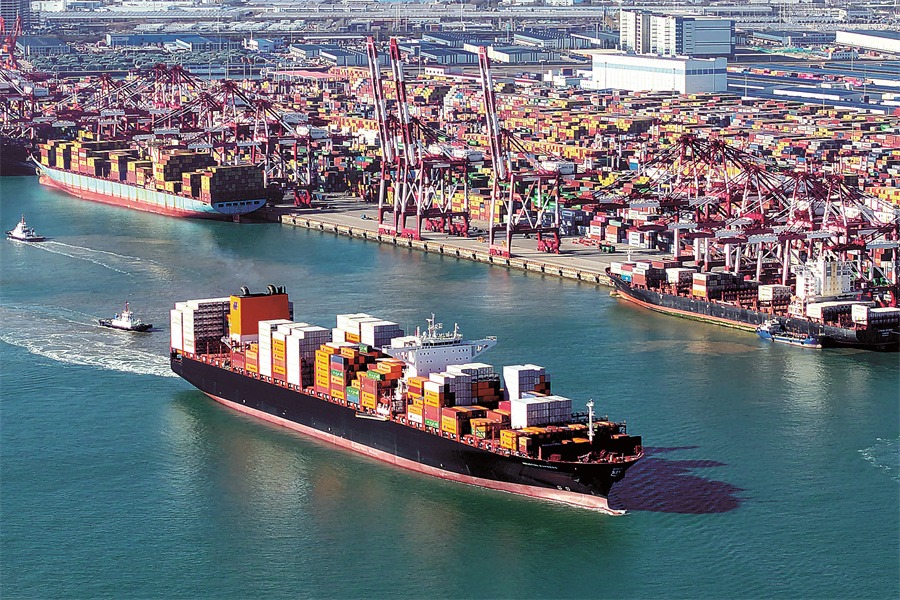
China has the world's largest manufacturing sector, both in scale and output, but the sector still lags behind those of industrialized countries in terms of profit margin, efficiency, quality, industrial structure, sustainable development and resource consumption. To develop an advanced manufacturing therefore, China needs to shift its focus from scale and speed to quality and efficiency.
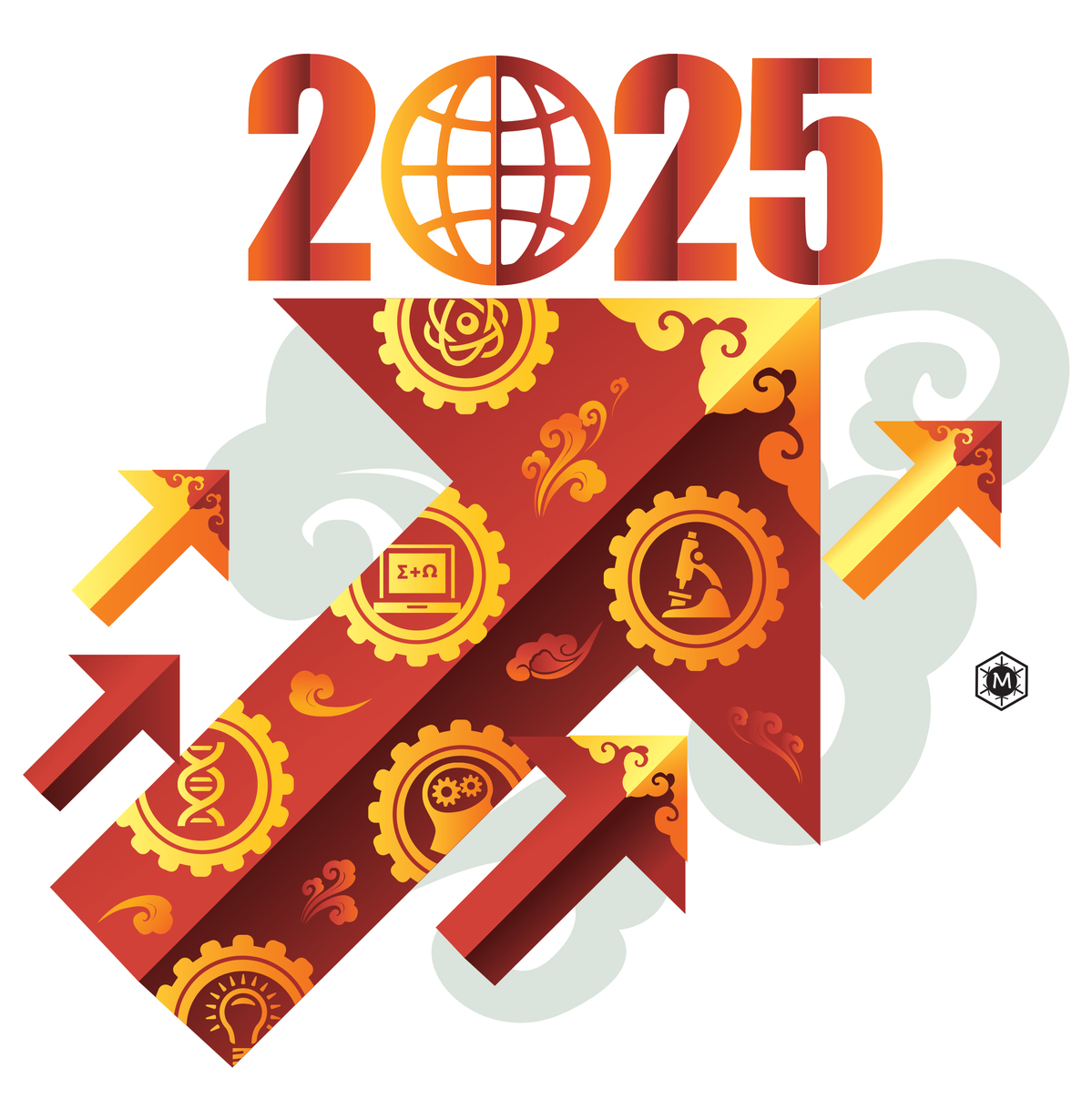
In fact, the Chinese government has devised the Made in China 2025 plan exactly to achieve that goal. Based on hundreds of Chinese experts' in-depth studies of global manufacturing development trend, industrialized economies' strategies, China's manufacturing problems and advanced technology's influence, the plan is aimed at facilitating the transformation and upgrading of China's manufacturing sector. Which will not only boost the sector's competitiveness but also develop China into a modern manufacturing powerhouse, by reducing resource consumption, improving labor productivity, enhancing innovation capability, expediting "informationalization", minimizing environmental impact and optimizing the industrial structure.
China has decided to launch a series of major projects before 2025 to facilitate the establishment of innovation centers, consolidate the industrial foundation, support high-end equipment innovation, and promote intelligent and eco-friendly manufacturing. It has also formulated programs to promote talents, and improve its information, new material, and pharmaceutical industries.
However, the realization of the goals outlined in Made in China 2025 depends on further reform and opening-up, which will boost innovation and inject fresh vigor into domestic enterprises so they can improve their productivity. Therefore, the market has to play a decisive role in resource distribution to create a good business and innovation environment. China also needs to conduct fair and win-win cooperation with other countries to sharpen the global competitiveness of its manufacturing sector.
Since it was announced three years ago, the Made in China 2025 plan has strengthened the consensus among various parties on the importance of manufacturing to the national economy, promoting intelligent and green development, and expeditiously building a powerful innovation system. A series of indexes measuring the manufacturing sector's capabilities, such as research and development input per unit of output, the ratio of researchers to the total workforce, and the sector's productivity, already show a fair level of improvement.
In their efforts to promote intelligent manufacturing, some demonstration enterprises also have, to some extent, raised production efficiency, lowered operation costs, shortened the product development cycle, and reduced energy consumption.
Still, the transformation of China's manufacturing sector from quantity expansion to quality improvement is not that smooth. Compared with such manufacturing powers as the US, Germany and Japan, China's manufacturing still has a large room for improvement in terms of quality, optimization of structure and sustainable development.
And due to a lack of comprehensive knowledge about Made in China 2015, some foreign organizations have jumped to the wrong conclusion about China's initiative. For instance, the US investigation report under Section 301 of the Trade Act of 1974 mentions Made in China 2025 several times, most of which are based on deductions that run contrary to facts. Disregarding World Trade Organization rules, the report has recommended additional 25 percent tariffs on 1,300 Chinese imports, including information and communications, and mechanical products-and the Trump administration has proposed extra tariffs on Chinese imports of $100 billion.
If such high tariffs are imposed on Chinese products, they could weaken the competitiveness of Chinese enterprises, although China's countermeasures would have a corresponding effect on US companies.
Still, Made in China 2025 will continue to play a vital role in boosting the competitiveness of China's manufacturing enterprises and, along with the manufacturing sector's capability to capitalize on the opportunities and meet the challenges of the fourth industrial revolution, it will help China to become a modern manufacturing powerhouse.
The author is a senior engineer and a special consultant for the China Machinery Industry Federation.