



Experts call for promotion of homegrown chips









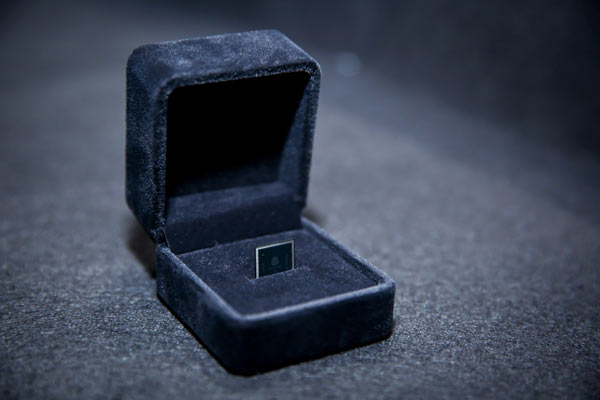
It is time for China to promote research and development in and the application of homegrown chips in various sectors either by leveraging government procurement plans or giving tax rebates to innovative local semiconductor companies, experts said.
The comments came after Chinese telecom equipment maker ZTE Corp was banned by the US government from purchasing any American technology, including chips, for seven years. The incident has triggered widespread concern that China's heavy reliance on foreign processors will threaten the foundation of its electronics industry.
Li Guojie, an academician of the Chinese Academy of Engineering, said the research and development of chips mirrors China's overall technology level.
"It will take time for China to catch up with leading foreign countries. But we are not afraid of technological difficulties. The key is that when we do come up with competitive homegrown chips, the government should do more to promote their applications. The wider use of these chips, the better they will become," Li said at a forum organized by the Young Computer Scientists & Engineers Forum, an non-profit organization in China.
Official data shows that in recent years, China has spent more than $200 billion on imported chips annually, more than the amount spent on crude oil imports. These mini-size processors lie inside mobile phones and computers as well as automobiles and other equipment in a wide range of sectors.
Hu Weiwu, who is in charge of Loongson, China's first general-purpose microprocessor with intellectual property rights, said: "We can turn the ZTE crisis into an opportunity to raise public awareness of the importance of processors and ramp up our push to promote the use of China-developed chips."
According to him, more efforts are also needed to cultivate a computer ecosystem surrounding these chips, possibly through government subsidies.
In 2014, China set up a fund worth around 138 billion yuan ($22 billion) to support promising local chip companies, as part of its broader push to reduce reliance on US chip giants such as Qualcomm Inc and Intel Corp. Tsinghua Unigroup is one of the beneficiaries of the fund. It has revealed plans to build a $30 billion memory chip factory in Nanjing, Jiangsu province, which will be completed in a few years.
Du Zide, secretary-general of the China Computer Federation, said more homegrown semiconductor products should be included in China's government procurement plans. Favorable tax rebate policies can also be given to encourage promising chip companies.











