Ancient farmers plant seeds of modern-day social behavior









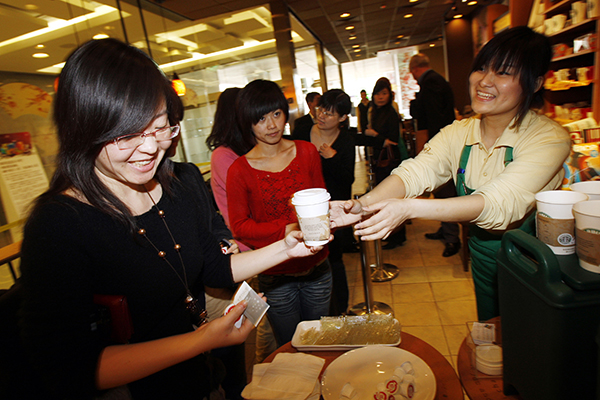
Ancestor’s farming shapes cafe goers’ behavior, says study
The behavior of Chinese customers in cafes is to some extent determined by what crops their ancestors farmed, according to new research by US and Chinese scientists.
The scientists analyzed and compared the behavior of customers in cities in southern China, where traditionally rice growing has been dominant, and in the north, where wheat farming was more commonly found.
As traditional paddy rice farmers tend to share labor and coordinate irrigation, southerners are believed to be more interdependent and cooperative than people in the wheat-growing north, who do not need so much help from neighbors to farm, and are believed to be more individualistic.
Researchers from China’s Beijing Normal University and the University of Virginia and University of Chicago Booth School of Business in the United States conducted observational studies to test whether historic cultural patterns have left a lasting impact on behavior in the modern era.
The data suggested that people who grew up in southern China showed behaviors typical of interdependent cultures, such as low importance of the self, and a strong distinction between friends and strangers.
People from northern China showed traits more common in individualistic cultures, such as a stronger importance of the self, and a smaller distinction between friends and strangers.
The scientists said most people in modern cities have never farmed, but the research was more about testing the legacy of a history of farming, rather than the effect of having farmed land itself.
The researchers counted 8,964 people sitting in cafes in six major Chinese cities, including Beijing (wheat), Shenyang (wheat), Shanghai (rice), Nanjing (rice), Guangzhou (rice), and Hong Kong (rice), and found that people in northern China were more likely to sit alone.
In the second study, in Starbucks across the country chairs were moved together so that they were partially blocking the aisle.
People in northern China were more likely to move the chair out of the way, which is consistent with findings that people in individualistic cultures are more likely to try to control the environment.
People in the rice-farming south were more likely to adjust themselves to the environment by squeezing through the chairs. Even in China’s most modern cities, rice-wheat differences live on in everyday life.
“These findings suggest that China’s agricultural legacy has given northern and southern China different cultures. And remember that the people in the study were not farmers,” Thomas Talhelm, the study’s lead author and assistant professor at the Booth School of Business told The Independent.
“This suggests that China’s agricultural legacies continue to shape people’s behavior in the modern day, even among people who have left farming behind and live in modern cities and shop at Starbucks,” he added.





- Xinjiang reports highest foreign trade growth in China
- Harbin authorities demand return of pensions paid out to deceased
- Global research project on AI guardrails launched in Beijing
- Partnering with China, embracing opportunities
- China's cyberspace regulators announce measures for protection of minors
- Beijing's 'Rocket Street' promoted at aerospace conference