



US move to militarize outer space vicious









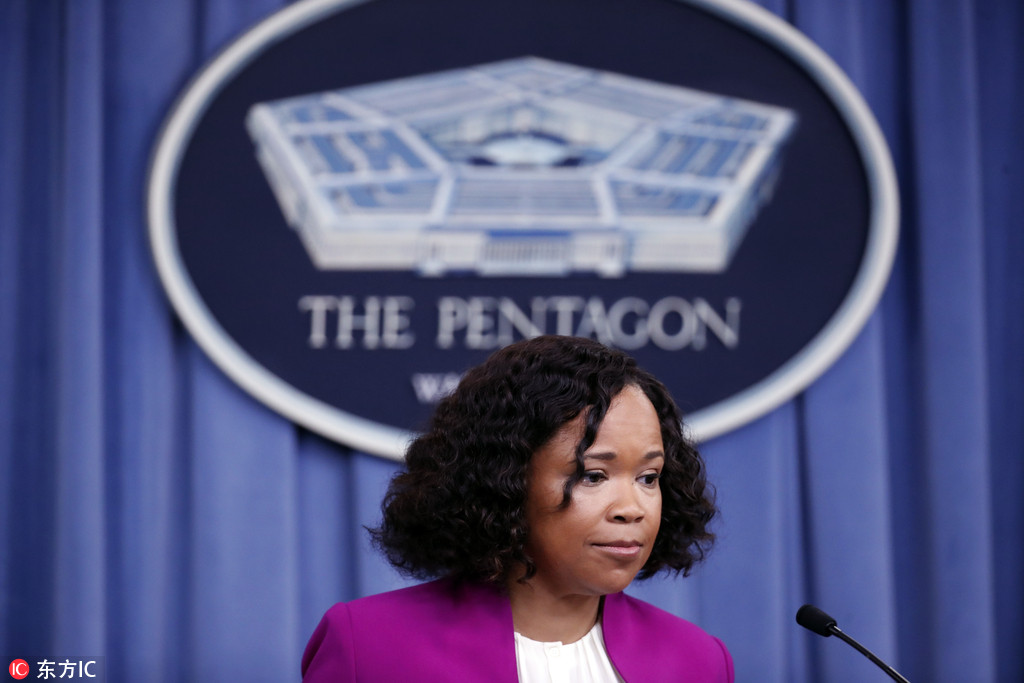
By directing the Pentagon on Monday to create a special "Space Force" as an independent branch of the US military to ensure the safety of US spacecraft and astronauts, US President Donald Trump has sparked concerns that Washington would ignite an arms race in outer space. Since outer space is the common property of humankind, China has always advocated its peaceful use and objected to its weaponization. It also opposes attempts to turn outer space into a battlefield, and hopes all countries will make joint efforts to keep outer space peaceful.
The United Nations' Outer Space Treaty, which came into force on Oct 10, 1967, stipulates that no country should take possession of outer space (including the moon and other celestial bodies) by means of sovereign claims, use or occupation, or by any other means. It also says signatory states must use outer space for peaceful purposes and should not establish military bases or facilities, or test any type of weapons or conduct military exercises in outer space or on celestial bodies.
Still, the Outer Space Treaty has certain fatal flaws. For instance, it does not prohibit any individual or organization from laying claim to a celestial body, or declaring property rights in outer space. In fact, a US company once declared that it owned the moon, while a Spanish national laid claim to the sun. And a US citizen once set up a "lunar embassy" to sell land on the moon, with some media reports even saying former US president Ronald Reagan purchased a "moon plot". These incidents may appear whimsical, but they reflect the problems with the Outer Space Treaty.
The treaty is binding only on UN member states which have ratified it, not on their citizens or stateless persons, who can, technically speaking, claim property rights over outer space even though they cannot travel into outer space or land on the moon or other celestial bodies.
Besides, despite the treaty prohibiting all signatory states from placing any nuclear or other weapons of mass destruction into the Earth's orbit or on a celestial body-which means a ban on "space war"-the UN does not have a space inspection agency that can monitor whether a country has placed or is in the process of placing a nuclear or any other weapon in outer space or on a celestial body.
The US has more satellites in outer space than any other country, which can carry weapons of mass destruction into outer space. And since the UN cannot inspect US satellites, people don't know whether or not they are carrying weapons of mass destruction.
The US plans to create a space force probably to monitor and manage the weapons of mass destruction it might have placed in outer space. Therefore, if the UN cannot extensively inspect US satellites, the Outer Space Treaty which prohibits states from placing weapons of mass destruction in outer space, will become just a piece of document.
Some US military research agencies are already working to develop "Rod of God", an inert projectile in outer space which hypothetically can strike any site on Earth causing extensive damage from the kinetic energy generated by the projectile impacting at very high velocities. The US is focusing on such research because it wants to use ambiguous wording to develop weapons that can be fired from outer space without appearing to violate the Outer Space Treaty.
These are enough reasons for the UN General Assembly to revise the Outer Space Treaty to plug the loopholes in the treaty and prevent military activities in outer space and to ensure no organizations or individuals lay claim to outer space or celestial bodies.
In stark contrast to the US, China, which has decided to build its own space station, has vowed to abide by the Outer Space Treaty and allow other countries to use it for scientific research. That China is taking measures to make the space station building process transparent and ensure outer space remains the common property of humankind should prompt the US to rethink its move to turn outer space into a battlefield.
The author is a professor of law at Zhongnan University of Economics and Law.





