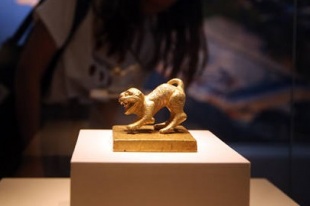



Out of the depths









According to Gao, the conditions for such a large-scale excavation in Minjiang improved in 2017, not just because new technology was available but also because of the falling water levels.
He says climate change has caused a drop in rainfall in the area, which has affected the water levels in several of the Sichuan cities it passes through, including the provincial capital, Chengdu. And since the river has become a major source of water and sand for the region's increasing urban population and construction industry, this has also had an impact on the water levels-providing archaeologists with easier access to the treasures that lie below.
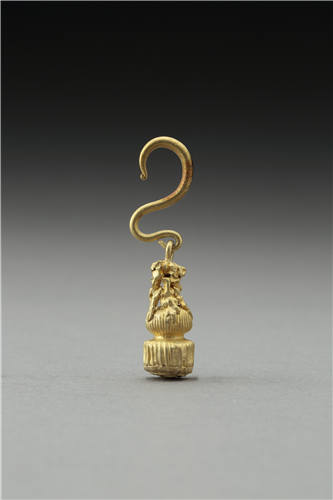
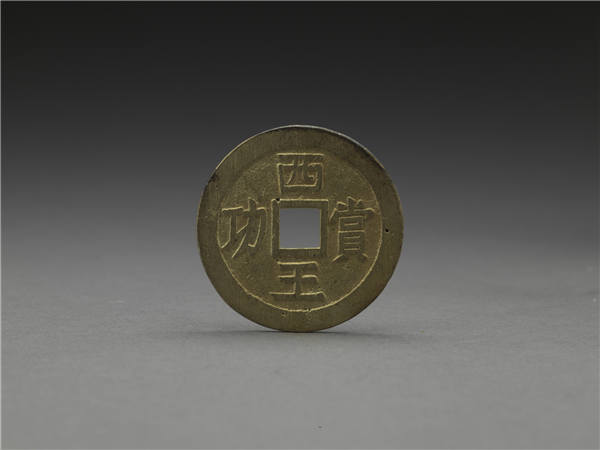
Besides the ingots and coins that reflect the economic situation of the late Ming era, the exhibition also has dozens of elegantly crafted gold and silver ornaments and jewelry on show.
Gao says these objects offer the audience a glimpse into the simple, refined lifestyle of the Ming Dynasty's upper classes. "They may look less sophisticated than the Qingperiod objects. But people will find in them an enduring, classic charm."
Gao adds that there may be more of Zhang's sunken treasure under the stones and sand at the bottom of the Minjiang.
Zhang, who hailed from Shaanxi province, assembled a powerful peasant army. His troops raided many developing towns and cities in provinces including Hunan and Hubei before reaching Sichuan. They robbed dignitaries along the way-including the wealthy governing princes in these prosperous places-enabling Zhang to amass an "immeasurable" fortune, according to Zhou Yuanlian, a senior expert in Qing history.
When Zhang felt his grip over Sichuan slipping in 1646, he loaded up dozens of boats with his collection of valuables and withdrew from Chengdu. His fleet sailed across Jiangkou when they were caught in an ambush set by Yang Zhan, a general who was still loyal to the overthrown Ming court. The treasure boats he ordered to be scuttled now lie deep underwater in a fast-flowing section of the river.
"All together Zhang made five attempts at conquering Sichuan," Gao says.
"He succeeded in the last attempt to declare himself a king. Also it was at that point his failure was inevitable."
If you go
9 am-5 pm, closed on Mondays, through Sept 26. 16 East Chang'an Avenue, Dongcheng district, Beijing. 010-6511-6400.