Regulator plans 'blacklist' to prevent corporate tax offenses









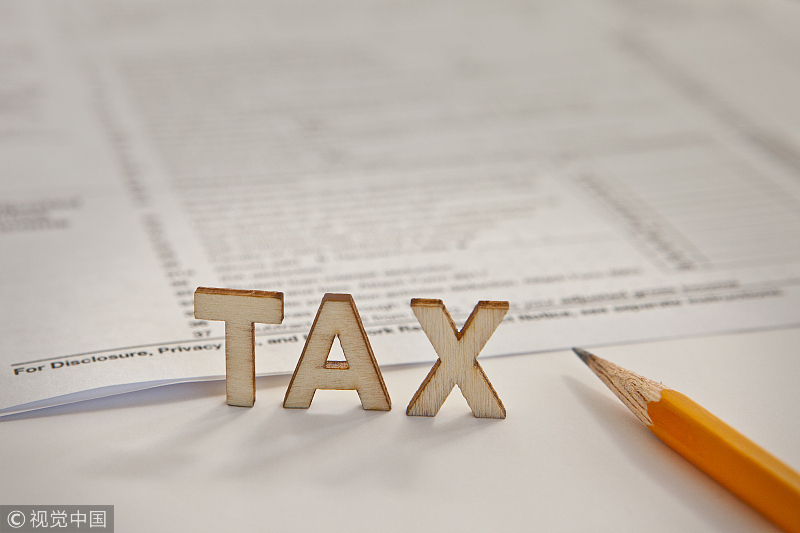
Evading corporate taxes could soon have serious repercussions in China, as authorities are contemplating a blacklist, reliant on the social credit system, that would among other things prevent offenders from purchasing train or flight tickets for a year.
Allaying fears that the measure would seek to impose stringent punishment for economic offenders, the State Administration of Taxation said it would be restricted to tax-related activities.
The system would be like the financial credit tracking system, with violators classified to a D level, suggesting a "not-so satisfactory" credit performance. Subsequently it will share the information with 20 other authorities and the offenders could face as much as 18 penalty measures.
The blacklist was set up after the National Development and Reform Commission, the economic regulator, promoted a credit blacklisting mechanism that restricted access to financial support from the government for over 6,000 enterprises due to their bad credit performance.
"The taxation blacklist has proved to be effective, and will be a trendsetter for credit evaluation in other fields," said Tang Jiqiang, a professor at the Southwestern University of Finance and Economics in Chengdu.
Since 2014, the regulator has announced 14 blacklists of tax violators. The blacklists reveal detailed information of those who have violated regulations, such as tax evasion.
The blacklist mechanism in taxation underwent an upgrade in 2016. The amended version has set 1 million yuan ($146,649) as the criterion for tax evaders to be listed on the blacklist. It also offers opportunities for tax offenders to clear their records after they pay off their taxes and fines.
Companies in the blacklist are already making amends to clear their outstandings, with 998 firms clearing their dues by the end of 2017. There were a total of 7,294 blacklisted companies at the end of last year.
"Opportunities to remove their names from the blacklist have prompted more companies to pay off the dues and follow the regulations," said Zhang Zhanbin, a professor at the Chinese Academy of Governance.
The mechanism upgrade in 2016 also expanded the number of administrations which are responsible for financial punishment from 18 to 28. In addition, the upgrade included 10 new financial restrictions, such as banning tax violators from entering certain markets and preventing them from exchanging public resources.
Meanwhile, local governments are adopting big data analysis and data sharing platforms to better implement the blacklist mechanism of taxation.
For example, Guizhou Provincial Tax Service, has developed a cloud computing platform to record companies' credit performances. The records, especially those related with taxation blacklists, can be used as reference for other administrations and businesses.
"The taxation blacklist is an important step for the country to develop a mature credit evaluation system," said Xu Zhengzhong, a professor at the Chinese Academy of Governance.