



Irrigation project to help wealth flow to farmers









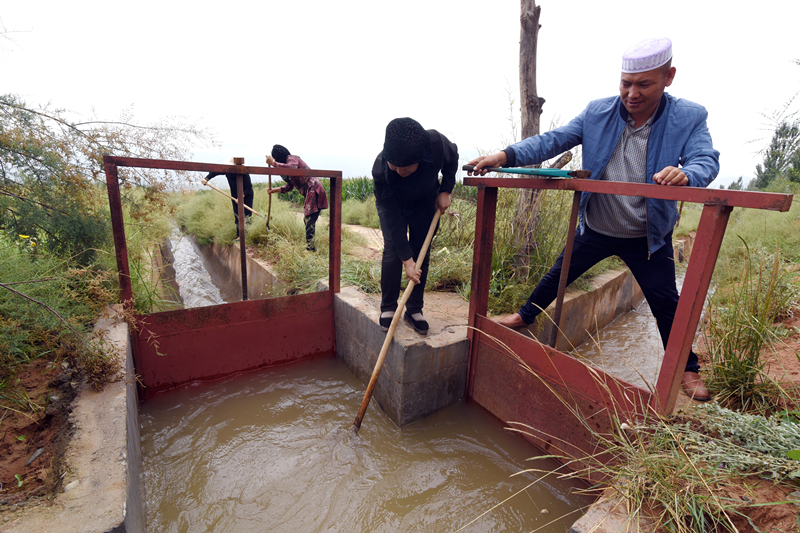
The technique means the water supply is quickly exhausted, so outlying fields, which are the last to receive the water, are rarely irrigated adequately. As a result, villagers downstream often quarrel with those upstream and fights are common.
"Those who receive the water first are the ones that benefit most," said Ji, adding that with adequate water, farmers can easily harvest an extra 100 kilograms of wheat per 667 sq m.
Li Ou, an irrigation specialist with the project, put it more bluntly. "In arid areas such as this, there is no agriculture without irrigation," he said.
Electric blues
Situated in the northeast of the Tibetan plateau, Qinghai is the source of the Yellow, Yangtze and Lancang rivers.
The landscape's features - high mountains, valleys and basins - resulted in many reservoirs and hydroelectric power stations being built to raise water storage capacity and generate electricity.
However, a 2006 report by the Party School of the Central Committee of the Communist Party of China showed that rather than alleviating poverty the dams had entrenched low standards of living in the Yellow River Valley.
The dams flooded a vast amount of farmland, and local farmers faced an extra challenge because they were required to pay 120 to 150 yuan every year for the electricity used to irrigate every 667 sq m of farmland they cultivated.
Local agriculture has been far too dependent on electricity, according to Ma Xin, production manager of the Yellow River Vegetable Basket, a vegetable producer in Haidong city, Qinghai, which operates more than 800 greenhouses in the region.
More water, less poverty
A year after the successful application for construction of the water management project in 2006, the central government formally added the initiative to a list of projects funded by low-interest loans provided by the Asian Development Bank.
The bank, which provided $60 million for the building of four main canals that start at the Lijia and Gongbo gorges and run for 105.5 kilometers in total, finished its evaluation procedures within three years. Construction work started in 2011.
"Both the government and the bank accelerated their normal work rates," said Qiu Jihui, an official at the water resources office who oversees foreign-funded projects.





