The robofashion makeover









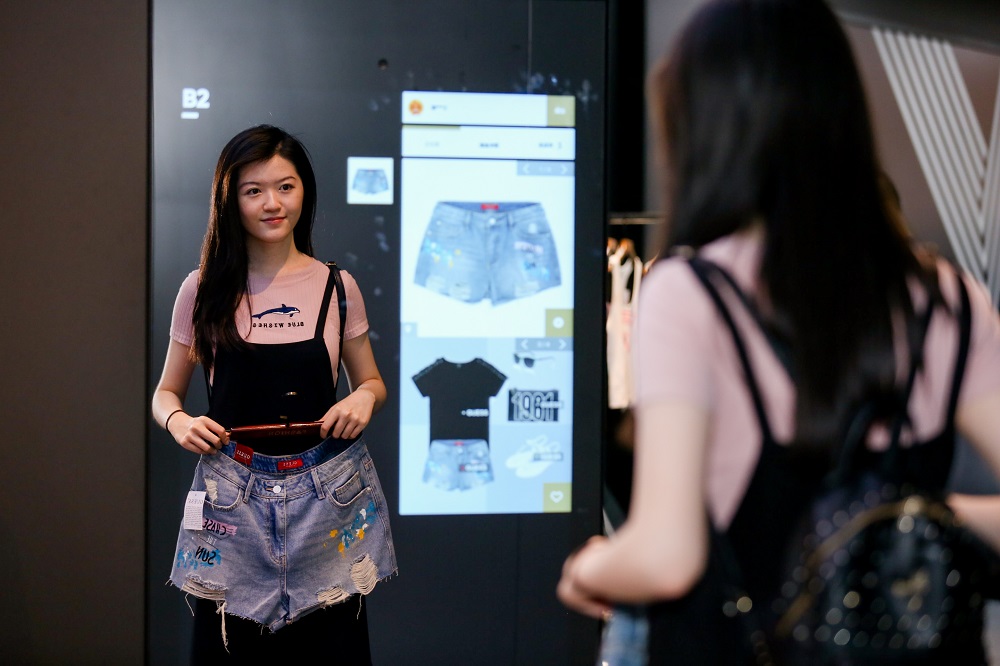
While human inspiration will always be the primary source of new designs, machines are learning to spot current trends and predict new ones. Sylvia Chang reports from Hong Kong.
When Thailand's King Bhumibol Adulyadej died in October 2016, a low-to mid-end Hong Kong fashion brand sold out of black shirts and white ones - the colors of respect worn during the official mourning period - almost overnight.
That prompted designers and merchandisers to begin wondering whether such color-focused shopping sprees could be predicted.
Traditionally, industry experts predict fashion trends based on their own experiences and sense of style. These days, however, social media's impact on consumers' behavior comes into play, and a fashion industry revolution is underway, with help from artificial intelligence technologies.
"We intend to provide a real-time estimation of fashion color trends by using big data from social media," said Gloria Yao, director of project development at the Hong Kong Research Institute of Textiles and Apparel, who is working with a team that is developing an AI-based color-prediction model.
Yao said sales prediction is very important for fashion businesses as it makes for effective inventory management, which increases profits by reducing markdowns due to overstocking.
Social media impact
According to a 2016 report by advertising agency PMX, which is based in the United States, social media posts drive 6.3 percent of website traffic to luxury brands, with Facebook the platform that drives the most sales.
That prompted Yao and her team to focus on hundreds of influential fashion industry accounts on Facebook, including over 500 fashion brands, 100 fashion magazines, 150 designers and 500 social media celebrities. To qualify as influential, Yao said, a brand should have at least 100,000 followers, a magazine 10,000 followers, and a designer or celebrity 1,000 followers. In addition, the accounts should be updated frequently and be able to spark community conversations.
"The aim is to capture the ongoing social and cultural events from social media posts and validate their impact on consumers' color preferences," Yao said.
An AI technology known as natural language processing interprets the text and images in Facebook posts and helps to identify "authentic fashion posts" related to color.
"If a celebrity says, 'I'm walking on a red carpet at a film festival,' the 'red' here has nothing to do with fashion," Yao explained. "But if she says, 'I like my red-colored dress today,' then this 'red' is the target of our data collection."
The institute works with a well-known Hong Kong fashion brand that provides its data on sales, inventories, prices, shop locations and marketing information.
Yao's team found a correlation when comparing data from Facebook posts with that from the brand, with a color trend starting on Facebook ahead of an uptick in sales.
"If we can determine the time gap between the two trends and their relationship, we will have more accurate color predictions," Yao said. Historical data reveal an average accuracy of about 70 percent, but this may improve as data are updated more often.
The project will finish in April, when a production license will be introduced and commercialized for application in the industry.
At present, Yao said, the color-prediction model fits different brands, "but with some adjustments". The reason is that different brands may target consumers with varying color preferences.