综合一区欧美国产,99国产麻豆免费精品,九九精品黄色录像,亚洲激情青青草,久久亚洲熟妇熟,中文字幕av在线播放,国产一区二区卡,九九久久国产精品,久久精品视频免费

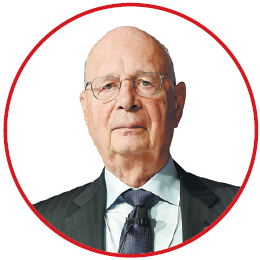
Klaus Schwab
Founder, executive chairman of the World Economic Forum
BORN:

Mar 30, 1938 in Ravensburg, Germany

EDUCATION: 1966: Doctorate in engineering, Swiss Federal Institute of Technology

1967: Doctorate in economics, University of Fribourg

1967: Master's in public administration, Harvard University

CAREER:

1963-66: Assistant to director-general, German Machinebuilding Association, Frankfurt

1967-70: Member of the management board, Sulzer Escher Wyss AG, Zurich

1971: Founder and executive chairman, World Economic Forum

1998: Co-founder, Schwab Foundation for Social Entrepreneurship

2004: Founder, Forum of Young Global Leaders

2011: Founder, Global Shapers Community

HONORS:

2018: China Reform Friendship Medal

Associating the 'Davos Spirit' with China's rising economy

World Economic Forum founder Klaus Schwab, a winner of the China Reform Friendship Medal, made tremendous efforts to work with the country after the launch of opening-up

The future is here

During the past four decades, the World Economic Forum's scope and focus have expanded.

However, in Schwab's view, what has never changed is "its dedication to collaboration among stakeholders, the steadfast adherence to high-level participation of leaders sharing the forum's commitment to improving the state of the world, and the forum's trust in the power of dialogue and exchange based on mutual respect and civility to bridge divides and shape actionable solutions to global challenges".

In September, at the opening ceremony of the annual meeting of the forum's New Champions event in Tianjin, Premier Li Keqiang vowed that the Chinese economy will open further and will help with the advance of economic globalization.

"This year marks the 40th anniversary of reform and opening-up," he said. "Compared with where we came from, the breadth and depth of opening-up has gone far beyond our expectations, and those of our foreign friends. Since we have benefited from opening-up, we will only open wider to the world."

Since becoming international, the World Economic Forum took the initiative to serve a broad scale of stakeholders, and act as their trustee charged with achieving long-term sustained growth. It has consolidated its support to an integrated global economy, open markets and multilateralism, which is in line with reform and opening-up.

During this year's Summer Davos in Tianjin, Schwab expressed his concerns in a speech at Nankai University about the global community's current perceptions. He observed that fewer people see globalization as a means for advancing global collective interests, as the scale of the integrated global economy now contrasts sharply with the fissures in global society.

"Governments increasingly protect and prioritize the interests of their societies over maintaining a free market global order, which is perceived by large parts of the population as more of a threat than an enabler of their livelihoods," Schwab said. "Governments should never forget that open markets and multilateralism are a major driver for creating wealth and welfare."

China will play a leading role in shaping a new framework for global cooperation to maintain open markets and facilitate globalization, he added. The country can take more responsibility in improving the international integration of governments, business and civil society, given that antiglobalization forces and sentiments are rising and disrupting the world's development.

The country could also lead the global transformation toward new development models, characterized by technological innovation and more based on intangible and digital assets.


|<< Previous 1 2 3 4 Next   >>|
Klaus Schwab
Founder, executive chairman of the World Economic Forum
BORN:

Mar 30, 1938 in Ravensburg, Germany

EDUCATION: 1966: Doctorate in engineering, Swiss Federal Institute of Technology

1967: Doctorate in economics, University of Fribourg

1967: Master's in public administration, Harvard University

CAREER:

1963-66: Assistant to director-general, German Machinebuilding Association, Frankfurt

1967-70: Member of the management board, Sulzer Escher Wyss AG, Zurich

1971: Founder and executive chairman, World Economic Forum

1998: Co-founder, Schwab Foundation for Social Entrepreneurship

2004: Founder, Forum of Young Global Leaders

2011: Founder, Global Shapers Community

HONORS:

2018: China Reform Friendship Medal

Associating the 'Davos Spirit' with China's rising economy

World Economic Forum founder Klaus Schwab, a winner of the China Reform Friendship Medal, made tremendous efforts to work with the country after the launch of opening-up

The future is here

During the past four decades, the World Economic Forum's scope and focus have expanded.

However, in Schwab's view, what has never changed is "its dedication to collaboration among stakeholders, the steadfast adherence to high-level participation of leaders sharing the forum's commitment to improving the state of the world, and the forum's trust in the power of dialogue and exchange based on mutual respect and civility to bridge divides and shape actionable solutions to global challenges".

In September, at the opening ceremony of the annual meeting of the forum's New Champions event in Tianjin, Premier Li Keqiang vowed that the Chinese economy will open further and will help with the advance of economic globalization.

"This year marks the 40th anniversary of reform and opening-up," he said. "Compared with where we came from, the breadth and depth of opening-up has gone far beyond our expectations, and those of our foreign friends. Since we have benefited from opening-up, we will only open wider to the world."

Since becoming international, the World Economic Forum took the initiative to serve a broad scale of stakeholders, and act as their trustee charged with achieving long-term sustained growth. It has consolidated its support to an integrated global economy, open markets and multilateralism, which is in line with reform and opening-up.

During this year's Summer Davos in Tianjin, Schwab expressed his concerns in a speech at Nankai University about the global community's current perceptions. He observed that fewer people see globalization as a means for advancing global collective interests, as the scale of the integrated global economy now contrasts sharply with the fissures in global society.

"Governments increasingly protect and prioritize the interests of their societies over maintaining a free market global order, which is perceived by large parts of the population as more of a threat than an enabler of their livelihoods," Schwab said. "Governments should never forget that open markets and multilateralism are a major driver for creating wealth and welfare."

China will play a leading role in shaping a new framework for global cooperation to maintain open markets and facilitate globalization, he added. The country can take more responsibility in improving the international integration of governments, business and civil society, given that antiglobalization forces and sentiments are rising and disrupting the world's development.

The country could also lead the global transformation toward new development models, characterized by technological innovation and more based on intangible and digital assets.

洪泽县| 盘锦市| 浙江省| 怀来县| 阳原县| 信宜市| 沐川县| 理塘县| 抚顺市| 邵阳县| 伊川县| 吴桥县| 宁国市| 新乐市| 张家界市| 黔东| 德昌县| 武强县| 哈密市| 古田县| 浪卡子县| 盐源县| 汉中市| 嘉鱼县| 恩平市| 原平市| 新安县| 都兰县| 汕尾市| 拉孜县| 沾益县| 通辽市| 惠州市| 怀宁县| 巩义市| 民勤县| 大化| 仁怀市| 华池县| 鹤庆县| 青州市|