



Industrial heritage sites need law for protection from urbanization









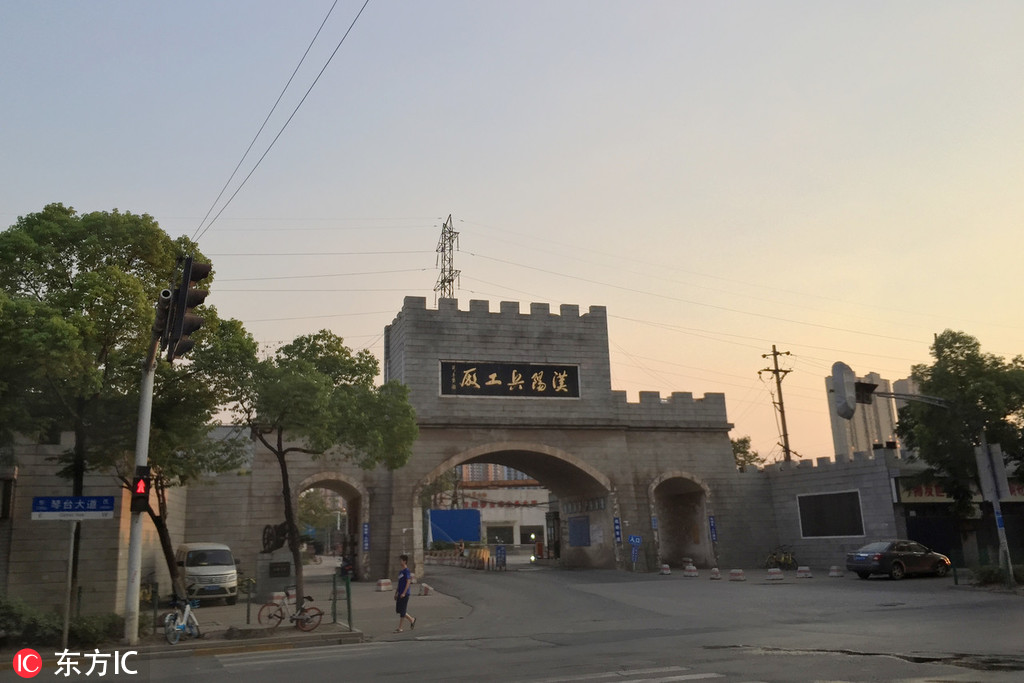
The country must formulate a law to protect industrial heritage sites during the ongoing wave of rapid urbanization, said Wei Xuefeng, a deputy to the annual session of the National People's Congress.
Wei, deputy curator of Sichuan Museum in Chengdu, Sichuan province, said that departments in charge of cultural relics have ignored industrial heritage sites when talking about the protection of relics.
Industrial heritage refers to the physical remains of technology and industry, such as manufacturing sites, and it bears the memory of an era, said Wei, citing Hanyang Arsenal, one of the largest and oldest modern arsenals in China.
It was established by the Qing Dynasty (1644-1911) in Wuhan, Hubei province, in 1891. During the Wuchang Uprising in the Revolution of 1911, which toppled the Qing, the country's last feudal dynasty, revolutionaries largely equipped themselves with weapons stored in the arsenal - some 7,000 rifles, 5 million rounds, 150 pack guns and 2,000 shells.
The arsenal, in support of the revolution, switched into full gear and began producing weapons and ammunition day and night.
During the War of Resistance Against Japanese Aggression, most Chinese soldiers, whether they belonged to the Kuomintang, the Communist Party of China or guerrilla forces, used rifles produced in the arsenal. Two years after the war ended in 1945, the arsenal was shut down.
Although it no longer operates, it is an industrial heritage site, Wei said.
Many industrial heritage sites have given way to urbanization since the 1990s.
"If the land is not used for development, the local government has to spend money maintaining the site," Wei said. "That is why many sites have disappeared."
Wei's concern for the protection of industrial heritage was reinforced several years ago when Sichuan Daily in Chengdu planned a museum about the newspaper's history but found its movable type press had been discarded.
Movable type - which had separate letters that could be arranged into words - had been used in the country for more than 1,000 years before the introduction of laser phototypesetting, Wei said.
The world's first movable type printing press for paper books was made of porcelain materials and was invented in China during the Northern Song Dynasty (960-1127) by Bi Sheng (990-1051).
Wei suggested industrial heritage sites be turned into museums or cultural and creative centers so that visitors can get a glimpse of the country's luminous past.


- Fujian targets high-quality growth through industry
- Zhao Huijie: Small village, big dreams
- Han Fengxiang: Cultivating hope, prosperity in rural communities
- Ma Bing: Nurturing more master craftsmen for building a manufacturing powerhouse
- Chinese leaders attend deliberations at annual legislative session
- Song Zhaopu: Making TCM culture take root, thrive





