


Instruments of change









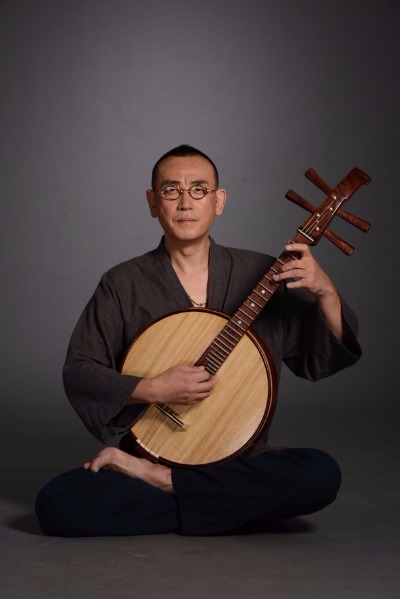
"I want to create a space, where music is as it was in the past and the listeners can relax, feel and imagine."
Feng says nowadays, Chinese music borrows a lot from Western music, such as styles, melodies and structures.
He will improvise during the tour in a way that "there is no way to predict what's coming next".
Su Dan, deputy dean of the Academy of Arts and Design at Tsinghua University who met Feng on a plane in 2013, says Feng's music has changed his impression of traditional Chinese music.
"I studied architecture and I am interested in space and sounds. When Feng plays his instruments, he creates a unique space, which serves well for his music and his audience."
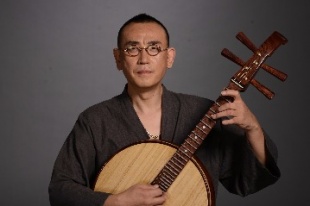
Feng, who was born in Harbin, Northeast China's Heilongjiang province, started to learn the yueqin, a traditional Chinese stringed instrument that belongs to the same family as the ruan, at the age of 4 along with his father, Feng Shaoxian, an accomplished yueqin player, whom he considers a major influence in his life and work.
At age 15, Feng Mantian came to Beijing and joined the China National Traditional Orchestra and started playing the ruan. He also plays other traditional instruments such as the sanxian and huqin. But he initially didn't like the ruan as it was an accompanying instrument in the orchestra and Feng felt his talent was constrained by playing it.
In 1985, along with musicians Liu Yijun and Zang Tianshuo, Feng Mantian formed the rock band White Angel. The band's album Rock in the Past was released in 1989, the same year Cui Jian, the godfather of Chinese rock 'n' roll, became an iconic figure among music fans in the country.
As Feng recalls, his rock music was "unacceptable to his father and colleagues in the orchestra", but he was happy. His time in rock music inspired his research on traditional music and the ruan. He also himself made musical instruments similar to the ruan to explore other sounds.
At the end of each performance now, he bows to the audience and lifts the ruan above his head as a ritual. "It's the player who should bow his head, not the instrument."
Feng had his first television exposure by performing on the popular China Central Television show, Amazing Chinese. He sang Cui's song, Girl in the Flower Room, and played his ruan, which soon got him attention. His goal was achieved, he says, as viewers had heard the instrument.
"After that they were curious to know its history and hear more music on it," Feng says.