Why rural China is worth exploring









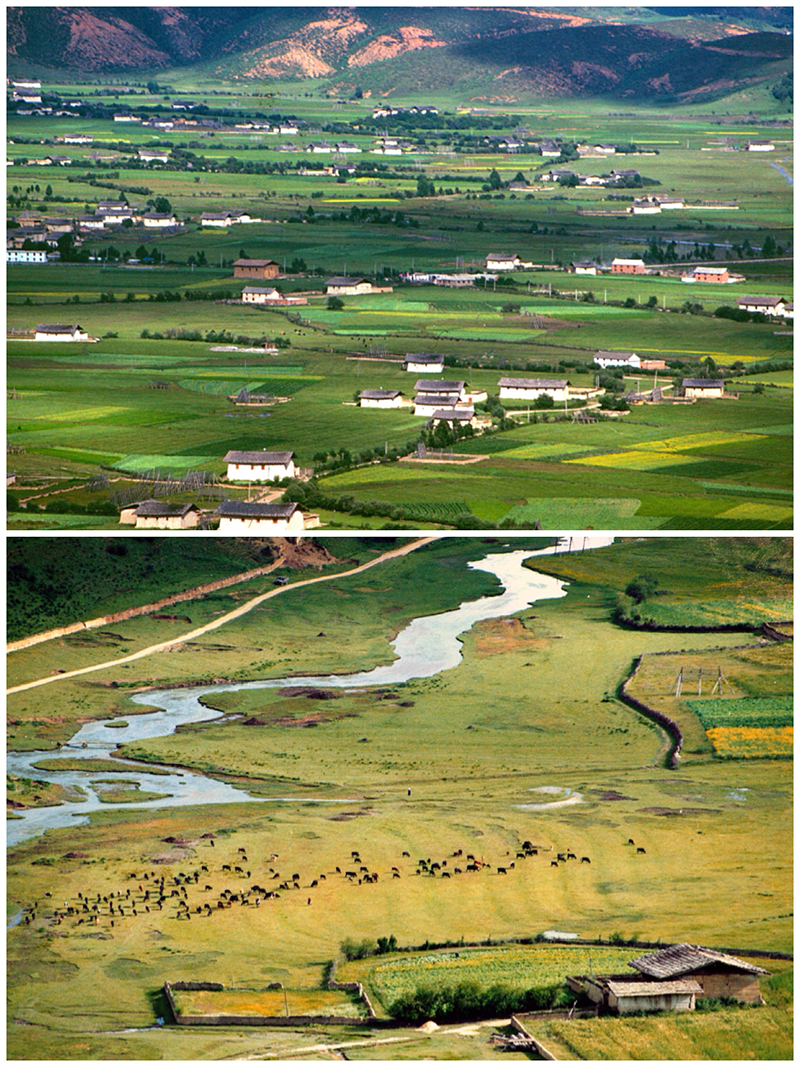
Since 1987, my journeys have taken me through and across many of China’s landscapes. Such is the sheer size of China that what represents rural life in Inner Mongolia autonomous region is so totally different to, say, Hainan Island. So cold are the northern winters that any form of arable farming remains highly seasonal, with long periods of inactivity. In contrast, some southern regions are under cultivation all year round.
Climate similarly affects building styles and strengths of domestic dwellings. In the far north of Heilongjiang, keeping warm, when outside temperatures may linger around -20 C below for several months, is a priority, Yet as I walked through parts of parts of Xishuangbanna in Yunnan, the priority was protection from heavy summer rains or intense sunlight.
Water of course is a significant influence. While eastern coastal and southern areas have abundant or at times too much water, we do not need to go far west of even Beijing to see how dry the land becomes. Flying from Shanghai towards Xinjiang can be revealing. The maze, the patterns of lights produced by many clusters of cities, towns and villages around the Yangtze River Delta, start to thin out beyond Anhui, partly due to the plains giving way to mountain ranges. Far fewer large cities exist between Xi’an and Lanzhou before the long flight above the Hexi Corridor along which the Silk Road once followed. Below there is virtual darkness broken occasionally by faint glimmers of light.
Gansu’s Dunhuang is a perfect example. I recall a daylight flight from Xining, capital of Qinghaim up to Lhasa in Tibet. While a few small settlements gathered around Qinghai Lake after Golmud, it was increasingly devoid of urbanization – a fantastic journey but also one emphasizing the country’s demographic imbalance.
Looking at maps it was obvious that the vast majority of China’s population concentrates to the eastern and southern fringes with only a few interior clusters such as Chongqing rising above the Yangtze. This imbalance of course reflects with infrastructure availability. While in the east there are many rail lines to chose from, heading overland in 1997 from Lanzhou to Urumchi there appeared only one.