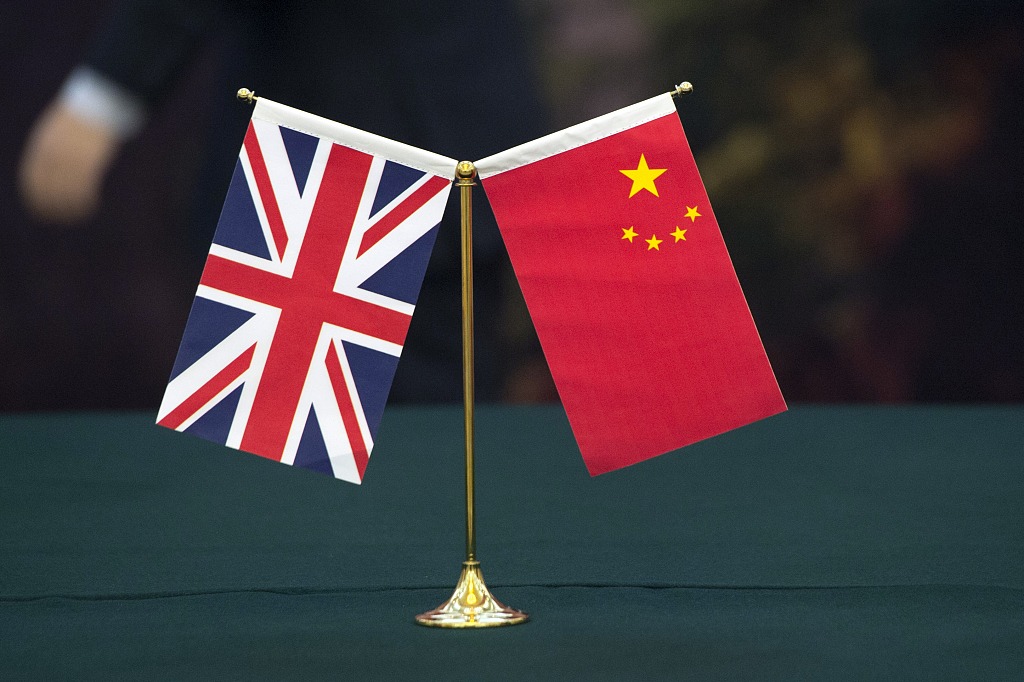
The US-China trade war is only beginning









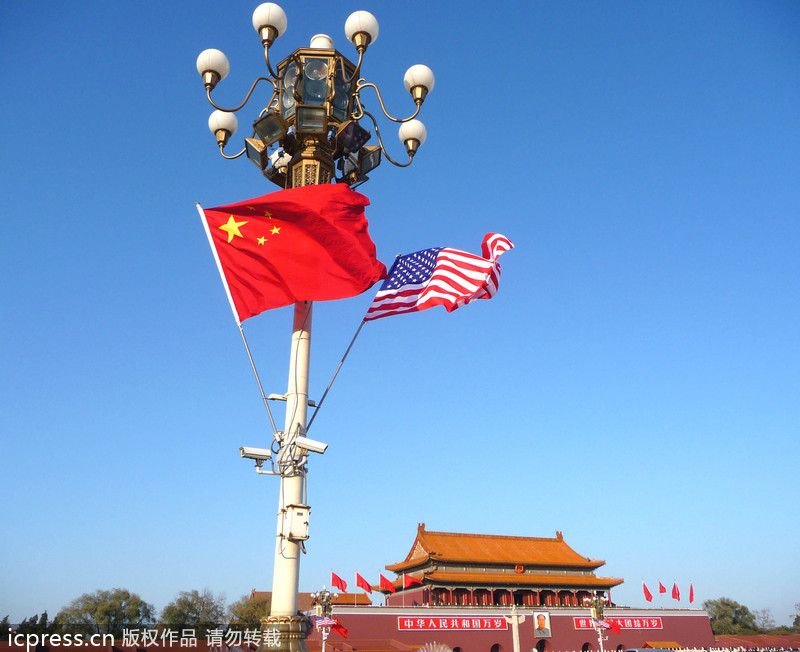
The China problem isn't going away
The trade war is just the beginning
On May 24, The Atlantic published on its website an article entitled "The US-China trade war is only beginning" by Richard Fontaine, Chief executive officer of the Center for a New American Security. The highlights are as follows:
America's relationship with China has taken a turn toward the confrontational. Tariffs are rising, rhetoric is heating up, and both sides are digging in. For all the efforts at a resolution, this current phase will likely be remembered as merely the opening skirmish in a long-term competition. The China contest now represents a key organizing principle of American foreign policy. Even a successful trade agreement would represent only the end of the beginning in a new era.
If Donald Trump and Xi Jinping strike a deal—perhaps at their planned meeting during next month's G20 summit—it will be partial at best. Perhaps Beijing will commit to buy more American farm products, natural gas and autos. Such a deal would resolve just a fraction of the economic disagreements dividing Washington and Beijing, and arguably not the most important ones. Larger issues are intrinsic to the fundamental Chinese economic model. They are largely intractable and not amenable to resolution.
An indication that this conflict is here to stay is the striking bipartisan support for President Trump's approach. Unlike every other aspect of the president's foreign policy—toward Iran, for instance, or North Korea, Saudi Arabia, or Russia—Washington's Democrats and Republicans largely agree that the time for a reckoning with China has come. Democratic leaders on Capitol Hill tend either to signal agreement with the president, suggest that he's not tough enough with Beijing, or remain silent. Some quibble with Trump's objectives (such as his fixation on reducing the trade deficit), but virtually everyone in power seems to believe that America's tone should be sharp and tolerant of risk.
That may change, as Trump has begun using the issue to batter 2020 candidates like Joe Biden, holding himself out as uniquely tough and clear-eyed about the challenge. But for now, most of the Democratic presidential candidates have remained quiet, taking care not to out-hawk Trump or label him overly aggressive.
Beyond the beltway, Americans seem willing to absorb the cost of "winning" the trade war. A large proportion of the same farmers who can no longer sell soybeans to China express support for Trump's policy on national interest grounds. Unlike in the past, many corporate leaders privately urge an even tougher approach. With shrinking constituencies on both sides urging comity over confrontation, the bilateral relationship is exposed to the full force of direct competition.
Of course it's possible that the business community remains relatively silent amid because the costs to them, so far, are relatively modest. Once the tariffs really bite, if farmers begin to file for bankruptcy, or if the prohibitions on dealing with key Chinese companies imperils whole markets, that tone may change.
So far, the trade conflict isn't bleeding into other areas.
But contentious issues may not remain siloed forever. A key feature of Cold War politics, at least in the 1970s, was linkage—rewarding cooperation in one area by relaxing tension in another, punishing bad behavior in one domain by imposing costs elsewhere. Linkage in the US-China context could turn a complex and difficult relationship into an unbounded conflict. As the stakes rise, both sides may try to gain advantage in one area by acting in another, and competition could cross domains as varied as defense, technology, diplomacy, information and more.
Trade in theory is a win-win domain. After all, trade is the most positive-sum of all foreign policy activities; parties only enter into a transaction if both expect to benefit. Yet as we've seen, even here disagreements between China and the US are deep, and resolution remains elusive.