How to prepare for next 100 years as globalization spreads economic competition









Since World War II, globalization came in two stages. From 1945 to roughly 1975, the United States, Western Europe, and Japan achieved steady economic growth, with the benefits of that growth spread widely throughout the population. In France, this period is called "30 glorious years" and in Germany it is known as the "economic miracle."
The second stage of globalization started in the late 1970s and has continued until today with a process of reform and opening-up not only in China but in countries of the former Soviet Union and in India.
This has been great for the world. China alone has lifted more than 850 million people out of dire poverty. But it has also increased competition faced by workers and companies.
The partial globalization of 1945-1975 worked great for average workers in the West. For much of this period, a young person could get a high-paying and apparently secure job in a factory that would allow him to live a middle-income lifestyle.
It's very hard to believe now, but in 1980, the US city with the highest average wage was Flint, Michigan, followed closely by Detroit. Other leading cities in terms of wages were Chicago, Houston, Milwaukee, Youngstown and Cleveland — all of which were centers of industry and manufacturing. At that time, San Jose, the center of then quite small Silicon Valley was fourth, San Francisco sixth, and capital Washington was eighth. New York City did not make the top 10.
Many people in the US and Western Europe look back nostalgically on those 30 years after WWII when artificial limits on global competition protected extremely high-paying manufacturing jobs. It is very sad to see only empty, rusting factories where thousands of people used to work.
It's tempting to use tariffs or other protectionist measures to try to retain the companies that provide these high-paying manufacturing jobs. But, most often the protections just lead to unproductive companies, declining innovation, and slowing GDP growth.
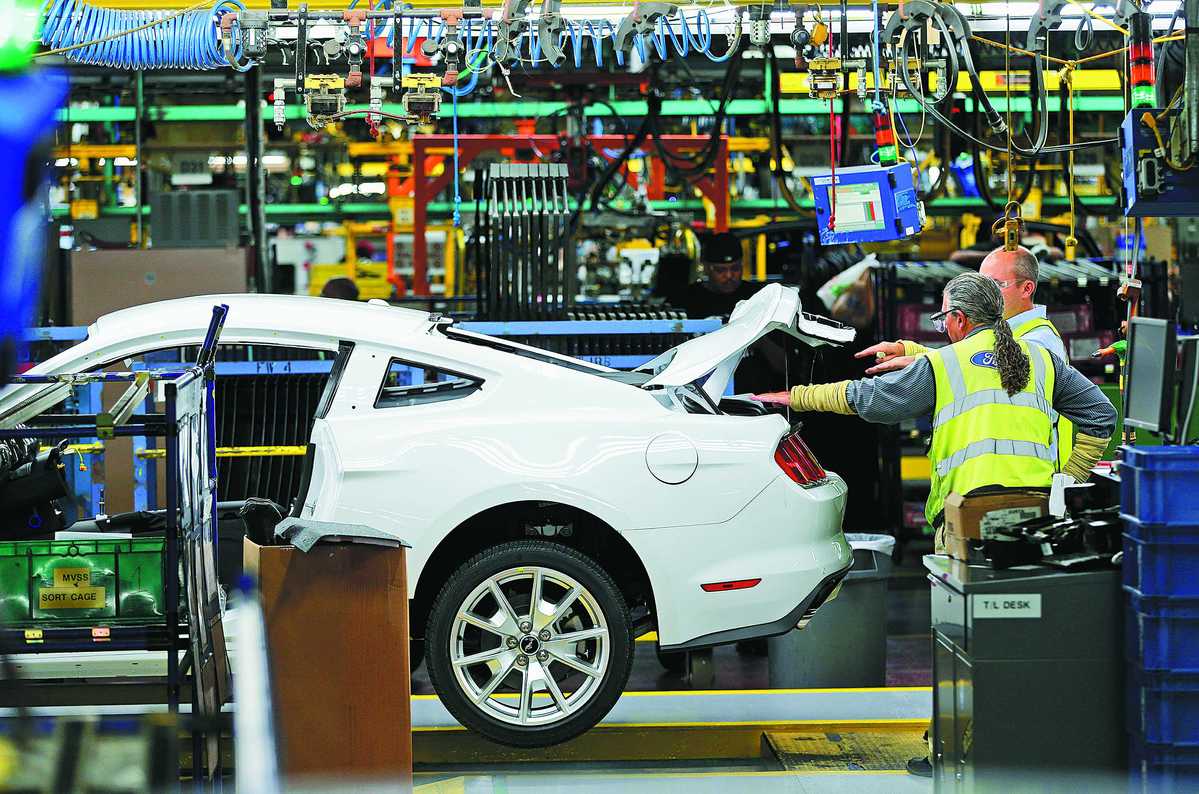
In the 1950s, the American car industry was seen as the prototype of how business should be run. Car company executives were seen as the most capable managers. In 1953, President Eisenhower chose Charles Wilson, known as "engine Charlie," to be his Secretary of Defense.
Then, in 1961, President Kennedy chose Ford president Robert McNamara for the same position. (Of course, McNamara's incredible mismanagement of the war in Vietnam reduced any confidence that car company executives were especially competent.)
By the late 1960s, the "big three" car companies in the US — General Motors, Ford, and Chrysler — formed a virtual oligopoly and turned lazy.