US wants to unilaterally dictate how WTO operates: China Daily editorial










The US government is once again intent on proving that what is right is decided by its might. This time it is demanding the World Trade Organization redefine how it designates developing-country status, claiming that some countries have unfairly made use of the status as it is defined at present to seek advantages from the flexibilities in the WTO rules.
The world's most powerful country, which has been wielding its baton of tariff hikes in dealing with its major trade partners, has also threatened to take punitive actions if the concerned countries fail to admit what the US thinks is their developed country status.
This is another unilateral step taken by the US government that threatens the multilateral global governance system.
The United States is the most powerful country in the world, and with that power comes responsibilities to others. From its call for reform of developing-country status, however, the world can see that the US government is not willing to shoulder this responsibility.
It should promote the balanced development of the world, something that it seems to wrongly believe is not in its interests, rather than seeking to impede the development of other countries.
The US government wants the WTO to take a highly simplistic approach to define developed countries, citing, for example, the overall economic scale of some countries, such as China. This fails to acknowledge that China's per capita GDP is only about one-seventh that of the US.
Admittedly, China has developed at a fast pace in recent decades. But considering its several tens of millions of poverty-stricken population, its very unbalanced regional development, its economic structure centered on low-end manufacturing, and its education and public services gaps, it is unreasonable for the US government to claim the country is a developed one.
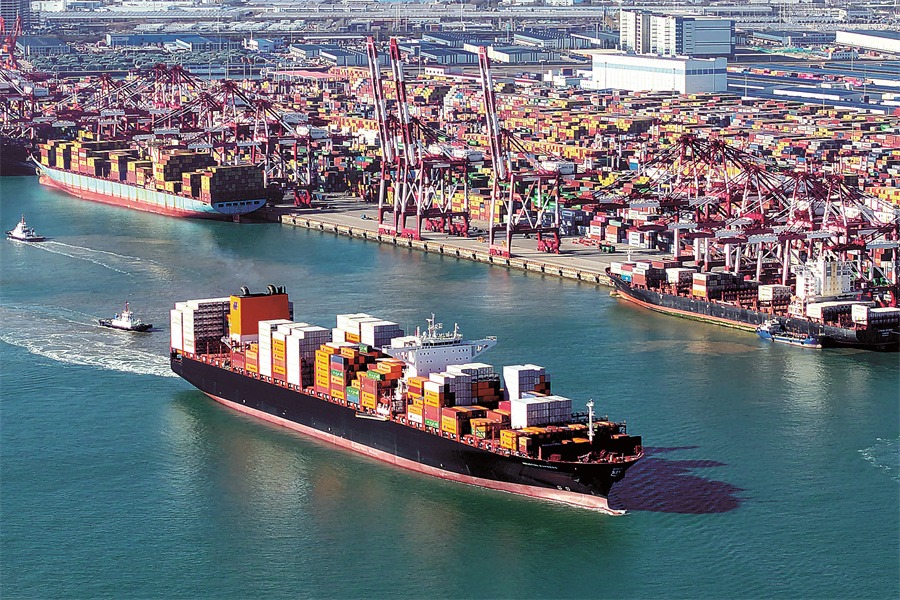
The WTO has taken a differentiated approach in defining the status of its members in order to narrow the gaps between developed and developing worlds. By such definition, the developing countries are supposed to enjoy the Generalized System of Preferences, which is the preferential tariff system extended by developed countries to developing countries. However, the US government has imposed various restrictions on offering such preferential tariffs, virtually denying developing countries, such as China, their legitimate preferential trade treatment under WTO rules.
The US government, therefore, has cited benefits that it has seldom offered to developing countries to question the developing-country status of those countries. This is absurd.
It is a consensus among member countries that the WTO does need reforming. But it should be reformed on equal consultations among all its members rather than simply being tilted further in favor of the US.
- US revised countervailing measures on Chinese imports inconsistent with WTO rules: WTO report
- Economist: Trade spats due to misunderstandings
- G20 leaders vow to realize free, fair trade and investment environment
- Forum stresses embracing more open global economy
- White paper: US backtracks on its pledges