



New cotton fertilization method developed in China









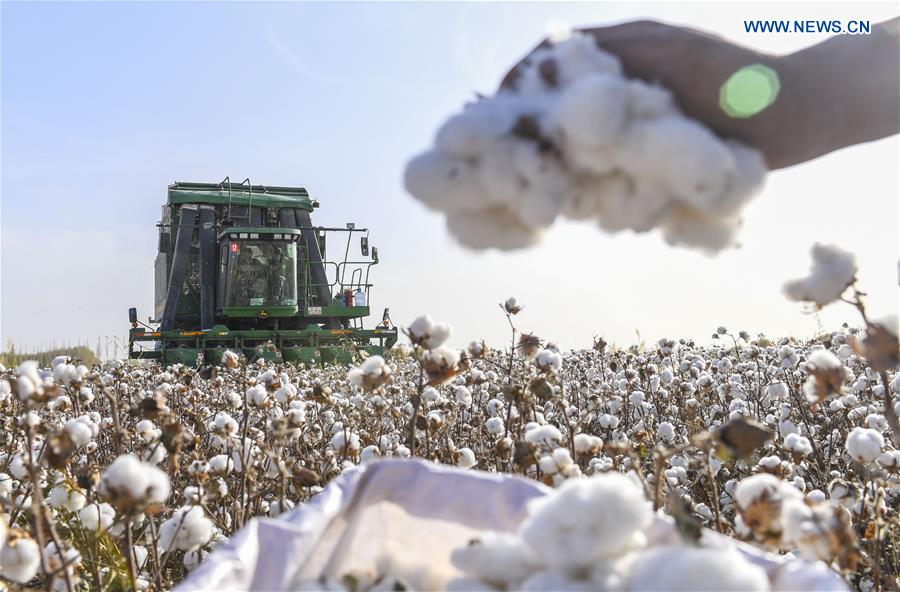
BEIJING - Researchers have devised a new method of efficient fertilization of cotton with lower nitrogen leaching in sandy soil in Northwest China's Xinjiang Uygur autonomous region, according to the Chinese Academy of Sciences (CAS).
Fertilizers like nitrogen are necessary for the plant's growth, however the ease with which they leach into sandy soil through traditional flood irrigation methods results in low nitrogen uptake efficiency and cotton productivity.
A research team from the Xinjiang Institute of Ecology and Geography of the CAS conducted research in the oasis zone around the Taklimakan Desert, an important cotton growth area.
The researchers reversed the order of the traditional irrigation and fertilization. When the water was drained after irrigation, the urea with high nitrogen was added into the wet soil and was found to be dissolved in mud, said the study paper published in the journal Agricultural Water Management.
The nitrogen can remain in the cotton roots for a long time, which contributes to a high nitrogen recovery efficiency, said the paper.
"This new fertilization method contributes to higher cotton productivity. We can also use 20 percent to 30 percent less water to maintain the yield compared with the traditional methods," said the researcher Zeng Fanjiang.
This result is also of great significance for the scientific management of the nitrogen leaching of cotton as well as other crops grown on sandy soil under traditional flood irrigation conditions, according to the CAS.


- Mideast tensions could increase costs for China's agricultural sector, expert says
- 7.5-magnitude earthquake strikes off Japan, no impact on China coast
- China opens citrus labs with Brazil and Montenegro in Chongqing
- Centuries-old Dong singing festival celebrates ethnic traditions in Hunan
- Chinese scientists discover new diatom species in Shanghai
- China’s strengthened IP protection system supports sustainable innovation





