Some frown on technology that IDs faces









More police departments in the US are using facial recognition, raising accuracy concerns
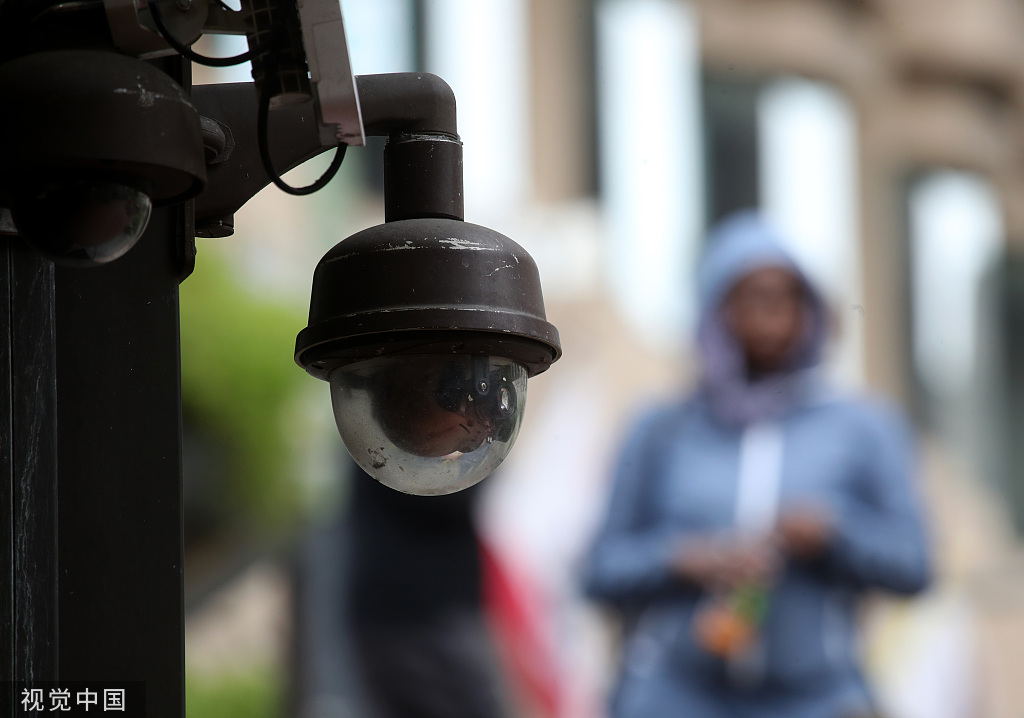
Police departments in the US are increasingly using facial recognition technology to catch criminals, but the software has come under fire by experts who say it has a relatively low success rate, is prone to racial and gender bias and could lead to wrongful arrests.
There are no official numbers on how many local, state and federal authorities are using facial recognition technology, but at least 50 across the country, including the FBI — which has a database of 36.4 million photos — and the New York Police Department, the nation's largest, have used or are using facial recognition in some way, according to the Center on Privacy and Technology (CPT) at Georgetown Law School.
In cases where police may have few leads and only a blurry photo of a suspect, they will feed an algorithm or facial recognition database sketches — or even pictures of celebrities — who resemble the criminal.
"The stakes are too high in criminal investigations to rely on unreliable — or wrong — inputs" the authors of the CPT report said. "It is one thing for a company to build a face recognition system designed to help individuals find their celebrity doppelganger … it's quite another to use these techniques to identify criminal suspects."
Immigration and Customs Enforcement was criticized by Congress members in July for using facial recognition to analyze millions of motorists' photos without their knowledge.
Norman Sadeh, a professor and expert in cybersecurity and online privacy at the School of Computer Science at Carnegie Mellon University, told China Daily: "There are expectations of privacy that people have and that are supposed to be respected. … If you see a camera, you have no way of knowing what this camera is doing."
Facial recognition technology works by matching live images of people walking past cameras against a list of persons of interest often compiled by police. The cameras scan the unique points of a face to create an identifiable biometric map that is as individual as a fingerprint.
Nathan Sheard, a grassroots advocacy organizer for the Electronic Frontier Foundation, a nonprofit defending digital privacy, free speech and innovation, told China Daily: "Face recognition technology is a particularly pernicious form of surveillance, given its disparate propensity to misidentify women and people of color."
A 2012 study that used a collection of mug shots from Pinellas County, Florida, to test the algorithms of three commercial vendors uncovered evidence of racial disparities, according to theatlantic.com. The study, co-authored by a senior FBI technologist, found that all three algorithms performed 5-10 percent worse on African Americans than on Caucasians.
One of the most-popular types of facial recognition software used by police is Amazon's Rekognition. The sheriff's office in Hillsboro, Oregon, was the first in the country to use it.
When the ACLU ran its own test of Rekognition to check its accuracy by comparing members of Congress to 25,000 photos of criminals, it incorrectly matched 28 lawmakers with people who had criminal records.
A study published by the MIT Media Lab in January found that Rekognition made more mistakes differentiating between men and women, according to theguardian.com. It also erroneously identified women as men 19 percent of the time.
Axon, the largest manufacturer of police body cameras in the US, has rejected selling facial recognition technology over accuracy concerns. Clients of the Scottsdale, Arizona-based company include 48 of 79 major city law enforcement agencies in America.
San Francisco this year became the first city to ban use of facial technology, followed by Somerville, Massachusetts, and then Oakland, California, which banned it in public spaces.
The technology has its defenders, including New York City Police Commissioner James O'Neill. The NYPD has used the technology since 2011.
In "How Facial Recognition Makes You Safer'', an opinion article published in The New York Times on June 18, O'Neill said that in 2018, detectives made 7,024 requests to the department's facial identification section, and in 1,851 cases, possible matches were returned, leading to 998 arrests.
He also noted that the software has helped clear suspects.
"It would be an injustice to the people we serve if we policed our 21st century city without using 21st century technology,'' O'Neill wrote.