


Old-school comedy makes a comeback










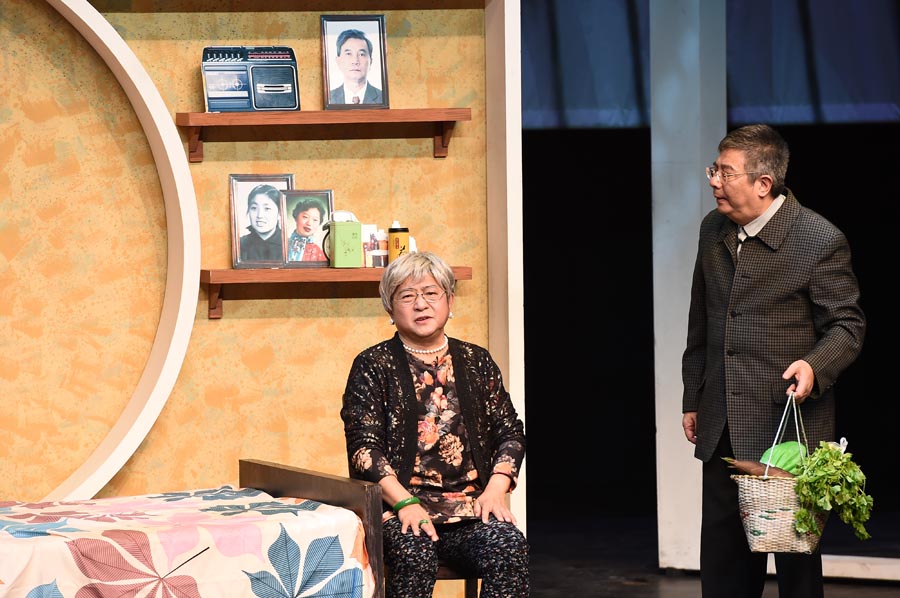
It was only after two celebrity huajixi artists, Yang Huasheng and Xiao Xixi, personally pleaded with Wang's father, that he was finally allowed to pursue his dream.
"I started my acting career with leading roles, and over the decades, I have won many honors and national awards for huajixi. Now, I am ready to be the 'green leaves' that bring out the beauty of the young 'red flowers'," he says.
According to Wang Rugang, huajixi had evolved from dujiaoxi, a simpler, more casual form of crosstalk show, in the early 1900s. He is also the official inheritor of dujiaoxi, an art form that was recognized as an intangible cultural heritage by the government in 2009. Both are considered colloquial forms of live entertainment and an organic part of Shanghai folk culture.
Dujiaoxi is similar in nature to xiangsheng, cross-talk shows that are popular in Beijing, Tianjin and wider parts of northern China. The key difference is that huajixi and dujiaoxi are only performed in the Shanghai dialect, meaning that only some of those living in the Yangtze River Delta Region can understand the language. This also explains why these genres are largely unknown outside of this region.
Traditional Chinese theater art consists of hundreds of regional folk operas, the most famous of which is Peking Opera. While the singing, music and performing styles differ across opera types, they also share similarities such as minimalistic stage setting and a focus on live singing and live music that is dominated by percussion instruments. In the 1840s, drama productions in China that had no singing, realistic stage settings and lots of dialogue were named wenmingxi (civilized theater).
Dujiaoxi then came about in the early 1900s, borrowing from the methods of wenmingxi while reserving its colloquial comedy element, says Wang Yueyang, the son of Wang Rugang, a Shanghai-based theater critic.





