



Shenzhen crowned China's city with most potential









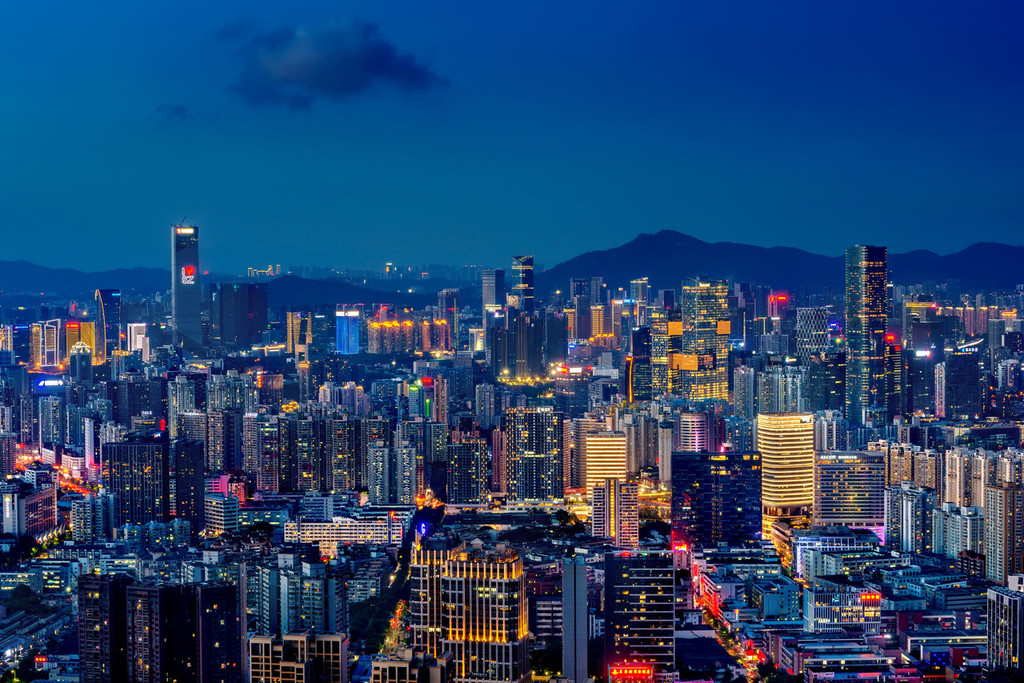
Shenzhen took the crown as the city with the most potential in China this year, followed by Beijing, Shanghai and Guangzhou, according to a report by Evergrande Research Institute on Friday.
The report analyzed the city development potential of 336 administrative units at or above the prefecture level in China via 27 indicators, including population, industries and location, and ranked the cities from first to fourth tier according to GDP, per capita disposable income of urban residents, and political status.
Among second-tier cities, Chengdu, Nanjing, Wuhan, Chongqing, Tianjin and Hangzhou claimed spots in the top 10 potential cities list.
Thirty-two cities from eastern China - most from the Yangtze River Delta region and Pearl River Delta region - entered the top 50, while in the northeastern part of the country, over 80 percent of the cities were ranked behind 200th place.
The top 100 cities gather 50 percent of China's population with 13 percent of the country's land, the report showed. These cities have also created about 73 percent of the GDP, and contributed about 62 percent of the country's commercial residence sales.
The population continues to stream into first- and second-tier cities, the report said, and the inflow and outflow is basically balanced in third-tier cities, while the fourth-tier cities see more individuals leaving.
Major cities like Shenzhen, Guangzhou and Hangzhou have registered substantial increases in the resident population. Core cities in the central and western parts of the country, such as Xi'an, Chengdu and Changsha, have been on the rise in attracting people, while the population growth in eastern cities such as Beijing, Shanghai, Tianjin, Suzhou and Wuxi has slowed down.
People go with industries, the report said, and first- and second-tier cities have a more stable foundation and greater potential in their industries. These cities create 46.5 percent of the country's GDP with 25.5 percent of the population.
First- and second-tier cities surpass others in terms of the number of listed companies, invention patents granted, traffic and location, public resources (including quality education, medical resources and urban rail transit) and absolute purchasing power. However, these cities need to do more when it comes to the ratio of housing price to income as well as housing supply, the report said.




















