



Chinese scientists learn how to fold atom-thick sheets of carbon









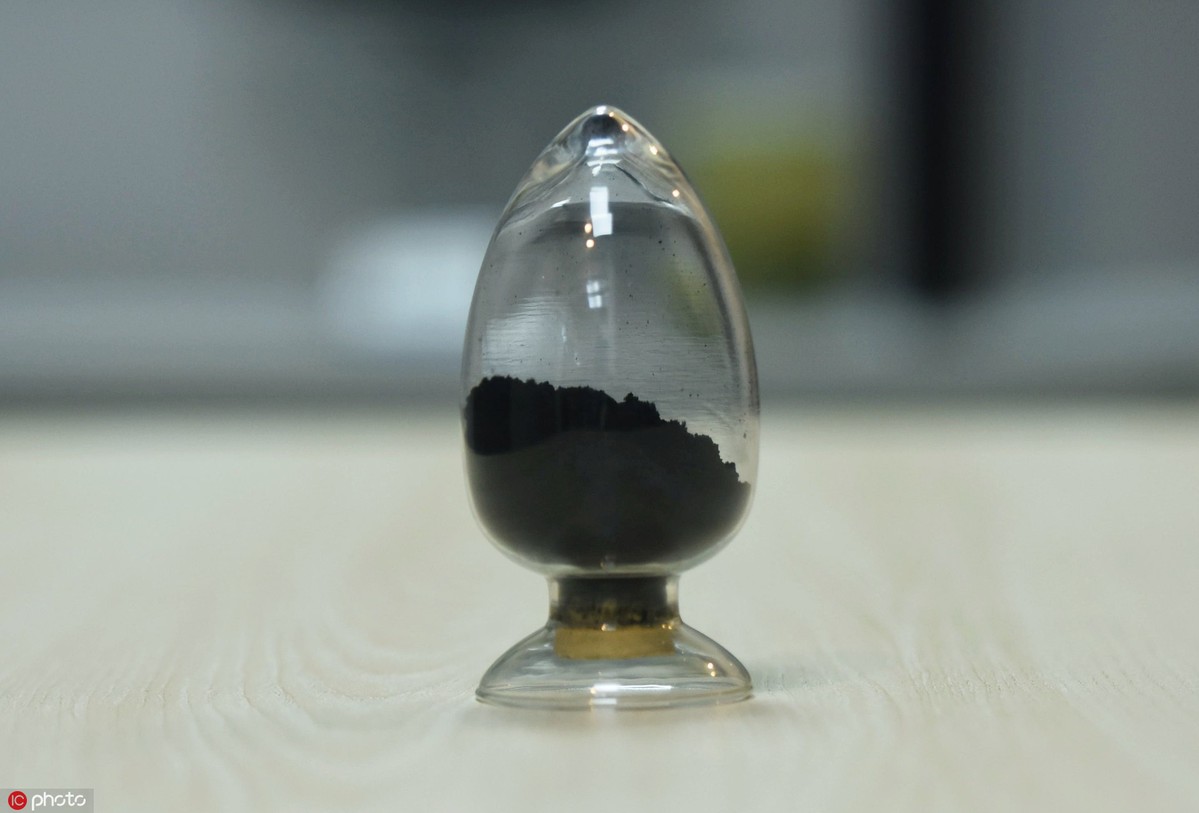
The ancient and delicate art of origami has reached the atomic scale, with researchers now able to precisely fold graphene — an atom-thick sheet of carbon — into custom shapes.
The technique could be used to build tiny structures like nanorobots and flexible circuits or help create more powerful processors.
For years, scientists have tried to reliably fold graphene in ways that display desirable new traits. For instance, twisting two layers of graphene at a "magic angle" of 1.1 degrees can make it superconductive, allowing electricity to pass through without resistance.
Researchers believe manipulating the promising material, which is tougher than steel, more elastic than rubber and lighter than aluminum, could lead to new discoveries and revolutionize current technologies.
But handling materials at an atomic level is tricky since the weird properties of quantum mechanics can get in the way, and it must be done with utmost precision in extremely clean and cold conditions.
To tackle this challenge, a team of scientists from the Chinese Academy of Sciences managed to fold a 20-nanometer-wide sheet of graphene like a sheet of paper using a sharp needle with a single electrically charged atom at its tip, a technique known as the scanning tunneling microscope (STM). The research was recently published in the journal Science.
The STM is an instrument for imaging surfaces at the atomic level. Its development in 1981 earned its inventors, Gerd Binnig and Heinrich Rohrer, the Nobel Prize in physics in 1986.
Unlike previous works which relied on random chance or cutting the graphene material to manipulate its shape and properties, the new method allows the first creation of custom-designed, atomically precise origami graphene nanostructures, Chen Hui, the first author of the research paper, said.
The folded graphene has shown some new traits that are typically lacking in a single sheet of graphene. Among them, the edge of the fold can display electrical properties similar to a carbon nanotube, Chen, a postdoctoral fellow at the academy's Institute of Physics, said.
"The STM and its subsequent technologies not only let us directly observe atoms, but also let us manipulate them like stacking wooden blocks," Chen said.
"In theory, our technique can work on other materials so long as they have good elastic properties. This means we can use the needle to fold other materials as well and create more complex artificial materials that can be used in nano-electronics, biomedicine and energy."
The shapes made from graphene and similar materials could serve as virtual laboratories to test new predictions about undiscovered states of matter and the laws of physics, he added.
"In the future, we are hoping to popularize our new atom manipulation technique and possibly open a new frontier in related global research," Chen said.





