China prepares for another record Double 11 shopping week









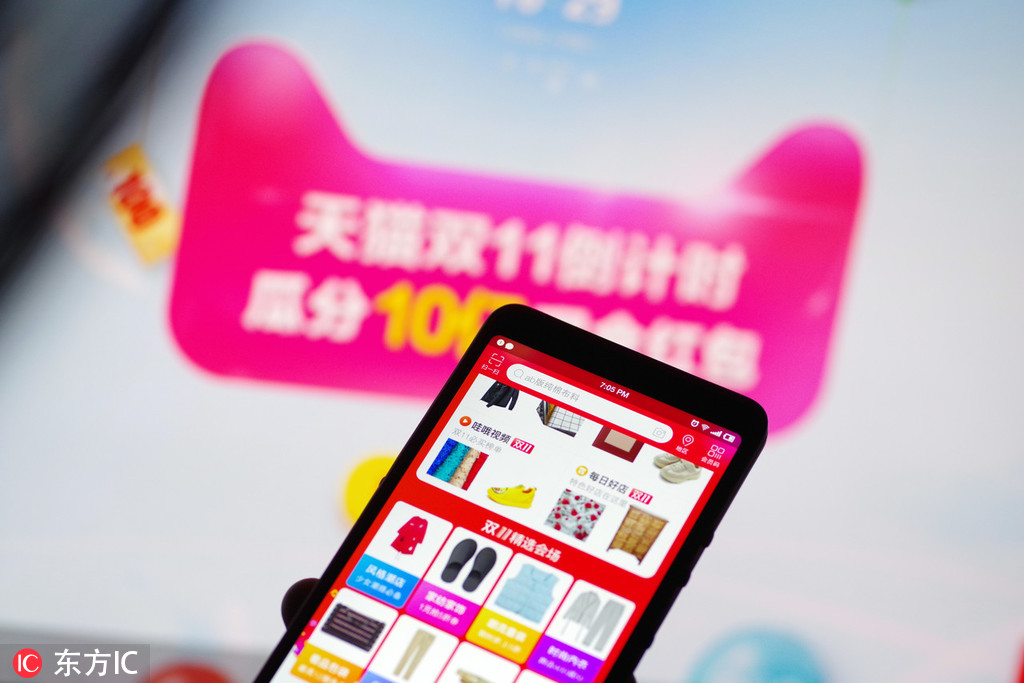
It’s that time of the year again. China and the rest of the world will soon experience the biggest online shopping event. It will take place in a couple of weeks on Nov 11 and represents for China the best shopping season of the year, an event now called Double 11 or 雙十一.
Singles' Day, also known as 'bare sticks holiday,' was born in 1993 at Nanjing University as a day for students to celebrate their singledom. Since then it has been transformed from an ‘a(chǎn)nti-Valentine's Day’ to a global shopping festival able to generate billions of dollars in transactions.
In the last 10 years Singles’ Day has become an annual 24-hour buying frenzy that exceeds combined sales for Black Friday and Cyber Monday in the United States, and represents an indicator for analysts of the state of health of China’s economy, being that consumption one of the most important components of a country’s GDP.
2018 was a record year when the gross merchandise value (GMV) hit over $30.8 billion in sales in the 24-hour shopping event, smashing its own record from 2017 when the sales extravaganza hit $25.4 billion, cementing it as the world’s biggest shopping event.
The event sees shoppers from around China scouting for bargains and for the best price, piling up their online shopping carts, while delivery couriers are expected to distribute an estimated almost 2 billion parcels over the six-day bonanza.
As Singles’ Day has turned into a national celebration, not only Alibaba, but also other e-commerce platforms, such as JD.com and Pinduoduo, have joined in to capitalize on a month of robust consumer spending pushing equally hard to attract the ever-increasing and affluent Chinese middle class.
The trigger for the event’s success was the introduction of the e-commerce component in 2009 when Alibaba executive Daniel Zhang used the date to promote Tmall, Alibaba’s virtual mall for brands, with just 27 merchants participating. Zhang eventually became the CEO of Alibaba when Jack Ma stepped down. This year will mark the 11th Single’s Day event for Alibaba and the second without co-founder Jack Ma at the helm.
Since 2009 e-commerce has been booming in China, leading the country to become the biggest market in the world. Furthermore, China today is not only the world’s largest e-commerce market but also undoubtedly the most exciting, innovative and unique in the world. It sets a benchmark for present and future global retail across the globe, making China an important market to study and to understand.
E-commerce is now part of the Chinese people’s common spending practice due to the widespread utilization of smartphones and security guaranteed by payment systems. This makes me reflect on the different environment back in my country and in general in Europe, where people are still very reluctant to make purchases online and are still used to pay using cash and buying at traditional brick and mortar stores. This is in part due to a traditional mindset of security given by touching physical money and objects before making the decision of a purchase, and in part due to the lack of trust in the e-commerce platforms in Western countries, still considered unsafe and unreliable at protecting personal data.
I have been living for quite a while in China and the widespread use of the smartphone for payments and purchases, I believe, makes life much easier and convenient. The booming FinTech industry is contributing to e-commerce success and innovations in terms of modality of payments will make the experience even more exciting.
China is looking to the future and it’s building a full digital society replacing the use of cash and even credit cards with biometric systems, such as fingerprint, and very soon facial recognition powered by AI technology. I am sure Western countries will definitely look at this kind of scenario with admiration and a little bit of envy.
The author is a finance professional at ICBC in Beijing and a member of the China Task Force at the Italian Ministry of Economic Development. The views don't necessarily represent those of China Daily.