
综合一区欧美国产,99国产麻豆免费精品,九九精品黄色录像,亚洲激情青青草,久久亚洲熟妇熟,中文字幕av在线播放,国产一区二区卡,九九久久国产精品,久久精品视频免费

Global EditionASIA 中文雙語Fran?ais
Culture
Home / Culture / Heritage

Baishiya Karst Cave one of top 10 archeological finds in 2019

chinadaily.com.cn | Updated: 2019-12-12 11:03
Share
Share - WeChat
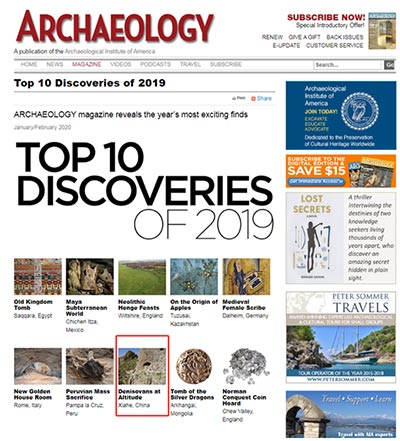
A screenshot of the webpage of US Archeology magazine. [Photo/Official WeChat account of Lanzhou Morning Post]

Baishiya Karst Cave in Xiahe county, Northwest China's Gansu province, was recently recognized by Archeology magazine in the US as one of the top 10 archeological discoveries in 2019.

Some 40 years ago, a Buddhist monk uncovered a mandible (lower jaw) in the cave, which is more than 10,000 feet above sea level on the Tibetan Plateau.

Archeologists have verified that the mandible can be dated back 160,000 years, and analysis of proteins from its teeth indicates that it belonged to a member of the hominin species known as Denisovans.
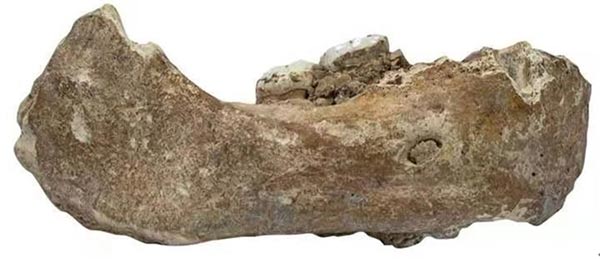
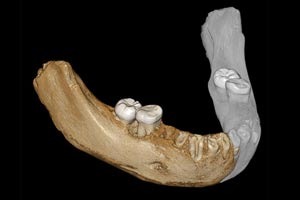
The Denisovan mandible found in Baishiya Karst Cave in Xiahe county, Northwest China's Gansu province, is recognized by Archeologymagazine in the US as one of the top 10 archeological discoveries in 2019. [Photo/Official WeChat account of Lanzhou Morning Post]

"This mandible reveals that Denisovans were geographically distributed much more widely and at a higher altitude than we previously thought," said archaeologist Zhang Dongju of Lanzhou University.

The mysterious ancient humans were previously known only through fragmentary remains found solely in southern Siberia's Denisova Cave, which is merely 2,300 feet above sea level and almost 1,750 miles northwest of Baishiya Karst Cave.
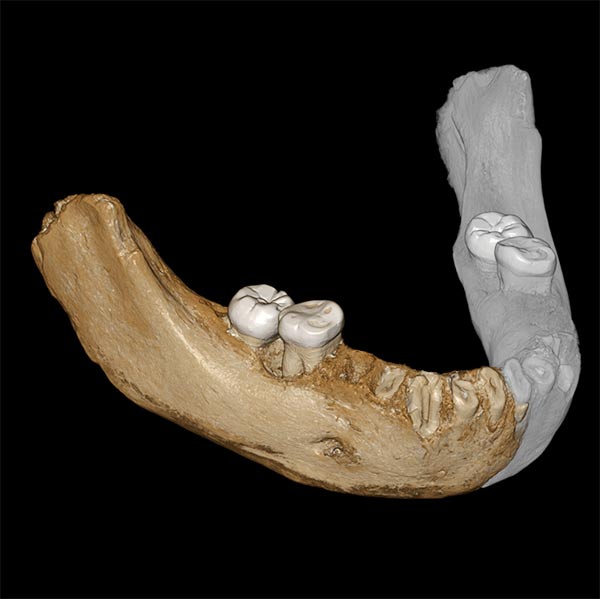
A 3D model of a Denisovan mandible found in Baishiya Karst Cave in Xiahe county, Northwest China's Gansu province. [Photo/Official WeChat account of Lanzhou Morning Post]

Earlier studies of Denisovan genetic material had detected a mutation that enabled them to survive in low-oxygen environments characteristic of extremely high-altitude locations, such as the Tibetan Plateau.

This same mutation has been identified in present-day Tibetans, and the discovery that Denisovans once inhabited the region may explain how they obtained this life-preserving adaptation.
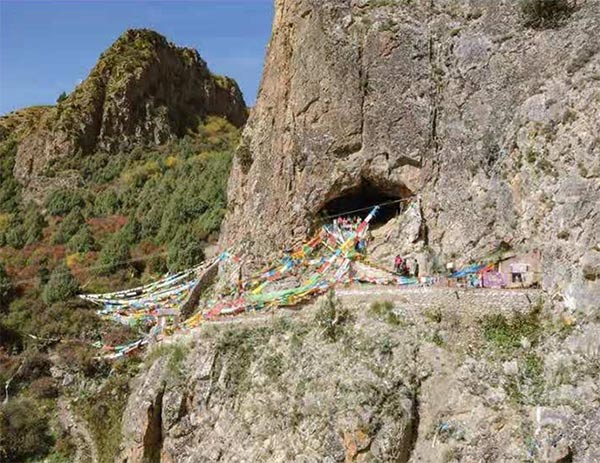
The picture shows a view of Baishiya Karst Cave in Xiahe county, Northwest China's Gansu province. [Photo/Official WeChat account of Lanzhou Morning Post]
Most Popular
Top
BACK TO THE TOP
English
Copyright 1994 - . All rights reserved. The content (including but not limited to text, photo, multimedia information, etc) published in this site belongs to China Daily Information Co (CDIC). Without written authorization from CDIC, such content shall not be republished or used in any form. Note: Browsers with 1024*768 or higher resolution are suggested for this site.
License for publishing multimedia online 0108263

Registration Number: 130349
FOLLOW US
西城区| 高雄县| 大石桥市| 梨树县| 灯塔市| 山东| 长阳| 佛教| 九龙县| 广南县| 舞阳县| 内江市| 康乐县| 富阳市| 揭西县| 临沧市| 清涧县| 大埔县| 芦溪县| 丹阳市| 仪征市| 通化市| 温泉县| 定兴县| 乃东县| 东乡县| 肃南| 河南省| 安图县| 当涂县| 吉隆县| 绥滨县| 铜陵市| 大埔县| 天门市| 临江市| 东兰县| 庐江县| 黄平县| 五指山市| 巴彦淖尔市|