



Innovative use of sales agents gives Vivo a massive edge in subcontinent









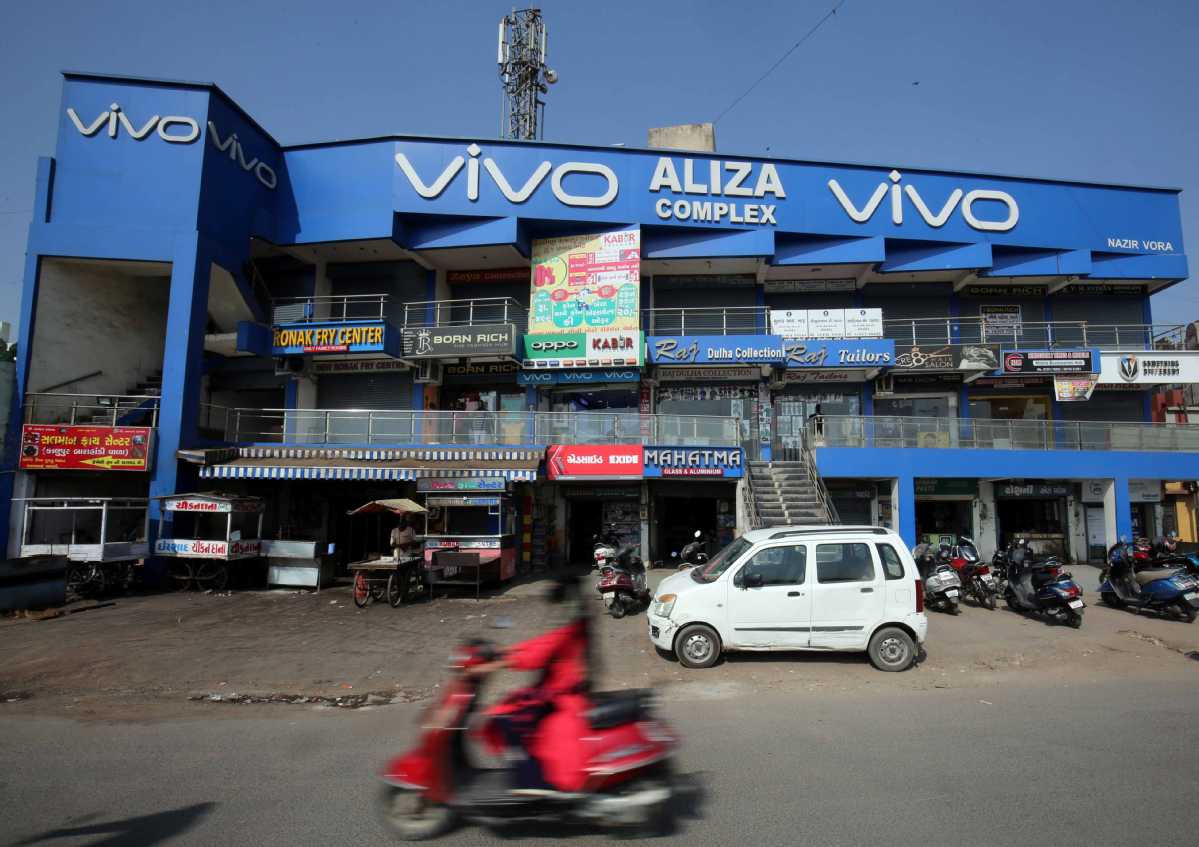
Chen Xiaofei has been a smartphone sales agent in India for more than five years, but he clearly remembers the day when he followed Chinese smartphone vendor Vivo to venture into the South Asian country for new opportunities.
"We came to India on April 15 in 2014. Back then, few Indian consumers recognized Chinese brands for they had a very low trust on Chinese products. When we looked for local people to be our retailers, nobody wanted to talk to us," Chen recalled.
Five years later, Vivo has surpassed Samsung as the No 1 smartphone vendor in Gujarat, a western Indian state where Chen has helped build a sprawling sales network for the Chinese company.
Data from market research company GfK showed that Vivo accounted for 26.6 percent of the state's smartphone market.
Chen is one of dozens of Chinese agents that have followed the footsteps of Vivo to India when the Dongguan, Guangdong-based company chose a unique way of going global.
Unlike most companies which tend to build their distribution and sales systems from scratch in each market, Vivo relies on agents, who have been working with it in China for years, to build a sales system in a foreign country.
That struck many as a surprise and seemed to violate the principle of localization at first glance. But Vivo succeeded by finding a way of combining its management style with the characteristics of the Indian market, industry experts and executives said.
"These agents all have their own businesses, but they also share a common vision, a common cultural value and the same brand with Vivo. We have an inseparable tie," Chen Zhiyong, CEO of Vivo's Indian branch, said when asked why Vivo decided to bring to India the Chinese agents who knew little about the country.
A senior executive of Vivo's rivals said that finding new local agents entails a long time to build trust, ease cultural differences, and find a proper way to share profits.
In contrast, bringing agents who know very well each other's way of doing things can quickly cultivate a market. The only thing is that they cannot directly copy what they are doing in China to India. They must adjust themselves to local market conditions.
That's exactly what Vivo is doing.
In China, the company's sales network included two levels of agents and retailers. Vivo cut the second-level agent in India and added the new role of managing distributor into the system.
"The logistics system and finance systems in India are not very developed and the country has a strong control over cash. As a result, we need managing distributors to help solve those problems. MDs are in a better position to maintain the relationships with retailers. Such a model shows partly why Vivo has been doing well in India," Chen said.
Except for the heads of level-one agents being Chinese, all other people in the company's sales system are Indians. Overall, about 95 percent of Vivo's employees are Indian, with the proportion even higher in its factories.
Such a model has significantly improved the income of smartphone retailers in India. Chen said that retailers used to earn just 300 rupees to 400 rupees ($5.6) from one smartphone they sell. Now, they can earn as much as 1,500 rupees to 2,000 rupees from Vivo.
Vivo has about 70,000 outlets across India and the company directly runs all of its after-sales centers to ensure good service. All of these efforts have helped Vivo become the third largest smartphone vendor in India. That marks a long way from where it started five years ago.
"In 2014, Vivo CEO Shen Wei told us that we needed to prepare for a possible five-year loss period in India. From a business perspective, most people would not join such a team. But because we share the same vision with Vivo that long-term initial investment and input are needed before a thing succeeds, we followed the company. We are taking root and thriving with Vivo in India," Chen recounted.
Now as Vivo is preparing to march into western European markets for the next wave of its growth, Chen said his company has also decided to follow Vivo's lead.




















