



Shanghai scientists make discovery in gene editing approach









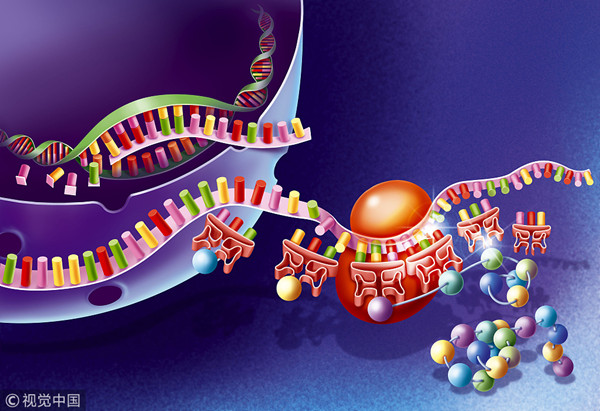
Shanghai scientists have found in lab tests that a novel gene editing approach could for the first time regenerate retinal ganglion cells and therefore restore sight of mice that suffer from permanent visual impairment.
The technology, which converts particular glial cells into neurons, was also found to be able to help mice suffering from Parkinson's disease regain motor functions.
The lab results have provided insights into the clinical treatment of various neurodegenerative diseases, such as Parkinson's disease, Alzheimer's disease, muscular dystrophy, frostbite and certain types of blindness, said the research group from the Center for Excellence in Brain Science and Intelligence Technology, Chinese Academy of Sciences (CAS).
"The research team will soon find collaborators and proceed with lab tests on monkeys. If all the animal tests prove effective, we hope the results can be applied clinically for the well-being of humans," said Mu-ming Poo, an academician at CAS and the academic director of the center.
Poo added that such approaches are internationally acclaimed and do not pose ethical disputes as they do not affect reproductive cells and thus future generations.
Scientists explained that the neurons in the human nervous system cannot regenerate after injury or death. Various other reasons, such as medication and genetic factors, can also lead to the death of neurons and thus trigger different neurodegenerative diseases.
It is estimated that more than 100 million people worldwide are living with neurodegenerative diseases, and the number is expected to rise as the aging population increases.
A type of permanent blindness caused by the death of retinal ganglion cells, a specific species of neurons functioning as the sole bridge linking the eyes and the brain, is another common neurodegenerative disorder.
In lab tests on mice, researchers discovered that the retinal ganglion cells derived from glial cells on the retinal ganglion cell layer can function as natural neurons to respond to light stimulation and are able to transmit visual signals to the brain.
"We found that such technology could revive the sensitivity to light for mice with impaired retinal ganglion cells," said Yang Hui, a leading researcher on the team.
Similarly, the researchers found that the approach could convert astrocytes, a type of glial cells, into dopamine neurons efficiently. Behavioral tests on mice with Parkinson's disease also showed that their motor dysfunctions were alleviated.
A paper about the study was published on the website of the United States-based journal Cell on Wednesday.
"Previous similar efforts focused on knockdown of toxic mutant transcripts in models of mendelian inherited genetic disease, whereas this study presents the novel aspect of using these tools for in vivo therapeutic cell fate conversion, which is interesting and could be a broadly applicable approach," read a peer review.






- China unveils regulations on Party organization elections within armed forces
- Pick your own cherished flowers in downtown Shanghai
- Liangjiang New Area of Chongqing inaugurated
- 17 rescued Filipino crew members transferred
- Team of Chinese, US scientists identifies key tumor cell state driving cancer growth, drug resistance
- China conducts first metal 3D printing experiment in space














