



More charging poles needed as NEV sector continues to grow









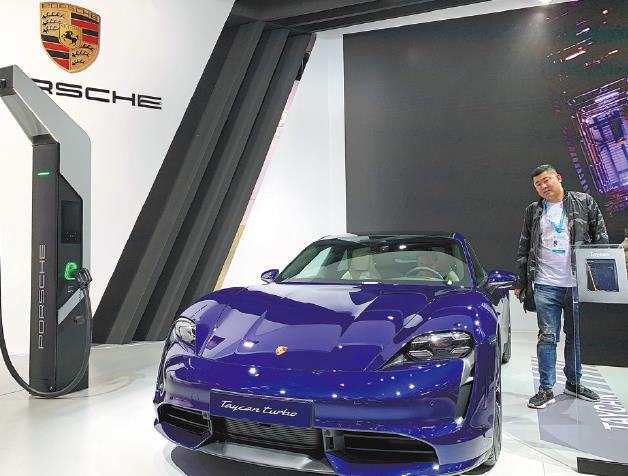
Nationwide push for infrastructure for new energy vehicles to meet gap in supply
The industry for electric vehicle charging infrastructure in China is undergoing a period of growth with construction quickly trying to make up for a gap in supply. Yet insiders said the current problems can only be properly solved by an all-around advancement of the new electric vehicle industry.
Statistics from China Electric Vehicle Charging Technology and Industry Alliance revealed that by March this year, there were 1.27 million charging poles in China, of which 542,000 are public and 725,000 are private.
The construction of private charging poles is far less than expected, according to insiders.
According to a development plan for the NEV industry released by the Ministry of Industry and Information Technology last year, China's NEV sales will account for 25 percent of total car sales in 2025.
If this is the case, it means that the country's charging infrastructure will be in serious short supply.
To cope, China is poised to step up the construction of charging infrastructure, with a total investment of 10 billion yuan ($1.41 billion) being invested this year to establish 200,000 public charging poles, 400,000 private charging poles and 48,000 public charging stations, said Cai Ronghua, a senior official of the National Development and Reform Commission, at a news conference on April 9.
Sun Guangqi, director of the economic construction department of the finance ministry, said at the event the ministry will work on optimizing incentive and subsidy policies for the construction of charging facilities, to further mobilize industry initiatives, turn the situation of more cars and less charging poles around and create a good environment for the consumption of NEVs.
Industry insiders said that user anxiety concerning the range of electric cars has shifted toward the convenience of charging.
Gao Haijun, senior vice-president of Star Charge, a charging station operator in China, confirmed the problem, citing that at present charging poles mainly serve public service vehicles like taxis, online ride-hailing cars and logistics vehicles.
However, the individual-end market has not yet been truly opened, reported China Energy News.
In the future, NEVs will mainly be private cars, and there is a huge market capacity for private charging, Gao said, adding Star Charge is set to announce a three-year investment plan of 3 billion yuan.











