US should make bio-labs more transparent









The novel coronavirus being of natural origin is universally recognized by scientists worldwide, as the World Health Organization (WHO) showed there were some 15,000 full genome sequences of the novel coronavirus available to prove this.
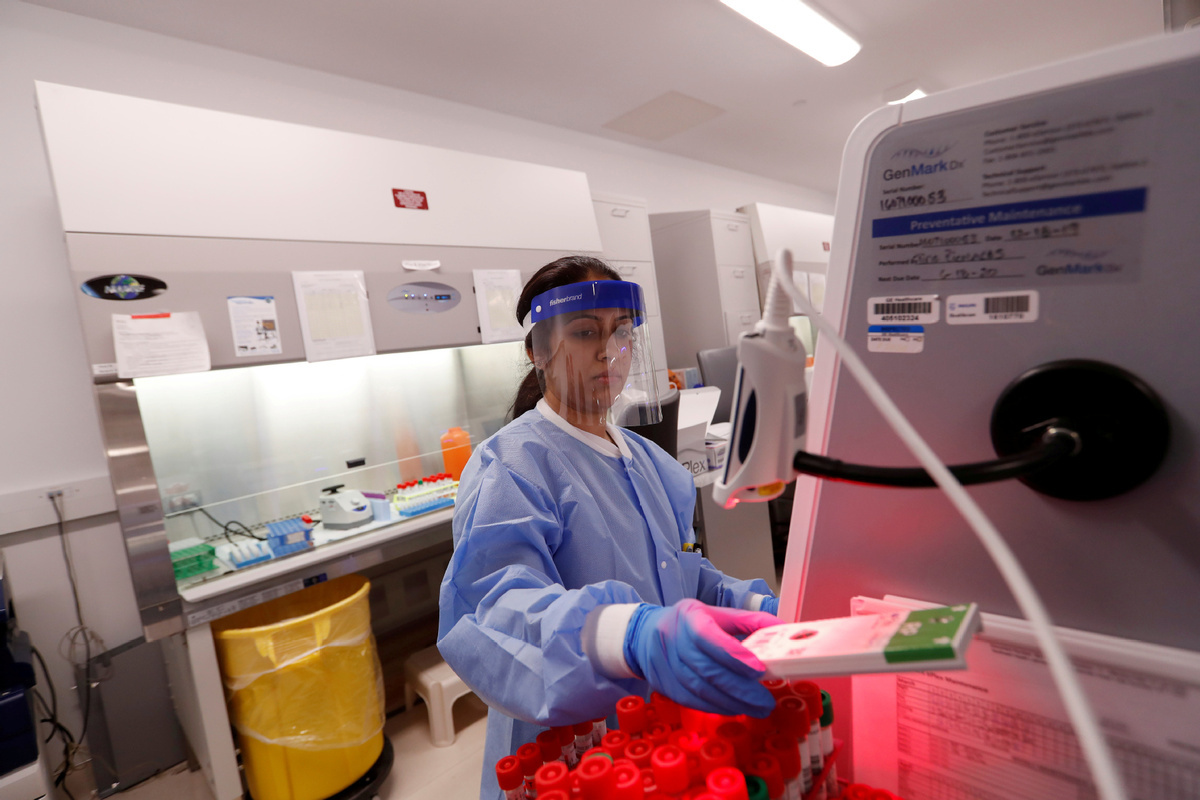
Yet the COVID-19 pandemic has turned the public attention to biological laboratories as never before, as more and more people wonder whether lab security measures are effective and whether their presence poses a threat to human security.
The White House's recent "Chinese lab theory" has been widely rejected, and even US' allies have distanced themselves from the groundless slander, despite US Secretary of State Mike Pompeo has changed his tone, admitting the US cannot be certain the coronavirus outbreak originated in a Wuhan lab.
China is opposed to a culpability investigation that frames any laboratory in the world with groundless accusations. But we are calling for a global laboratory safety inspection, with the WHO acting as supervisor.
The US, which has one of the world's largest biotechnology industries with extensive research realms, is outside a 1972 Biological and Toxin Weapons Convention (BWC) protocol, approved by some member-states to the Convention, to increase the transparency of treaty-relevant biological facilities and activities. The US should respond to the international community's call for lab transparency
Global concerns rose after the US CDC restored full operating capability to all US Army Medical Research Institute of Infectious Diseases (USAMRIID) labs at Fort Detrick, Maryland at the end of March after a shutdown in July 2019 out of safety concerns.
US media quoted the CDC as saying the lab was suspended because it had no "sufficient systems in place to decontaminate wastewater" from its highest-security labs. At least the claim reflects how the safety of the US laboratory is in serious danger.
From 2006 to 2013, labs notified federal regulators of about 1,500 incidents with select agent pathogens, and 15 people contracted laboratory-acquired infections, according to US newspaper USA Today.
As a country with the strongest scientific strength in the world, the US has more power to set the agenda around laboratory safety issues, and has a tendency to use this power for geopolitical purposes. The US ramped up efforts in accusing laboratories in other countries, but ignored domestic loopholes.
Washington has taken advantage of the scientific resources and political vacuum left by the collapsed former Soviet Union to set up biological laboratories in the Commonwealth of Independent States (CIS) countries around Russia that, some suspect, are performing riskier experiments than those in the US.
Research carried out by those laboratories and their safety should be the focus of international attention.
The COVID-19 pandemic reveals the dysfunctional governance system of the US, where some of the key capabilities once considered world-leading have proven woefully inadequate.
It is reasonable to be highly suspicious that the security at the US' vast biological laboratories is substandard, and that there are a lot of "dirty tricks" going on inside for fear that the outside world will find out.
Through this ongoing outbreak, the international community should truly regulate biological research in the US and urge it to reach the basic level of transparency.
The US should not be exempted from international screening for biological risks, but rather be at the forefront of such inspections. The vast number of laboratories in the US, with their complex and diverse management bodies and methods, needs a clean-up test that will reassure the international community.