Climate activists urge govts to seize opportunity created by lockdowns









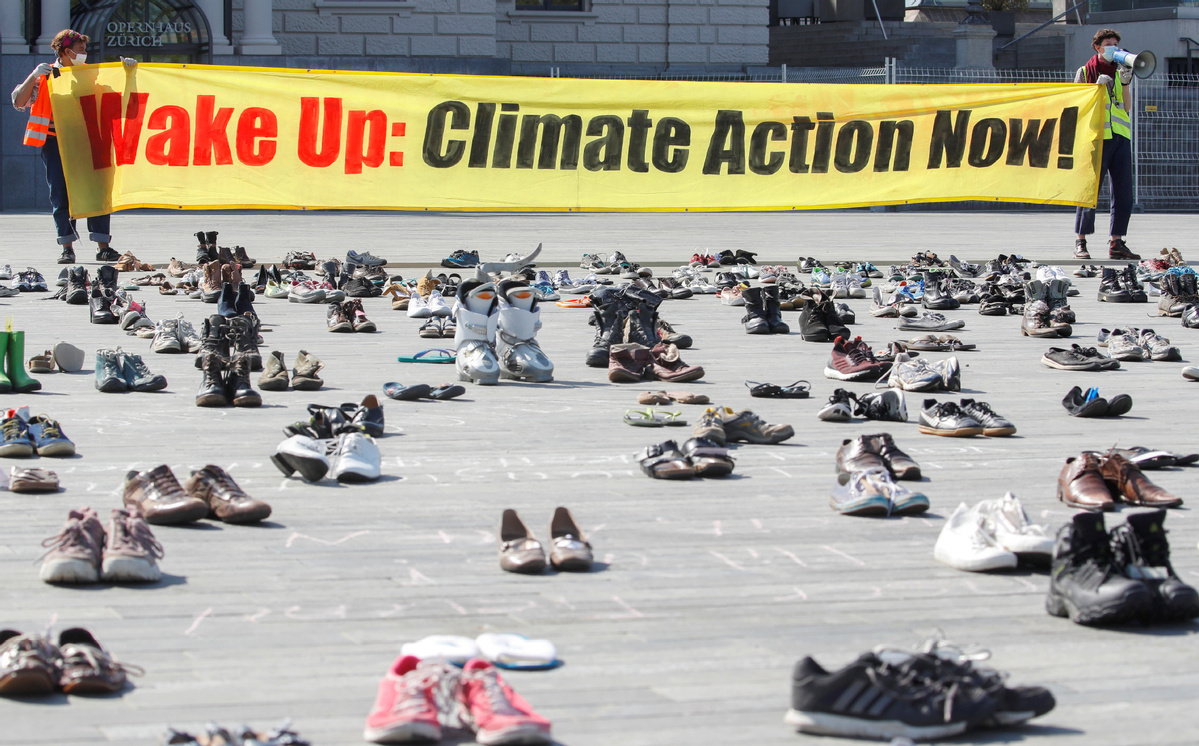
Climate activists are hoping the experience of tackling the novel coronavirus-caused COVID-19 disease will encourage governments to seize the opportunity to confront the even more chronic threat of global warming.
Weeks of lockdown in many parts of the world closed factories, emptied the streets of industrial cities and halted most air travel. But they also brought clear skies and a dramatic fall in greenhouse gas emissions.
With a return to normal life and the overwhelming need to rapidly get economies going again, pollution levels are inevitably on the rise.
In China, the first country to be struck by the pandemic and therefore among the first to lift restrictions, emissions are back at pre-crisis levels, according to the Helsinki-based Centre for Research on Energy and Clean Air.
Countries in Europe and elsewhere are expected to follow that trend as their economies reopen.
There was never a likelihood that the pandemic would lead to an overnight switch to a low-emission world, to which most governments are committed in the longer term. The harm to economies by not getting back to normal as quickly as possible could end up being more damaging than the disease itself.
However, some climate experts nevertheless believe that the nature of governmental and public responses to the COVID-19 virus crisis could provide a model for tackling climate change.
According to Ajay Gambhir of the Grantham Institute at London's Imperial College: "The ability of people and societies to respond to threats affecting their well-being-as is being demonstrated across the world-is a potentially powerful response mechanism."
Gambhir wrote that, although it was too early to say how changes in public behavior would outlast the pandemic, "it is important to capture the notion that such changes can occur when it's apparent that lives are more important than business-as-usual GDP growth."
The Brussels-based Finance Watch, which campaigns for the financial system to do more to serve society in general, warned that climate change posed a bigger threat to financial stability than the pandemic and yet would be easier to fix.
Action to tackle the link between climate change and financial instability would be far less radical and much cheaper than the action taken to react to the COVID-19 crisis, it said in a report this month.
It said it did not take a doomsayer to see that many of the plagues brought by climate change would spread as quickly as the COVID-19 but have every chance of being far more impactful.
Arguing for tougher restrictions on bank lending to fossil fuel enterprises, the report said: "Two of the lessons from the COVID-19 crisis are that public money is not scarce when the survival of our societies is at stake, and that policy-makers have a strong ability to react to adverse circumstances."
At a more micro level, individual choices post-pandemic will have an impact that may outlast the current wave of the disease. Many people may be less disposed to eating out, attending mass spectator events or flying abroad for some time yet.
Countries heavily dependent on tourism may have to revise their economic models as the world emerges from the crisis. Lower and more selective levels of mass travel would clearly have a positive effect on global emissions.
Climate activists hope that other patterns of behavior imposed by the pandemic might also outlast it.
Many people have found that working from home during the lockdown can be more agreeable than trudging to the office, while employers can also see the potential for savings.
Others have taken up cycling to work in order to avoid crowded public transport, a trend that has been encouraged in a number of European cities with the provision of additional cycle lanes. It is a habit that may stick in the longer run.
As governments boost public spending to kick-start their economies, climate activists are arguing that the recovery investment should be focused on green industries and projects.
Massive programs of green public investment would be the most cost-effective way both to revive virus-hit economies and strike a decisive blow against climate change, Nobel economics laureate Joseph Stiglitz and British climate expert Nicholas Stern said in a report in May.
Some have described the COVID-19 outbreak as a "Black Swan", one of those unpredicted events that can change the world forever. Or maybe not.
It could be that as the crisis passes, and if a vaccine is found, we will all return to our bad old ways, burning up the planet until the next crisis comes along to remind us that global warming is a plague that still awaits a cure.
Harvey Morris is a senior media consultant for China Daily UK.