



Africa must help more women to embrace technology









The digital economy is crucial in today's world. It's a pillar on which world economies hedge their future. Unfortunately, women in Africa's informal sector have very low exposure and access to digital services.
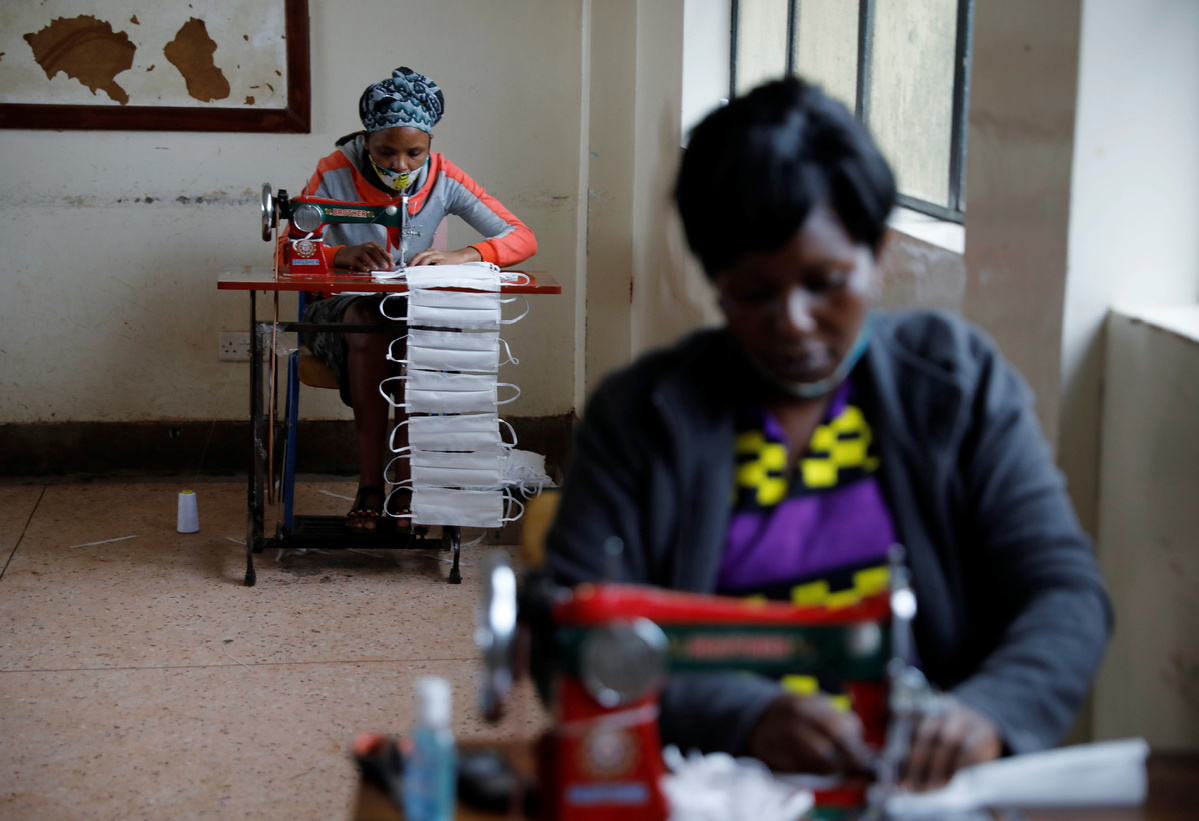
Due to the developing state of all African countries, a majority of the female population lives in rural areas. Lack of education, poverty, mobility restrictions and limited exposure are some of the hurdles that curtail the realization of benefits associated with harnessing digital technology for Africa's women. Yet digitalization has the potential to uplift their socioeconomic life.
Traditionally, business and career opportunities have been biased against women in Africa. In some communities, they are seen as homemakers, and the economy is not structured in a way that creates equal opportunities for them.
Access to digital technology will provide immense opportunities for women. According to the Global System for Mobile Communication, a globally accepted standard for cellular communication, only 26 percent of women in Kenya can afford and use mobile internet.
In Tanzania, the figure is 17 percent, while in Mozambique it is 9 percent; Cote d'Ivoire, 28 percent; South Africa, 54 percent; and Nigeria, 35 percent.
In order to bridge this inequality in Africa, young girls should be encouraged to enroll for studies related to information and communications technology. Information is power, and women are losing out because they are traditionally predisposed to be excluded from the ICT space.
Since education levels are low for many women across the continent, simple tasks such as how to create an email account are difficult. Digital literacy should be an integral part of the effort. This would impart knowledge on how to set up email accounts and social media accounts.
The use of social media to advertise formal or informal businesses, display goods and services online, and interact with other women online will open up markets that can't be accessed through traditional channels.
In addition, empowering women through digital financial inclusion will have a positive impact on the continent's economic productivity. Women need tailor-made financial access based on the irregular income rhythms most of them have in rural settings.
Many of the conventional financial access avenues become a hurdle when racing toward digital inclusion of Africa's women. Access to simple credit solutions will enable them to acquire digital access gadgets, such as smartphones, tablets and computers, by paying small amounts over a period of time.
This has been observed in Kenya, where a majority of consumers of mobile-based digital loans were women who borrow daily and use the funds as capital for goods they sell in fresh produce markets.
They pay back the loans at the end of the day and reinvest part of the profits the following day. Refining and replicating such models across Africa would emancipate women from poverty and empower their communities.
The Global System for Mobile Communication estimates that if as many women as men used mobile internet worldwide, the global GDP could rise by $700 billion. With Africa contributing 3 percent to the global GDP, this translates to $21 billion added to Africa's GDP by increasing digital access for Africa's women.
Furthermore, telecommunications infrastructure should be available across the board as a crucial component for digital inclusion of women in Africa. It should be easier to adopt and use.
For instance, cheaper internet access is essential for enhancing affordable digital adoption by Africa's women. In some countries, internet is still expensive and is out of reach for women in rural areas.
Additionally, creating relevance of digital solutions in the everyday lives of women in Africa is also a key cog in getting the wheel of digital inclusion to turn. Content should be created that touches on the different facets of a woman's daily life. Information such as education for children and access to family health would make sense to them.
Every country in Africa should have women-centered policies on technology that allow women to design technological solutions that counter the main challenges such as affordability, relevance and lack of digital skills.
Policies should be made simple and easy to interpret for uneducated women. Doing so will spur job creation and subsequent economic empowerment.
The author is a senior associate fellow at the Africa Policy Institute, a Kenya-based think tank. The views do not necessarily reflect those of China Daily.










