


Ginseng pickers pass on their skills










Herb's 'hometown' boasts ideal growing conditions
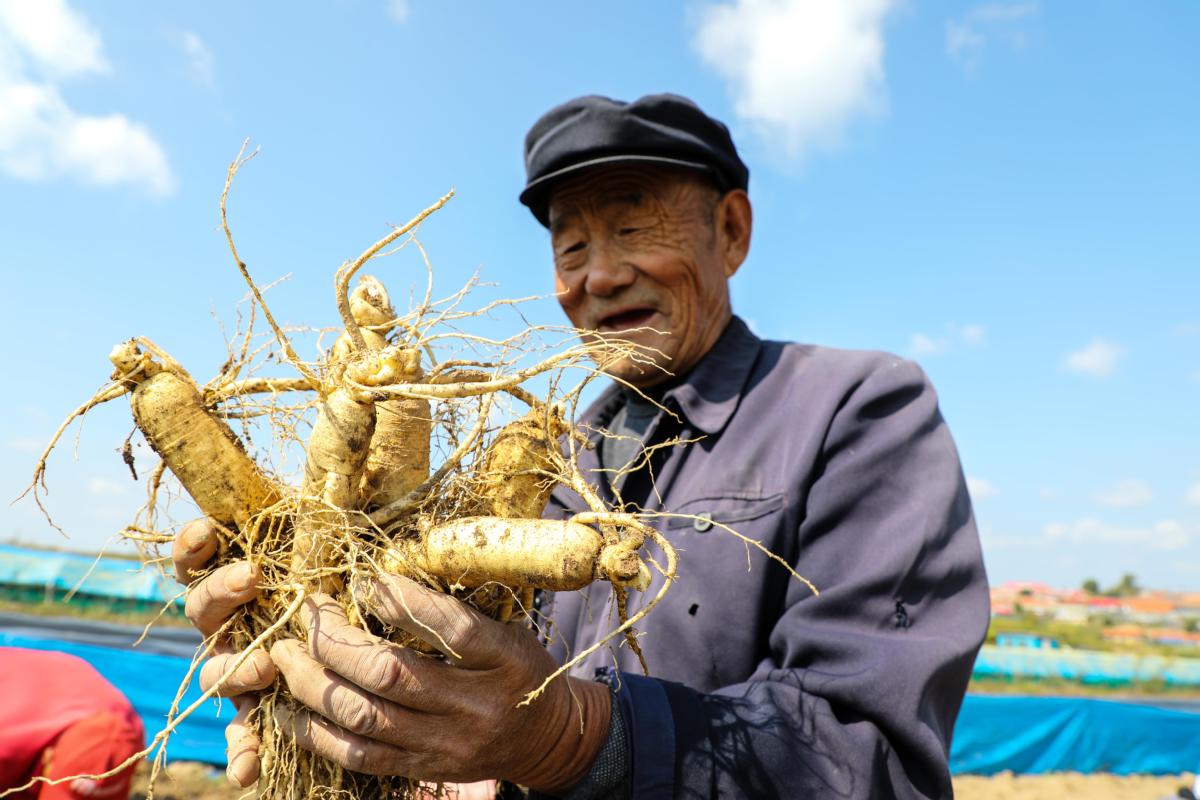
Cui Chang'an, 65, a native of Fusong county, Jilin province, has been looking for and digging up ginseng for almost 50 years.
Although it's difficult to find good-shaped, large wild ginseng that has grown for a long time in forest and mountainous areas, Cui said the skills needed to locate and pick the precious herb must not be lost.
Fusong, which is at the northwestern foot of Changbai Mountain, is known as the "hometown of ginseng", because the area is home to numerous forests, boasts rich and fertile soil, and has humid and cool weather-ideal conditions for the plants to grow.
The slow-growing herb has a light-colored, fleshy root, a relatively long stem, green, oval-shaped leaves and red fruits.
Legends and myths about the ginseng root abound among the older generation, since it resembles an energetic man. For example, many experienced pickers tie a red cord around the stem of wild ginseng after finding the herb in forests as, according to a saying, "Ginseng will run away like a man if it is not tied down."
The herb is believed to restore and enhance well-being by boosting energy levels, lowering blood sugar and cholesterol levels, reducing stress and assisting relaxation.
This year, it has been used in many traditional Chinese medicines that have been effective in preventing COVID-19 and also relieving symptoms of the disease.
In the 1980s, wild ginseng was listed as an endangered plant, meaning that no private individuals can dig it up. According to national forestry regulations, personnel from government departments and private individuals cannot pick the wild plants or destroy their growing conditions in ecologically protected areas.
As a result, ginseng that has grown for more than 100 years is seldom picked in Fusong. Most ginseng growing in the wild is now the result of seeds being spread by humans. Compared with purely wild ginseng, it is cheaper and has a shorter growing period. However, both types have similar health benefits.
In addition, cultivated ginseng has proved popular in Fusong in recent decades. Although its efficacy is not as good as that of wild ginseng and it is also cheaper than this variety, it can meet market demand and has a much shorter growing time.
In June, the value of ginseng-related industries in Jilin was about 52.7 billion yuan ($6.85 billion) in 2019, according to the Provincial Department of Agriculture and Rural Affairs. The number of industries related to the herb, including food, medicine and cosmetics, was rising, the department said.
GDP in Wanliang, a ginseng township in Fusong, reached 1.02 billion yuan last year and farmers each were earning more than 16,000 yuan annually, according to a statement issued by the county government.
It also said efforts have been made to help local residents use e-commerce platforms, livestreaming and artificial intelligence to sell ginseng.





