


But according to many scholars, the name originated from jing zhuan (capital brick) for its exclusive use in the imperial palace and then gradually evolved to jin zhuan, as jin and jing are homophonic.
One such imperial brick is currently on show at Everlasting Splendor: Six Centuries at the Forbidden City, an exhibition being held at the Palace Museum in Beijing, the site of the former Forbidden City, to celebrate the 600th anniversary of the completion of its construction.
Four experts from the Palace Museum and two professionals in charge of brick-packing visited the Suzhou museum for the handover ceremony in late August.
Shen Quannan, director of the Suzhou museum's research department, says the exhibition will "raise public awareness about the bricks' significance".
The 59 kg, 420-year-old "fine-material square brick" from the reign of emperor Wanli is the most complete piece of all Ming imperial bricks preserved at the Suzhou museum, with inscriptions recording names of the potters, construction officials and supervisors still visible on its sides.
The Suzhou museum boasts a collection of 1,458 imperial bricks from the Yongle period of the Ming Dynasty to the Xuantong period of the Qing Dynasty. It covers an area of 38,875 square meters, including the building area of 15,087 square meters.
Designed by architect Liu Jiakun, the museum aims to protect cultural relics through architectural organization and showcases the historical and cultural connotations of its exhibits.
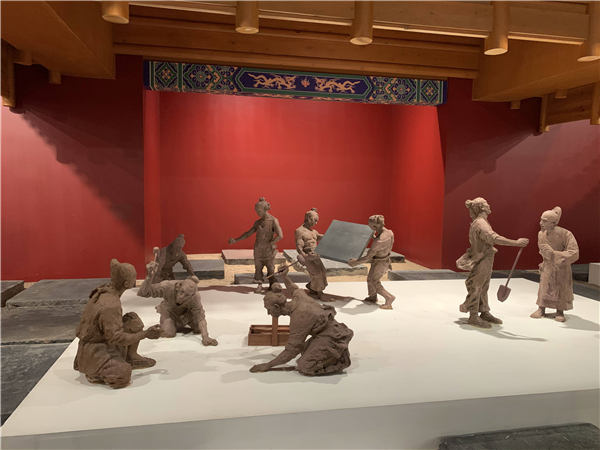
The lobby on its second floor displays the process of imperial brickmaking, from firing to transportation.








