PMI continues to expand as economic recovery powers ahead









China's economy recovered steadily in October as the latest data showed the continuous expansion of the manufacturing and services sectors. Economists expect structural reforms and opening measures unveiled in the country's newly proposed five-year plan and its development goals for 2035 will help sustain long-term growth.
The country's factory activities stayed in expansionary territory for eight consecutive months as the purchasing managers index for the manufacturing sector stood at 51.4 in October. The PMI for the nonmanufacturing sector came in at 56.2, compared with 55.9 in the previous month, according to the National Bureau of Statistics.
While the manufacturing PMI was slightly down from 51.5 in September, it was above market expectations of 51.3. The services sector also accelerated the pace of recovery, with the subindex for business activities expanding 0.3 points from the previous month to 55.5, the NBS said.
NBS senior statistician Zhao Qinghe said on Saturday that the recovery of the country's economy is accelerating as production and demand have kept a rapid pace of rebound and the country's exports and imports continued to improve thanks to government measures to stabilize foreign trade and the recovery of external demand.
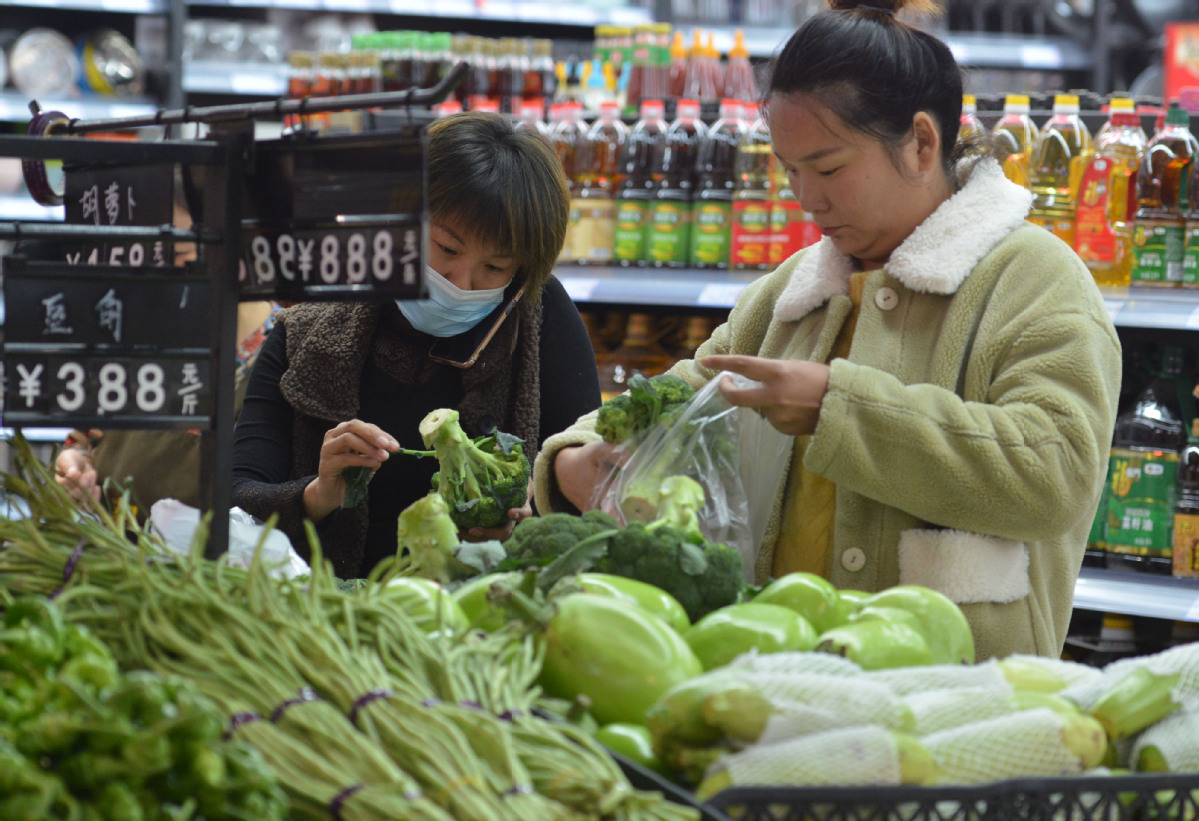
"Driven by the National Day and Mid-Autumn Festival holidays, people showed greater willingness to travel and consumer demand has accelerated. Business in the railway and air transportation, accommodation, catering, culture, sports and entertainment industries is becoming more active," Zhao said.
Looking forward, economists said that policymakers will continue to implement pro-growth measures to facilitate a steady economic recovery, including boosting domestic demand, encouraging technological innovation and further opening the domestic market to international competition.
They added that China's policymakers are likely to refrain from stimulating the economy aggressively in order to ensure financial stability. The country's economic policy is likely to exit the emergency mode resulting from the COVID-19 pandemic and see an increased focus on maintaining a normal monetary policy to reduce financial risks.
China's financial authority has reiterated improving the financial supervision system and enhancing the system's transparency and rule of law while actively resolving financial risks and resolutely maintaining financial stability, according to a statement issued by the Financial Stability and Development Committee under the State Council after a meeting chaired by Vice-Premier Liu He on Saturday.
"We expect China to refrain from stimulating growth to above-potential-level to preserve policy space," said economists at Standard Chartered Bank in a research note.
Assuming that there is no big resurgence of COVID-19 cases and China-United States relations stay largely unchanged, economists forecast that China's economic recovery will continue to be on a firm footing and growth could further rebound to around 7 percent next year.
The country's 31 provincial-level regions have released their economic performance figures for the first three quarters. Among them, 25 provincial-level regions saw their GDP growth rate turn positive during the period.
In the long term, China's policy focus will be on pushing deeper market-based reforms and further opening-up to expand the offering of high-quality goods and services, analysts said.
Experts said that the Fifth Plenary Session of the 19th Central Committee of the Communist Party of China, held last week, sent out a signal that China's policy will focus on promoting sustainable, balanced and high-quality growth through more structural reforms instead of committing to a specific growth target as it did in the 13th Five-Year Plan (2016-20).
"In line with our expectations, the government plans to focus on the structure and quality of growth going forward, highlighting especially the need to boost domestic innovation and technological capabilities," Wang Tao, chief China economist with UBS Securities, said in a research note.
Wang said that domestic structural reforms are more important than before to help support China's long-term growth as external conditions are becoming increasingly challenging.