



Asia in good position to help revive global travel









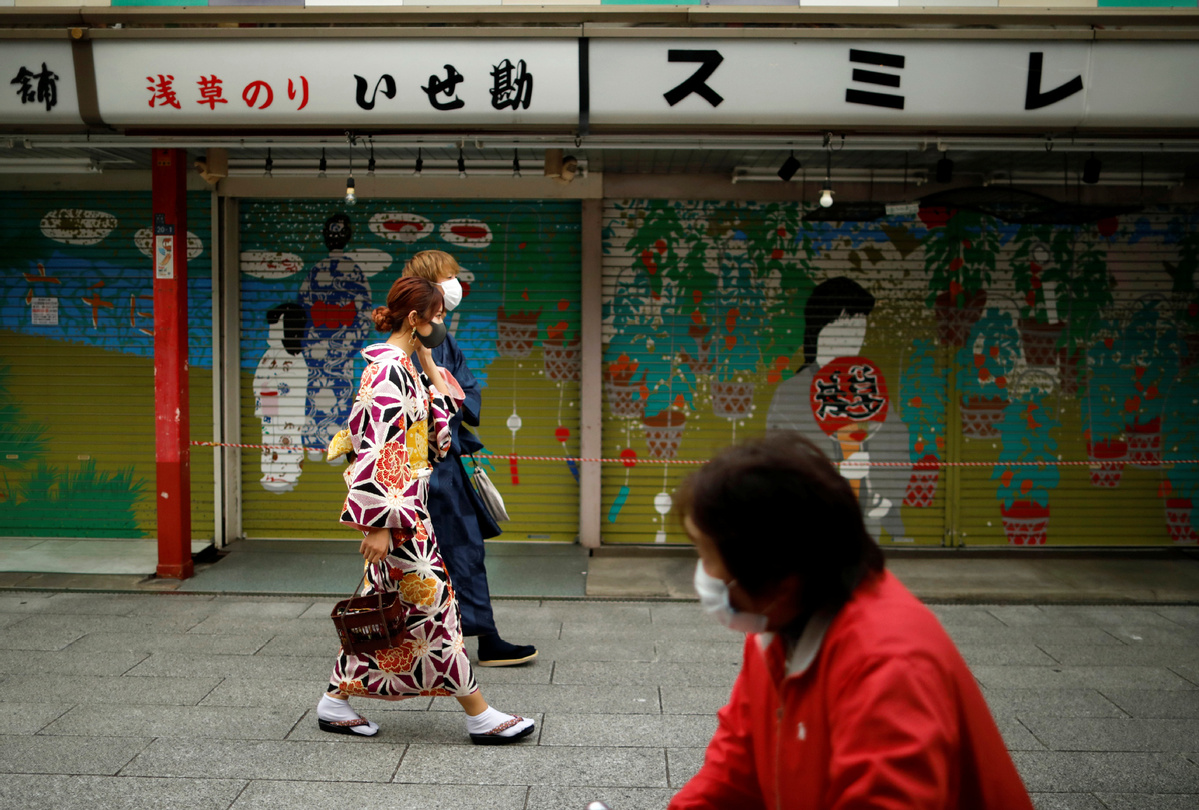
Tourism is one of the sectors hit hardest by COVID-19, due to extensive international travel restrictions and fear of infections.
In 2020, Asia is expected to have welcomed 75 percent fewer international tourists compared with 2019.
The consequences for economies that are the most dependent on tourism are severe. The World Travel and Tourism Council estimates that over 60 million jobs in the travel and tourism industries will be lost in the Asia-Pacific region.
The pandemic may have diminished opportunities to exercise wanderlust, but not the desire. That is where domestic travel can play a role.
Recent research by the Asian Development Bank found that, for about half of the economies in Asia, domestic tourism has the potential to fill the gap left by the dearth of international travelers.
For example, the Philippines received about 7 million international tourists in 2018, when 8 million Filipinos traveled abroad. If all outbound tourists stayed in the Philippines, the country would have an excess demand of 1 million.
However, mobilizing domestic tourists is far from simple. Many governments have limited domestic travel to contain the spread of COVID-19 internally. Such local lockdowns or domestic travel restrictions severely restrict travelers' choices. Furthermore, travelers' confidence is undermined by the continued fear of infection.
In China, domestic tourism has recovered quickly. During the National Day Golden Week this October, the number of domestic visits reached 80 percent of last year's total. Hubei province has been particularly successful in attracting domestic tourists. Travel and tourism businesses offered considerable discounts, which stimulated demand.
According to an October survey by McKinsey& Co, Chinese travelers are also increasingly warming up to the idea of traveling abroad, with almost a third of respondents saying they are ready to travel overseas for their next vacation.
Opening borders for Chinese tourists would prove to be an important economic stimulus for many countries in Asia.
Before the pandemic, Chinese tourists formed by far the largest group of inbound tourists in many destinations. For example, in 2018, one in three foreign visitors to Cambodia, the Republic of Korea, Mongolia, Palau and Vietnam were Chinese.
It is not just about high numbers, because Chinese tourists were also among the top spenders. Chinese tourists spent about $2,500 abroad per person on average - substantially more than tourists from Japan or the Republic of Korea.
One promising approach to reopening borders for tourism is instituting travel bubbles or green lanes. These are bilateral agreements between governments to allow for business or leisure travel according to agreed-upon health protocols.
The first travel bubble in Asia and the Pacific was established between China and the Republic of Korea in May, but was limited to business travelers. More travel bubbles have been introduced in recent months, but almost all are limited to business and essential travel. In the coming months, travel bubbles that allow for leisure travel are urgently needed to help rescue Asia's tourism sector.
Public health must be the first priority in designing travel bubbles for leisure tourists.
Governments of countries that are dependent on tourism cannot put at risk the successes achieved in fighting the pandemic.
For example, several Pacific islands are COVID-19 free, and their governments would like to preserve this status. Several countries in Southeast Asia, such as Laos, Thailand and Vietnam, have also managed to keep the number of new COVID-19 cases low.
Given China's success in containing the pandemic, establishing travel bubbles between these countries is the next logical step forward.
Allowing Chinese tourists to visit these countries could make a significant difference to their economies and provide a lifeline for their tourism sectors.
Governments need to agree on and be able to implement strict health and safety protocols to minimize infection risks.
Thailand recently agreed to again welcome Chinese tourists but has implemented a 14-day quarantine. However, such quarantine requirements could fall short of effectively supporting tourism by making inbound travel rather impractical.
It would be better instead to boost COVID-19 testing requirements and mandate the installation of a contact tracing app upon arrival. The roll-out of vaccines and the concept of mutually recognized vaccinations provide another promising avenue.
Partner countries also need to establish detailed contingency plans in case of new COVID-19 cases. Ultimately, though, to sustainably revive international tourism, travelers will need to regain confidence that they can travel abroad reasonably safely.
China and several countries in Southeast Asia and the Pacific have been particularly successful in fighting the pandemic. They have become low-risk, which makes them natural partners for creating travel bubbles.
The region therefore has the potential to show to the world not only how to handle the pandemic, but also how to reopen tourism for the prosperity of all.
The author is an economist at the Asian Development Bank. The views do not necessarily reflect those of China Daily.










