Talking of the CHAT collection









CHAT’s first collection show since its grand opening in 2019, titled “Sight Unseen”, ran from August until October. The exhibits were displayed side by side with machinery from the now-defunct Nan Fung mills and documents that helped shine fresh light on Hong Kong’s textile history.
The exhibition showcased art commissioned by CHAT, as well as those created during artist residencies, or as a result of collaborations with artists and art collectives. Among the pieces featured were works by two prominent Hong Kong artists — Morgan Wong and Movana Chen.
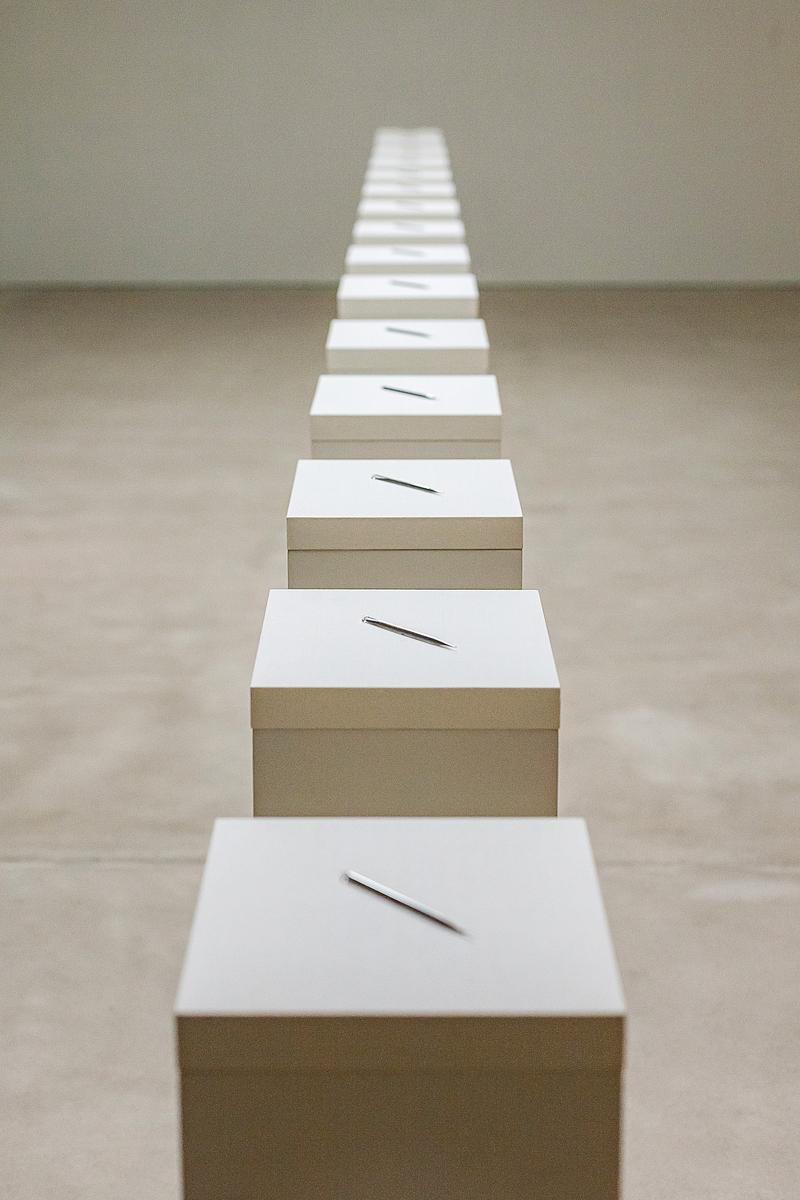
Wong’s Time Needle is a lifelong project started in 2016, when he began filing a steel rod that was as tall as him and weighed as much as he did, on a daily basis and collecting the scraps in glass tubes resembling needles. Inspired by the Chinese proverb, “grinding an iron pestle into a needle” — which underscores the value of perseverance and determination — Wong has created hundreds of such needles over four years. Of these 15 were on display.
“I like the seriality in the work, which shows us the passage of time,” says Wong. The audience viewing the needles one by one also suggests the movement of time, he adds.
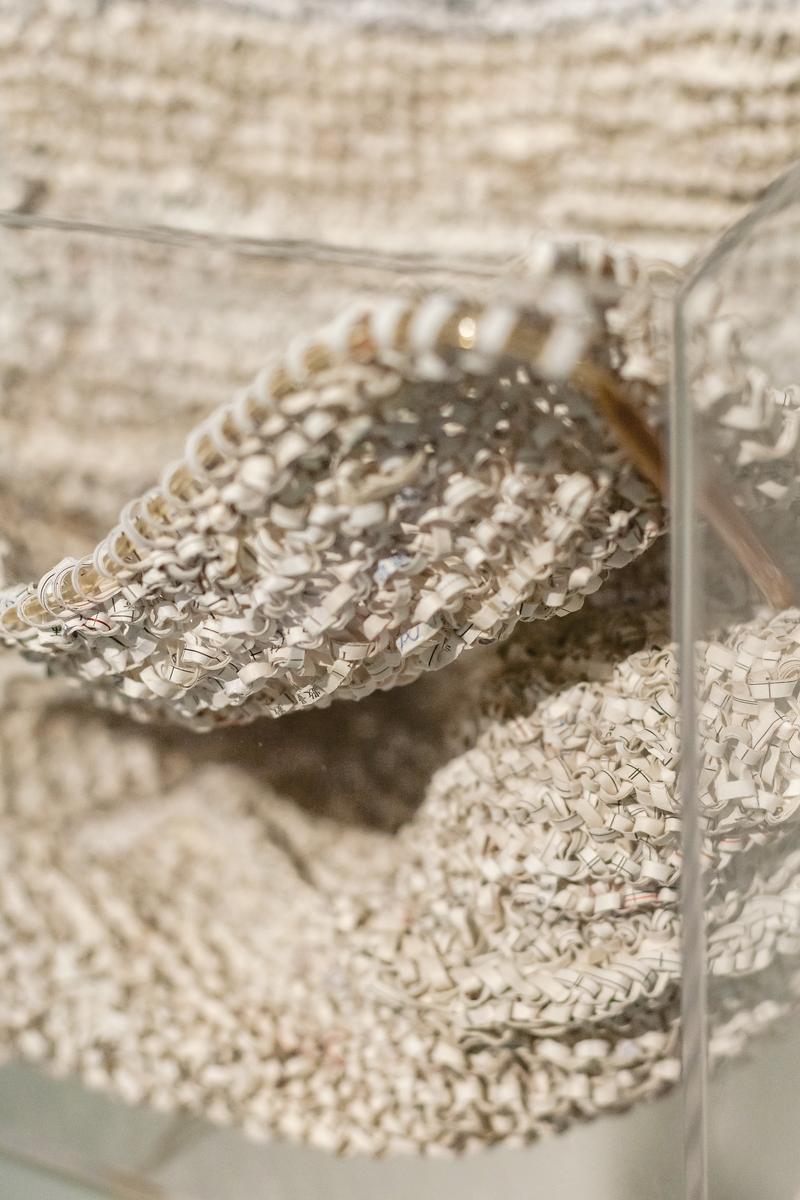
Chen used shredded strips of paper to weave a 10-meter scroll. These were originally documents containing daily records of factory workers. She found them quite serendipitously, during a visit to the mill site, before it was renovated and turned into an art center.
“These documents form part of an archive and have history inscribed on them. I even tried to preserve some of the dust and stains on them while shredding and weaving,” says Chen. “It’s as if you can smell history on them.”
She hopes to have given a new life to documents, which were no longer useful, adding a chapter to the continuing history of Hong Kong textiles.
“My works are never just works but journeys,” Chen says.
Wang Weiwei, who curated the show, says she was excited to find a yarn count converter — a chart comparing different units of measurements used for counting yarn across the world — among the tools previously used at the mills. “Measurement systems inherently imply a form of standardization, justice and fairness — in terms of equality, and exchange. And there is inevitably a pursuit of justice and democracy, in achieving that,” Wang said.
Wang mentioned how before a standardized measurement system evolved, units were counted in terms of steps and paces, leading to inconsistencies. “People in power, for example landowners and aristocrats, would be able to manipulate and create injustices within the system.”
She hoped to create a thought-provoking and introspective experience for visitors by including such items in the exhibition.
Quotes from the works of men and women of letters, such as Tang Dynasty Chinese poet Li Bai and 20th century German Jewish philosopher Walter Benjamin, were printed on the walls, providing further stimuli to the visitors’ imagination. One of these was from Judith Schalansky’s An Inventory of Certain Losses, which particularly appealed to Wang.
“I believe she makes a good point as to how we consider deconstruction and reconstruction,” says Wang. She feels Schalansky offers some pointers toward understanding the loss of Hong Kong’s manufacturing, including textiles, industries in the latter half of the 20th century, adding that perhaps the slow but steady erosion of manufacturing from Hong Kong should not be attributed to a particular cause.
The eclectic mix of exhibits — pieces of art, heritage objects, writing on the wall — opened up a myriad of possibilities in understanding Hong Kong’s industrial history.
“Perhaps this is only possible with a collection show, where I can put aside explanations and standard answers, and allow for assumptions or even misreadings,” says Wang.



- Shanghai researchers unveil promising clinical trial results in glioblastoma treatment
- CCG organizes 134 patrols around the Diaoyu Islands since 2021
- Yangtze finless porpoise population increases in China
- Trains undergo inspections ahead of Spring Festival travel rush
- China to foster new quality productive forces in water conservancy sector
- China's transport sector sees growth in 2025