



Divergent paths to common prosperity









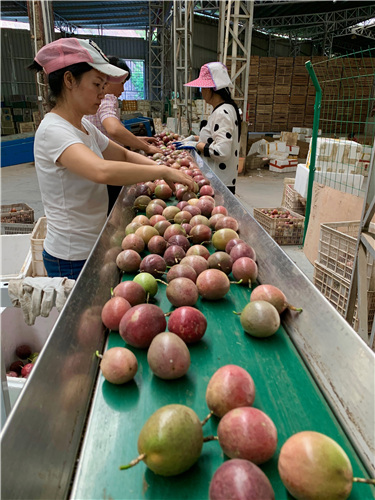
The cooperative built a base that could process 400,000 eggs after the government started promoting their product in 2018. It sold 1 million in the first half of this year, Zhang says.
Selling eggs to the co-op helped lift 57-year-old Wang Kefu out of poverty.
His family of 10 had fallen into debt after he paid tens of thousands of yuan to treat his lung cancer in 2015, he explains, lifting his shirt to reveal a lightening bolt of a scar on his chest.
"I could only earn a few thousand yuan a year back then. And I was our breadwinner," he says.
"Now, I have over 1,000 ducks in my backyard. I don't have to worry about how to make ends meet anymore. Life is getting better."
Tapping tourism
Life has likewise improved for Liu Linzhao, a server at an agritainment restaurant in Huichang county's Dongtou village, since the settlement developed tourism based on ethnic She culture and primitive wilderness.
The 44-year-old worked in Guangdong before returning in 2016 to take her job at the eatery and care for her three children.
"I got paid more outside, but I also had to spend a lot," she says.
"Now that I'm working in my hometown, I can also take care of my family and live around my friends."
Travelers visit Dongtou to hike through its national forest park, which hosts hundreds of centuries-old trees, including 50 that are over 500 years old.
They also feast on traditional She cuisine at "long-table" banquets with over 100 diners bellied up to dozens of tables placed end to end. And they visit a She cultural showroom, pick plums and explore buildings that date back as far as three centuries.
Dongtou's Party secretary Ou Xiaohua says tourism recently pulled the final 68 households, comprising 310 people, above the poverty line.
Red tourism has likewise brought prosperity to Ruijin's Huawu village.
People come to see dozens of trees ceremoniously planted by young men from the village before they joined the Red Army's Long March in 1934. Seventeen of them never came home.
"Their belongings were never found," says Huawu's Party secretary Huang Risheng.















