FOCAC promotes common development of China and Africa









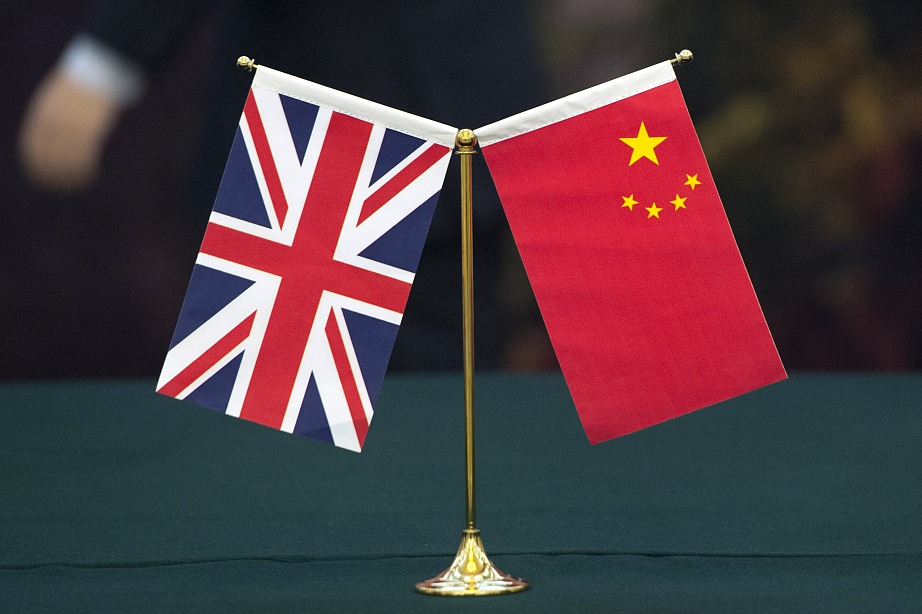
October 2000 marked the maiden ministerial conference of the Forum on China-Africa Cooperation held in Beijing. Thereafter, six more ministerial conferences have been convened interchangeably in Africa and China, after every three years. These conferences have become the primary formal policy forum, the cornerstone of development cooperation, and the promoter of Sino-African relations.
The year 2020 marked the 20th anniversary of the establishment of FOCAC as China and Africa geared up for its 8th session to be held in Senegal in 2021. This celebration materialized at a time when the significance of FOCAC was subjected to deeper trials by the outbreak of the COVID-19 pandemic.
But, once again, it ascertained its essence of strengthening friendship and promoting cooperation by furthering mutual support and solidarity in combating COVID-19. This has been done by sending expert teams, sharing experience, and facilitating Africa's procurement of medical supplies in China.
As we celebrate and prepare for the 8th session of FOCAC, it begs us to reflect on its significant achievements and challenges in the last 20 years, and project a new era of its impact in the coming years.
The seven FOCAC sessions have set various targets and results. They have fundamentally covered President Xi's proposed areas of collaboration highlighted during the 2018 Beijing summit. These include industrial promotion, facility connectivity, trade facilitation, green development, capacity building, health and hygiene, humanities exchanges, and peace and security.
Deriving from these eight pillars, FOCAC has moved development cooperation between China and Africa to unprecedented heights.
First the trade sector, by 2019 trade between China and Africa reached $208.7 billion, while Chinese foreign direct investment in Africa amounted to $49.1 billion, rising by 20- and 100-fold, respectively, compared with two decades ago. The unprecedented pandemic has not paralyzed China-Africa economic and trade cooperation either. More than 1,100 Chinese projects continue operating in the region with China's investment in Africa increasing by 4.4 percent in the first four months of 2020, compared with the same period in 2019. The trade volume between the "54 plus 1" friends reached over $80 billion in the first half of the year 2020.
China has also established six overseas economic and trade cooperation zones in five African countries, namely, Egypt, Ethiopia, Zambia, Mauritius and Nigeria. Further, there are nearly 100 Sino-African joint industrial parks under construction or in operation that have boosted Beijing's investment stock in Africa with over 3,700 Chinese companies operating on the continent by the end of 2019.
Second, FOCAC has boosted infrastructural development in Africa. By 2019, China had supported the implementation of over 200 infrastructure projects including the Ethiopia-Djibouti Railway and the Kenya Mombasa-Nairobi-Naivasha Standard Gauge Railway. Similarly, Chinese companies have helped build or upgrade about 2,000 kilometers of railways, 30,000 km of highways, more than 30,000 km of transmission and transformation lines, 85 million tons per year of port capacity, more than 9 million tons per day of clean water treatment capacity, and about 20,000 MW of power generation capacity in Africa.
Third, FOCAC has prioritized the training of African human resources, helping African countries to improve educational infrastructure and nurturing skills and talents to underpin sustainable industrialization. During the 2018 FOCAC, China made a bold pledge to offer 50,000 scholarships to African students from 2018 to 2021.
Fourth, the forum has provided channels for the enhancement of Africa's healthcare sector and promoted agriculture. At the 2015 Johannesburg summit, it was decided that China would participate in the building of Africa's public health control and prevention system and relevant capacities, support 20 hospitals from each side to carry out demonstrative cooperation, strengthen African hospitals' departments for specialized diseases, and encourage Chinese enterprises to undertake local production of drugs in Africa. Since the 2015 summit, Beijing has also supported capacity building, training, and sharing of agro-technology and experience and transfer of applicable agricultural technologies through initiatives such as demonstration centers and the "Enriching People with Agriculture" project.
A key challenge that Africa faces when engaging in FOCAC is that the continent does not have a unified and collective foreign policy when connecting with Beijing. "China has an Africa Policy but Africa does not have a China Policy" is a common refrain. This notwithstanding, FOCAC presents itself as a genuine platform where both parties are seen as equals, however, failure for Africa to present a unified voice could hamper the continent's ability to shape the terms as well as conditions of the cooperation.
Shadrack Kuyoh is a Legal and Policy Adviser at the Africa Policy Institute.