


From the excitement around the recent excavation at the Sanxingdui Ruins site to the rising popularity of revolutionary sites in tourism and the emerging practice of celebrating Chinese Lunar New Year by visiting museums, traditional culture has revealed its abiding charm and taken on new appeal in China.
Behind the boom is a cultural confidence. The country's long-term commitment has been underpinning the inheritance and promotion of fine traditional elements. Guidelines on preserving and developing traditional culture were rolled out in the run-up to Spring Festival in 2017. It was the first document released by central authorities to address the issue. More recently, China unveiled key cultural initiatives for the next five years as part of national strategies to carry on traditions.
A dynamic and open-ended list, the latest version incorporated eight new projects on top of 15 erstwhile initiatives, covering ancient books, intangible cultural heritage, traditional music, the Yellow River culture, traditional Chinese medicine and other areas.
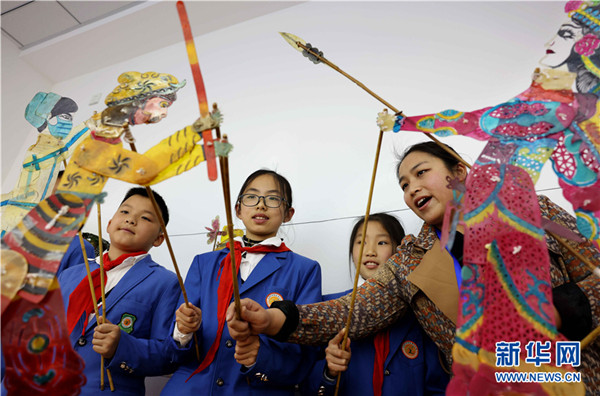
Thanks to four-year nationwide efforts to sort out cultural resources, a tiered system of intangible heritage has been established, spanning national, provincial, municipal and county levels. More than 100,000 items have been registered in the system, including 1,372 at the national level.
Twenty-three national cultural ecology protection zones have been set up or piloted to help develop traditional culture in areas with high concentrations of intangible cultural resources. The country has also put 135 historical and cultural cities under national-level protection in addition to 799 towns and villages and 6,819 village clusters. A total of 38,500 constructions have been identified as historical sites and a number of industrial complexes and cultural landmarks have made it to the protection system.
In terms of the protection of ancient books, 14 national or sector standards had been set up by 2020.Researchers logged data of more than 2.7 million works, completing 94 percent of the total task. More than 3.6 million pages were repaired and 72,000 volumes of digital resources were released.
Chinese Poetry Conference, a quiz show produced by the national broadcaster China Central Television, has crowned journal editors, high school students and even delivery personnel as champions, which shows that the appreciation of classical poems is a national pastime instead of being exclusive to the elite. With the sixth season well underway, the program has attracted a total of 3 billion views at home and abroad.
In a rare positive development resulting from the COVID-19 pandemic, the Palace Museum, Dunhuang and the Terracotta Warriors, among other cultural sites, have launched digital services for audiences in compliance with epidemic control efforts.
Empowered by cloud technology, antiques lying still in museums, historical sites scattered across the country and characters inscribed in ancient texts have come alive and woven themselves into the fabric of people's lives.
Protection of traditional culture even couples seamlessly with the country's poverty alleviation efforts. In Southwest China's Liangshan, home to the country's largest Yi community, ethnic embroidery, silver jewelry and lacquerware have helped locals move out of poverty.
More than 2,000 workshops have been set up across the country since 2016 to reduce poverty on the strength of intangible cultural heritage.
In the next five years, cultural databases are expected to become robust. Novel technologies will be deployed in heritage preservation. An array of literary works informed by Chinese culture is in the pipeline, and media integration and innovative platforms will give wings to cultural dissemination.
Xinhua





