Commuters forced to go the distance









Tough reality
The couple are relatively fortunate, as their workplaces are quite near an expressway.
Li's neighbors, who work in a northern area of Beijing, spend about two and a half hours on the road to get to work, and three hours during rush hours-one hour on the expressway and another two traveling within Beijing.
Wang Ying, a 28-year-old saleswoman in the financial sector, said: "I sit in my car for more than five hours, driving between home and work and back again in the evening. Sometimes, it's six hours if I get off work late and get caught in a traffic jam.
"At first, I killed time listening to music, but I have gradually realized that I am either at work, or on my way to work, a lot of the time. I have little time to relax after I arrive home at around 9 pm. I'm exhausted."
Wang, who owns a 130-square-meter apartment that cost about 1.8 million yuan in Langfang, said she is considering renting in Beijing again.
"The money I paid for my apartment could only 'buy' a living room in Beijing. For the past two years, I've enjoyed this large apartment, which is situated in a beautiful community that is full of trees and flowers, but the exhausting long-distance commuting has affected both my mental and physical health," Wang said.
"I've tried to lead a two-city life, but have failed."
Wang, who is currently making a round-trip of 160 km each work day, plans to sell her apartment and buy a smaller one within 30 km of her workplace.
The last straw for her came in January, when clusters of COVID-19 infections were found in some villages in Hebei.
Even though the villages are far from where Wang lives, the local government announced that commuters traveling between Beijing and neighboring cities in Hebei had to produce several documents and negative nucleic acid test results to enter the capital via expressway.
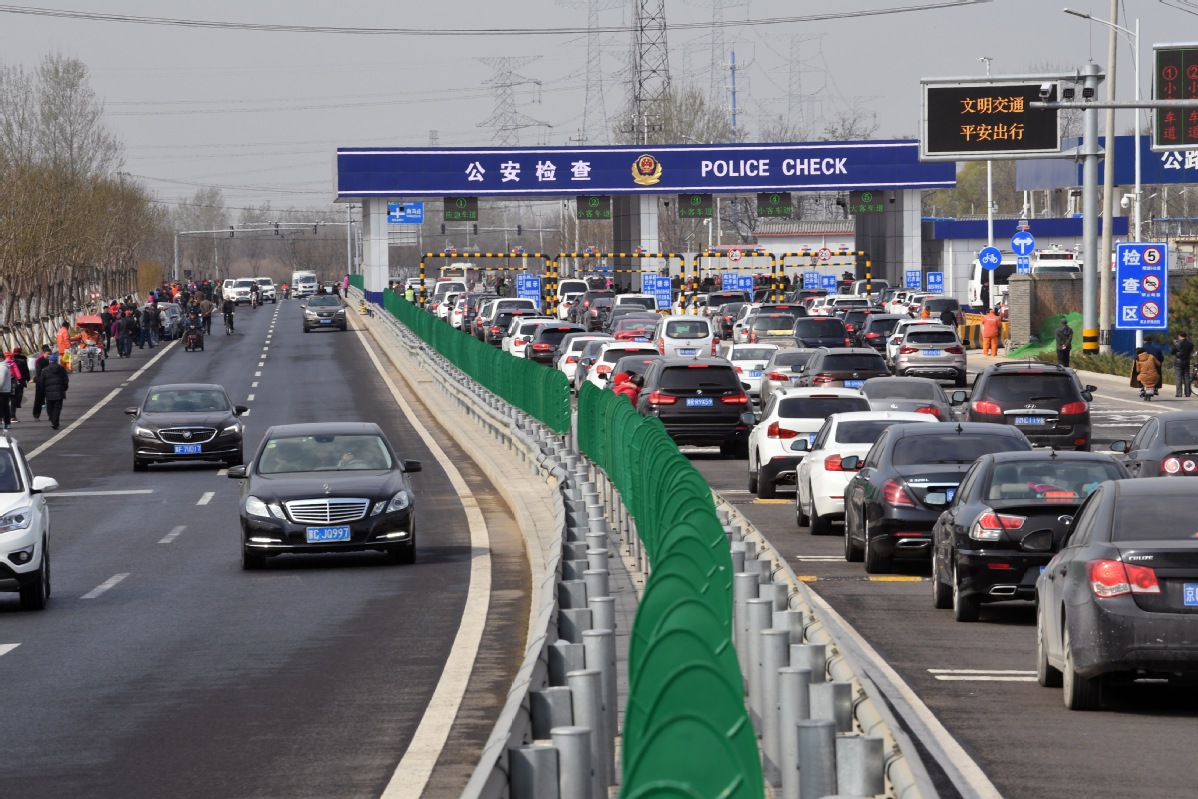
This led to long lines of traffic waiting to pass through checkpoints.
On Jan 8, Wang arrived at an expressway checkpoint at 8 am and waited for three hours in a long line of vehicles. She burst into tears and called her boss from her car while she was waiting. She eventually arrived at work, tired and hungry, at 1 pm.
"I felt as though Beijing was rejecting me that day. I was emotional at the time, but I'm pretty rational now, and know I have to move back. Otherwise, I am always going to be an outsider."