


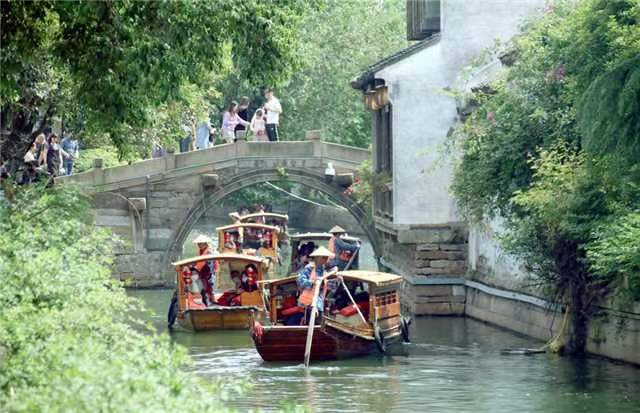
Conservation work has been combined with urban construction
For centuries, canals and rivers have flowed past ancient houses in Suzhou, Jiangsu province. The white-walled homes are clad with black tiles dotted with moss.
Under the eaves of properties in narrow, neat alleyways, locals chat in the soft Wu dialect, which can be difficult for travelers from outside the area to understand.
The city of 10 million people, which is a major tourist draw, has taken vast strides in recent years, with a booming modern manufacturing sector established in newly developed industrial zones.
Impressive progress has been made, but the sixth-largest city-level economy on the Chinese mainland also boasts a proud history that has been meticulously protected by locals.
Construction in the city began more than 2,500 years ago when a Wu vassal state was established during the Spring and Autumn Period (770-476 BC).
Gusu district in the heart of Suzhou is home to the city's rich cultural legacy-best exemplified by its classical gardens that are a UNESCO World Heritage site.
Nearly 1 million people live in the district, including Xu Gangyi, 70, a retired civil servant, who since the early 1990s has regularly walked around the city's ancient neighborhood in his spare time, taking photos to record people's lives.
"A city cannot grow without urban development, but as demolition work began on some of the old buildings, I felt that something may be lost forever," he said.
Xu has photographed alleyways, wells and buildings before they disappeared in demolition work to make way for road widening projects.
The 14.8-square-kilometer ancient city core area is surrounded by moats, and Xu grew up near Panmen Gate, which traverses one of these waterways.
Xu, who has a deep regard for the history of his hometown, has often written letters to the authorities appealing for ancient sites to be spared from demolition.
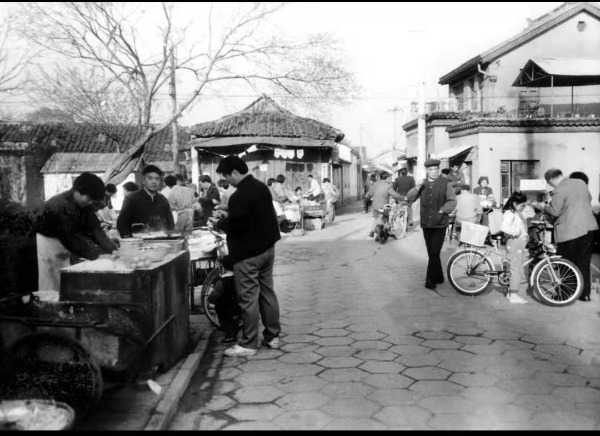
"Everything we have now was left by our ancestors. What will we leave for our children? Our roots lie in this ancient city, and it has influenced our characters. We'd better take good care of it," he said.
He did not have to wait long to receive positive feedback. In 2002, a comprehensive project to restore the ancient city area was launched by the local government. A series of renovation projects have followed.
During the 1990s, a construction rule was rigidly enforced. This is still the case today. No new building in the ancient city area can be higher than 24 meters-one-third the height of Beisita, a landmark Southern Song Dynasty (1127-1279) pagoda in downtown Suzhou.
Thanks to the rule, no skyscraper breaks the skyline in the ancient city.
In 2018, a provincial-level regulation covering the ancient city area was implemented to rigidly supervise construction. The rule, in particular, stressed that basic colors used in the area should be black, white and gray to "reflect simple but elegant aesthetics". Traditional building materials and styles were also called for.
"I believe that the ancient city will never be destroyed," said Xu, also a former local political adviser. "The area remains as it was, lacking a flamboyant appearance."





