



Driverless vehicles steer deliveries forward









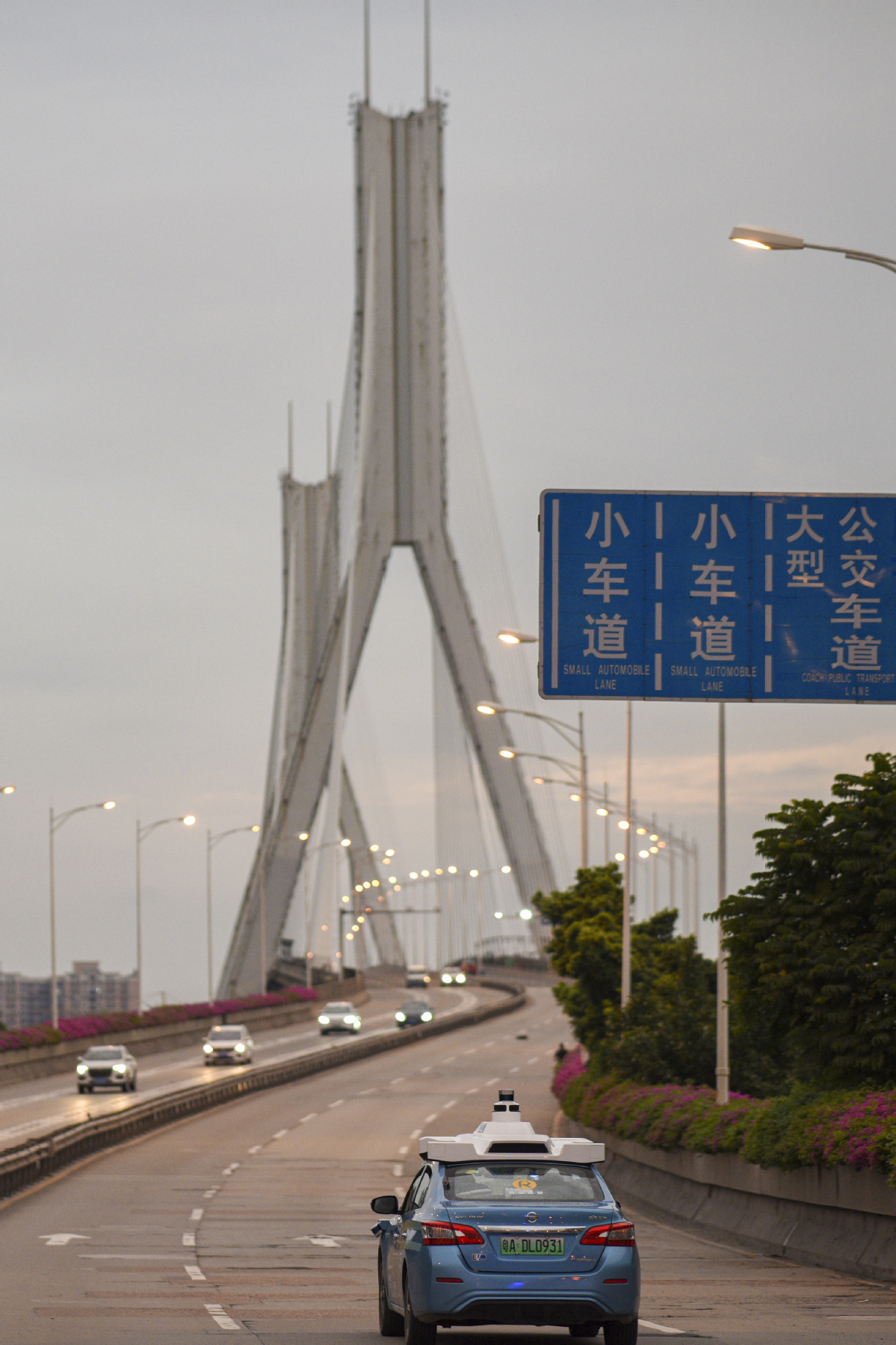
Pony.ai, another leading autonomous driving firm, has so far dispatched its unmanned passenger vehicles and heavy trucks to deliver around 100 tons of goods to Liwan and Nansha districts in Guangzhou.
"Both of our robotaxi and robotrucks have built a complete set of intelligent vehicle management backends," said Mo Luyi, vice-president and general manager of the Guangzhou branch of Pony.ai.
"It was with such intelligence that the company's unmanned vehicles are able to achieve rapid response to any urgent need," Mo said.
According to Mo, Pony.ai's unmanned fleet has also helped send over 100 teachers and students to college entrance examinations.
In fact, for some time now, domestic tech companies have been gearing up efforts in unmanned delivery services, which are expected to generate huge commercial value in a variety of businesses like express delivery, food take-away, fresh produce ordering and retail pharmaceuticals.
According to a report by investment firm Estar Capital, sales revenue of the country's terminal distribution market is expected to exceed 300 billion yuan ($46 billion) this year. Terminal distribution refers to logistics services that interact with end users.
Now in China, a sound unmanned distribution business model has been formed with technologies being able to support different needs. The overall industry is expected to eventually enjoy large-scale commercial applications, the report said.
Since the beginning of last year, leading players in the field have been removing security officers from vehicles to go totally unmanned. In general, the country's passenger vehicles all require a backup driver in the car to ensure safety in case of emergencies or malfunctions. Companies also rely on safety control centers to monitor self-driving vehicles and road conditions in real time and give timely assistance and instructions to vehicles in need.
Meituan, Alibaba and JD said that they plan to beef up their presence in autonomous deliveries and will launch thousands of unmanned delivery vehicles this year.
Another report by investment firm CICC predicted that by 2024, instant deliveries are expected to reach 51.2 billion orders, which will be a significant rise from the 12.8 billion such orders in 2019.
Last year, China unveiled a blueprint to boost autonomous technologies in the country. According to the blueprint, the country will realize "scale production of vehicles capable of conditional autonomous driving and commercialization of high-level autonomous vehicles in certain scenarios by 2025".
According to a latest report from global management consulting firm McKinsey & Co, China will become the world's largest market for autonomous vehicles, with revenue from sales of such new cars and mobility services expected to exceed $500 billion by 2030.
It predicted that by 2030, the total sales volume of autonomous vehicles is expected to hit $230 billion and autonomous vehicle-based services will generate a gross booking of around $260 billion.
Earlier this year, a high-level autonomous driving demonstration zone in Beijing issued licenses for unmanned deliveries to companies like Meituan and JD. It marked the first time that the country granted legal rights of way to unmanned delivery vehicles.
In Wenzhou, Zhejiang province, unmanned deliveries are no longer limited to vehicles as unmanned aerial drones of SF Express are transporting boxes of bayberries from a mountaintop to a delivery station located far below.
For local farmers, the delivery of bayberries has always been a problem, as such fruits easily bruise during overland transport. While it previously took over two hours to deliver the fruit, it now takes only eight minutes using aerial drones, according to SF Express.
He Xiongsong, executive president of Estar Capital, pointed out that it will take time for the country's unmanned delivery industry chain to grow and reduce costs.
"Autonomous driving is in the process of rapid development. One of the main barriers is that the cost of core components such as lidar are relatively high," He said.
"At present, some companies can achieve a total vehicle cost of about 200,000 to 250,000 yuan, but others have to pay over 500,000 yuan for a single car."




















