



Japan must not rush Fukushima water plan: China Daily editorial









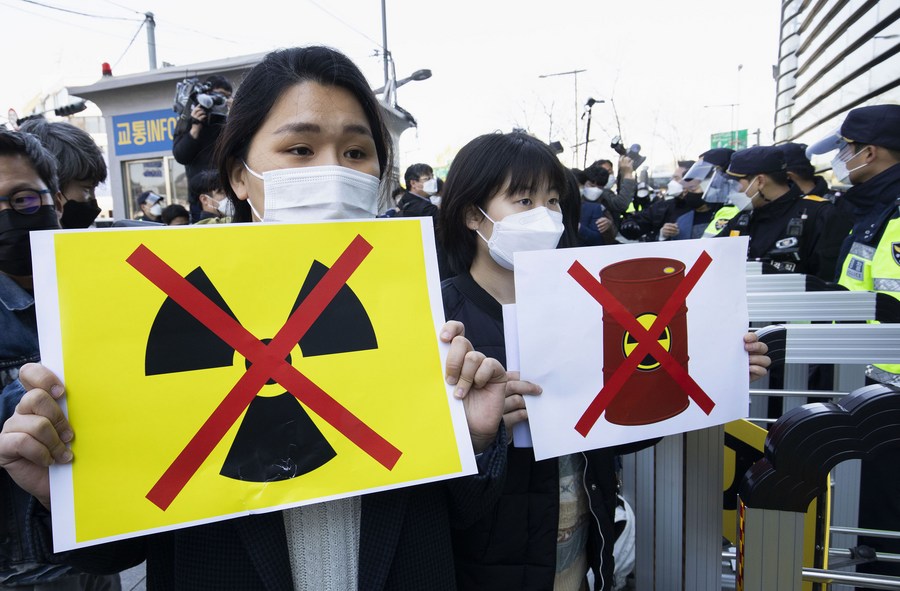
Ever since the Japanese government announced in April that it would discharge the contaminated water from the wrecked Fukushima nuclear plant into the sea, it has met vehement opposition from environmentalists, fishermen and neighboring countries.
Which is justifiable, given the irreversible damage the move could cause the marine environment and people's health.
Thus it is irresponsible, and disappointing, that Japan's new prime minister, rather than reconsidering the move, has decided to press ahead with the controversial plan, as he said on Sunday.
Speaking at his first visit to the facility since taking office, Fumio Kishida said that he "felt strongly the water issue is a crucial one that should not be pushed back", which means he has no intention of re-examining the merits of other options.
The nuclear plant's operator, Tokyo Electric Power Company (Tepco), has said it will start releasing the water in the spring of 2023, and it will last the span of decades.
Tokyo has argued that discharging the nuclear-contaminated water into the sea is the only way to dispose of it. Yet that is not true. It is simply the most cost-effective means for Japan to start decommissioning the crippled nuclear plant.
Japan has also claimed that the around 1.2 million tons of wastewater being stored at Fukushima, after being treated with an advanced liquid processing system, or ALPS, will meet global safety standards, with their radioactivity levels well below legal limits.
But that conclusion is being questioned. Not least because the trustworthiness of Tepco remains questionable because of the disinformation it has previously spread.
For example, Tepco insisted that all radioactive materials except tritium — considered to be relatively harmless — would be removed using ALPS, but that turned out to be untrue. This has raised legitimate concerns that the treated water may not be as safe as the company and the Japanese government claim.
China has been urging Japan to exercise extreme caution when dealing with Fukushima's contaminated water disposal. After all, this is not just a domestic problem of Japan that can be fixed unilaterally by it. For Japan to be a responsible global player, it must first consult with its neighboring countries and win their understanding and consent before taking action on a matter of such gravity. It should not treat the Pacific Ocean as its own backyard sewer.
The International Atomic Energy Agency has reportedly invited China to join a technical working group to evaluate and supervise Japan's water disposal plan. Before the results of this assessment are released and a broad consensus is reached, Japan should refrain from acting on its own initiative given the high stakes involved. And not set any deadline for dumping the contaminated water.





